 Mimu Play









product search
Indoor PlaygroundNinja WarriorOutdoor PlaygroundTrampoline
search
Trampoline materials mainly include UV-resistant polypropylene mats for jumping, galvanized steel frames for structural strength and PVC-coated foam mats for safety. In order to ensure durability, the mat is usually woven, and the net is usually made of polyethylene material. These materials ensure their weather resistance, UV resistance and sustained impact resistance.
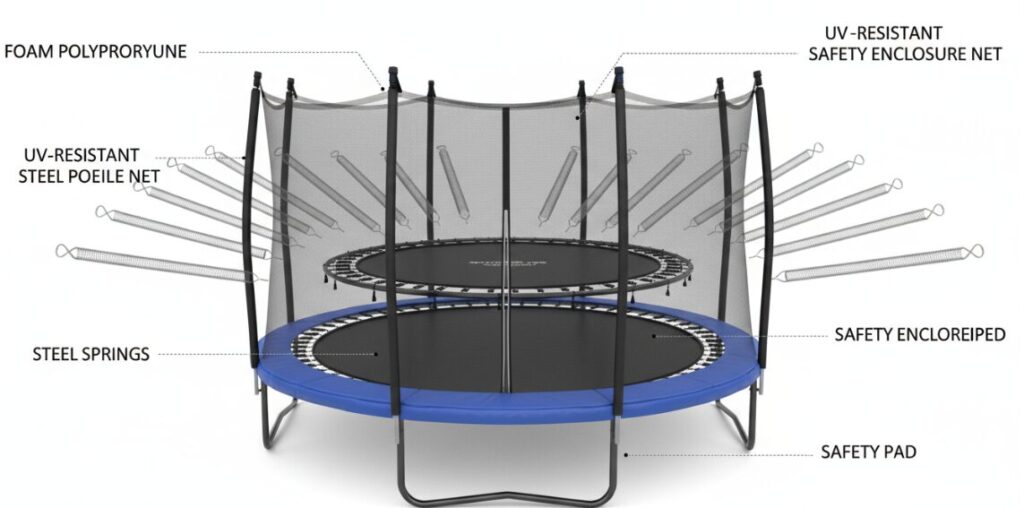
The trampoline is stable and can be used for several years. The skeleton is the core. Galvanized steel is currently the industry standard for high-quality trampolines. The reason why this material is chosen is that it has a strong structural strength, which can ensure that the trampoline does not take shape after thousands of high-intensity jumps.
The most critical part is actually the “galvanizing” process, that is, coating a protective layer of zinc on the surface of the steel. This is life-saving for outdoor trampolines, because they are exposed to rain and humid air all year round. Without this layer of zinc, the steel will soon begin to rust from the inside.
Although some lightweight models on the market will use aluminum to reduce weight, but to be honest, if you are looking for heavy load and long-term durability, galvanized steel is still the most stable choice.
Jumping Mat can be said to be the most tiring part of the whole trampoline. Today’s high-quality jump cloth basically uses polypropylene (PP), which is the 1 synthetic thermoplastic polymer.
Why does it hold the top spot?
Weaving process: the fibers are woven in a specific way to form a plane that is both elastic and extremely tough.
Thermal chain weaving: high-end products jump cloth density is very high, using thermal chain technology. This is not only to increase the tensile strength, but more importantly, to make the jumping surface smoother and prevent tearing when the force is uneven.
Stress tolerance: This material has been specially engineered to maintain resilience even in the face of continuous tension and high-speed impact, and is not easy to become “loose”.
Discover endless fun and spark imagination! Our indoor playground products create a safe, exciting paradise for children. Experience boundless joy now!
Embrace adventure and fresh air! Our outdoor playground products offer thrilling, safe experiences for kids to explore, play, and grow. Unleash the fun outside!
Connecting the jump cloth and the frame is a high-strength galvanized steel spring. They are responsible for storing and releasing kinetic energy. The galvanized treatment of springs is as important as the frame. If the spring rusts, the coil will become brittle, or even collapse. Only rust in place, trampoline “elastic life” to maintain many years, rather than play a quarter on the misfire.
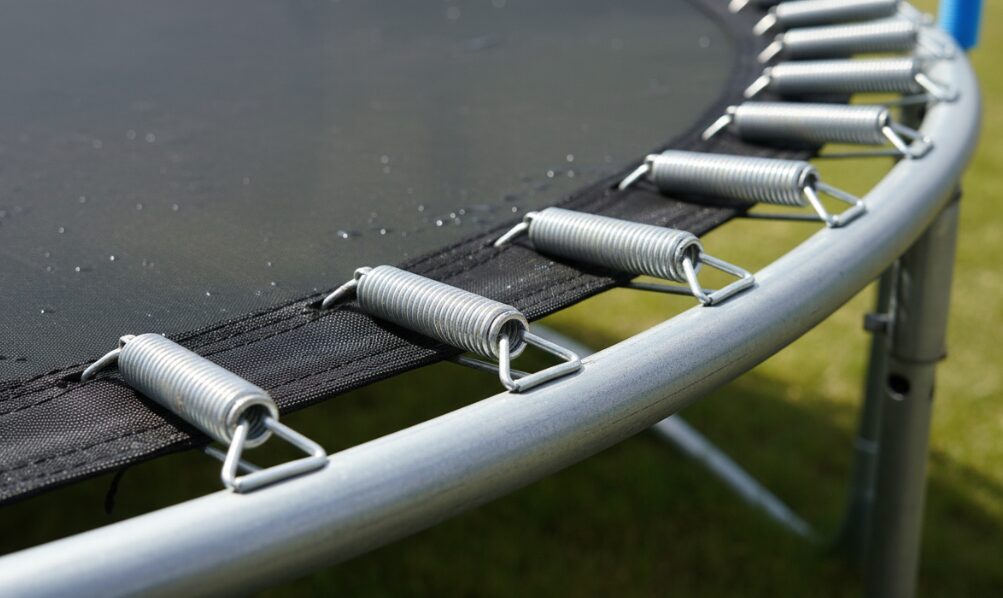
In the field of amusement equipment engineering, safety is always the first.
Safety pad: This is to prevent the player from stepping into the spring gap or hitting the frame. They are usually thick closed-cell foam inside (this foam does not absorb water, this is very important, otherwise the next rain cushion will sink), wrapped in UV-resistant PVC or vinyl coating. This outer skin protects the foam inside from being burnt and brittle by the sun.
Security seine: The seine is usually made of polyethylene (PE) or polyester fiber. I personally prefer PE net, because it feels softer and can reduce the “hot skin feeling” caused by friction. At the same time, it is tough enough to hold an adult flying out. The mesh must be tightly woven to avoid getting your fingers stuck.
When evaluating the endurance of a trampoline, I usually stare at these key points:
UV resistance: Since it is outdoor equipment, all fabrics (jumping cloth, pads, nets) must be treated with UV resistance. Sunlight is the killer of plastic chemical bonds. If the material is not handled properly, it will tear like paper for half a year.
Galvanizing level: This is the line of defense of metal parts. In humid climates, the thickness of the galvanized layer directly determines whether the frame will rotten.
Weaving density: The higher the density of the jumping cloth, the better the abrasion resistance. The kind of cheap jump cloth that can see through the gap at a glance will soon appear fatigue damage under daily high-frequency use.
In general, buying a trampoline can’t just look, the foundation of the material is the key to determining whether it is a “professional equipment” or a “disposable toy.”
Author: Marcus Reed
“With over a decade of experience in outdoor sports equipment engineering, I specialize in the structural integrity and material science of backyard playgear. My focus is on helping consumers understand the technical components—like UV-resistant polypropylene and galvanized steel—that ensure a trampoline’s safety and long-term durability. I believe that knowing exactly what your equipment is made of is the first step toward a safer jumping experience.”
Find Out How Many Springs Are On Your Trampoline. Learn How Size And Shape Affect The Count For A Safe, Quality Bounce.
View details
Discover How Spring Count Affects Trampoline Bounce And Durability. Learn Why Quality Matters As Much As Quantity.
View details
Learn how adult amusement park indoor projects can match equipment categories, age limits, layouts, and model evidence.
View details
Plan An Aesthetic Indoor Trampoline With Clear Zones, Practical Padding, Verified Structure, And Maintainable Details.
View details