

What To Know Before Buying A Trampoline
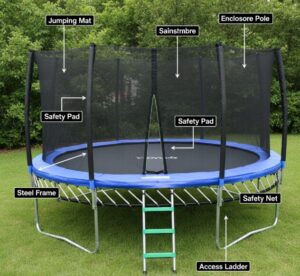
Before buying a trampoline, when choosing a model, priority should be given to safety, size and durability, such as a sturdy rust-proof galvanized steel frame, high load-bearing capacity, and high-quality UV-resistant safety shell. Make sure that there is at least 1.5 meters of open space around the trampoline, the ground is flat, and check for available replacement parts.
Security Configuration
Safety always comes first. When comparing different models, the following configurations are required:
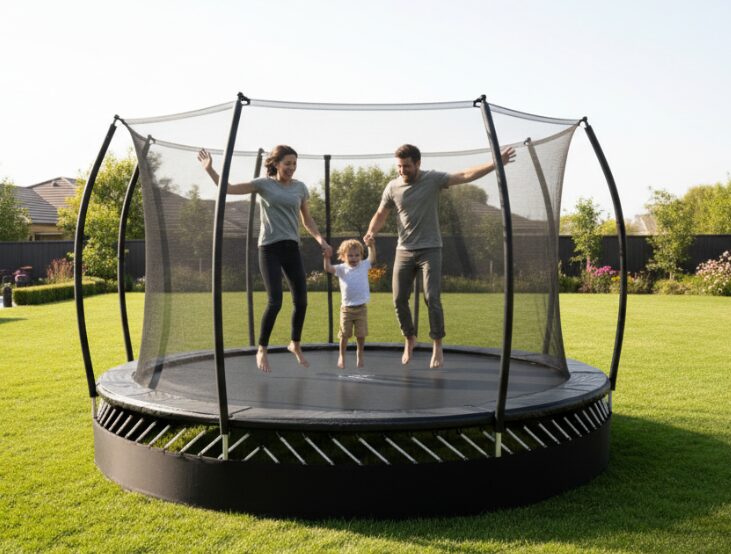
- Safety net: the quality must pass and the connection is stable. Without a net, the risk of a child falling is almost 100 percent.
- Thickened protective pad: It has to be thick enough to cover the spring and frame tightly to prevent the child’s foot from getting stuck or being injured when jumping.
- Solid frame: The foundation of the trampoline must be as stable as a mountain.
- Spring-free option: If the budget allows, I personally highly recommend spring-free design. It completely eliminates the risk of being pinched by springs or hitting metal parts, and is currently the choice with the highest safety factor.

Space And Site Requirements
Before clicking “buy”, take a tape measure to the courtyard and measure it on the spot. What you want to buy is not only the footprint of the trampoline itself, but also the “buffer belt”:
- Around the gap: at least 1.5 meters (about 5 feet) of open space should be set aside around the trampoline. Trust me, don’t expect your child to only be in a heartbeat forever, this space is to prevent them from crashing into fences, trees or walls.
- Vertical height: Look up and see if there are any branches or wires above? If the height is not enough, the consequences will be very serious.
- Ground level: find a flat and stable ground. If the ground is inclined, the trampoline can easily roll over when the force is applied.
Load-Bearing Limit And Capacity
Each trampoline has a maximum load-bearing limit. When shopping, you have to refer to the heaviest user in the house (or the total weight of several children who may jump at the same time). Long-term overload operation is not only unsafe, but also causes the equipment to be “scrapped” in advance. Metal fatigue is no joke.
Indoor Playground
Discover endless fun and spark imagination! Our indoor playground products create a safe, exciting paradise for children. Experience boundless joy now!
Outdoor Playground
Embrace adventure and fresh air! Our outdoor playground products offer thrilling, safe experiences for kids to explore, play, and grow. Unleash the fun outside!
Durability And Material Quality
If you don’t want the trampoline to experience a winter on the rust, material quality is the key:
- Galvanized steel frame: This is the core of anti-rust and maintaining structural strength, especially in outdoor and humid environments.
- Anti UV jumping mat: The low-end jumping pad will become brittle and lose its elasticity after a year or two. UV resistant materials can ensure that it lasts longer in the sun.
- High quality spring: a good spring can provide better rebound, and is not easy to stretch deformation or fracture.
Assembly, Maintenance And Spare Parts
Buy a trampoline to consider its entire life cycle:
- Installation: Confirm whether you need to do it yourself (DIY) or invite professionals.
- Spare parts supply: even the best trampoline needs maintenance. Before placing an order, check whether the manufacturer can easily buy vulnerable parts such as protective nets, cushions or springs.
Insurance And Legal Liability
Owning a trampoline may affect your home insurance. It is best to say hello to the insurance company first, understand the relevant coverage and potential legal liability risks, take precautions.
Pit Avoidance Guide: Novice’s Most Easily Mistakes
- Ignore space requirements: Put the trampoline on a slope or next to an obstacle, which is causing trouble for yourself.
- Overload use: exceeding the load-bearing limit will directly damage the spring and jump pad, resulting in structural failure.
- Buy inferior mats on the cheap: Those cheap mats age quickly in the sun and quickly become as brittle as paper, which is very dangerous.
- No protective net: Never use a trampoline without a protective net, even if it’s just a test jump.
How To Choose The Right Type?
The shape and installation of the trampoline depends on the layout and purpose of your yard:
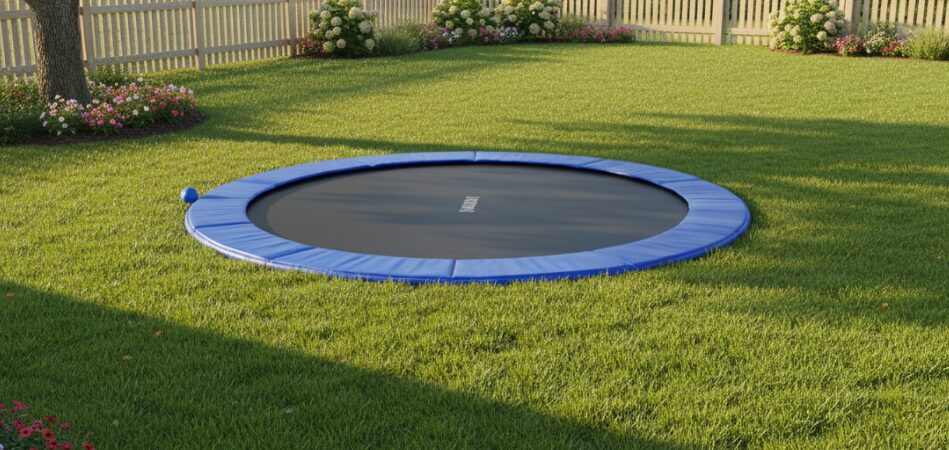
- Above-ground: The most mainstream choice. The installation is relatively simple, the price is close to the people, and if you move, you can take it away.
- Buried trampoline: visually more clean, because flush with the ground, the sense of security is also stronger. However, it is a huge amount of engineering, the need to dig holes, is a permanent facility.

- Round trampoline: suitable for ordinary family entertainment. Its design will automatically lead the jumper to the center, which is safer.
- Rectangular or square trampoline: the elasticity of the entire surface is very uniform. If your child is practicing gymnastics, or you are a senior player and need more precise control, then choose this one.
Special Reminder For Families Of Young Children
If you are buying for children under the age of 5, be sure to look for special “Junior models”. These models are usually equipped with armrests, and the elastic system is weakened, which is more suitable for the delicate bones and physical qualities of the baby.
Author: Marcus Reed
Hi, I’m a home gear specialist dedicated to helping families make safer, smarter purchasing decisions. I’ve spent years researching outdoor play equipment, and I wrote this guide to ensure you understand the critical safety, size, and durability factors before investing in a trampoline. My goal is to help you choose a high-quality model that provides years of fun without compromising on security.
Related recommendations
-
How Do You Winterize A Trampoline
376Earn How Do You Winterize A Trampoline. Choose Partial Disassembly Or Outdoor Securing With Our Step-By-Step Maintenance Guide.
View details -
How Do You Fix A Hole In A Trampoline
304Fix A Trampoline Hole Safely. Patch Holes Under 1 Inch, Stitch & Patch Up To 3 Inches, Or Replace The Mat For Larger Tears.
View details -
How To Level Trampoline
407Fix A Sloped Trampoline Fast. Learn 3 Methods: Trenching, Leveling Blocks, And DIY Feet For A Safe, Even Bounce.
View details -
How To Keep Trampoline From Flying Away
301Keep Your Trampoline From Flying Away Using Corkscrew Stakes Or 40lb Sandbags. Get Permanent And Emergency Storm Tips Here.
View details
Mimu Play