 Mimu Play


ürün arama
Kapalı Oyun AlanıNinja SavaşçısıAçık Oyun AlanıTrambolin
arama
A parent may use “baby gym indoor” to mean a small mat and activity frame for an infant. A venue operator may use the same words for a room full of padded climbing equipment. Those are very different settings. Before comparing colors, layouts, or prices, find out who will use the space and what they will actually do there.
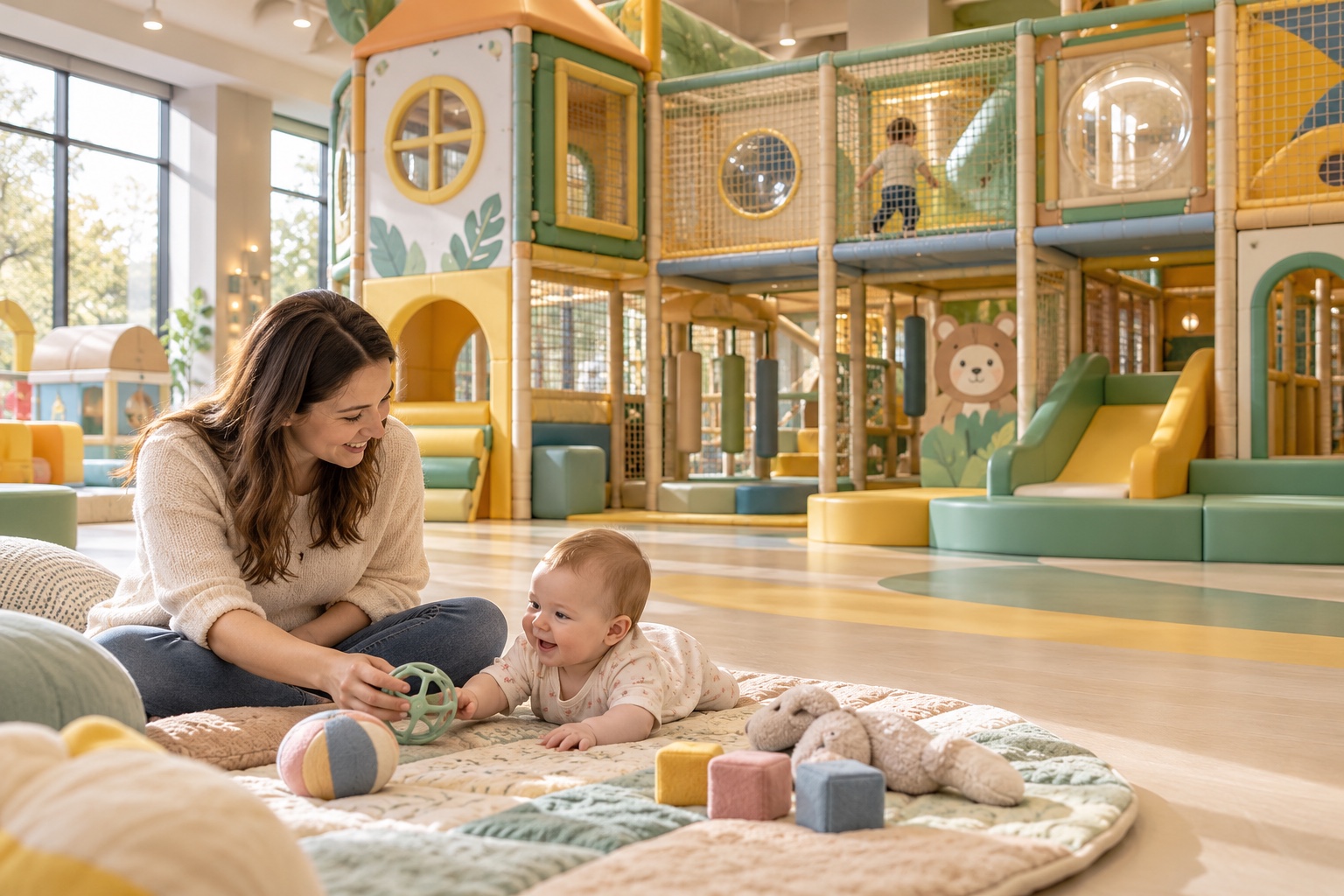
For a family venue, the distinction is especially important. A quiet, floor-level area where a caregiver stays close to a baby should not be treated as an entrance to a larger play structure. Mimuplay's Kids Space themed indoor play structures are specified for children aged 3–15. That product range should not be presented as infant equipment simply because a product listing uses the word “baby.”
Write down the ages and abilities the proposed area must accommodate. Then ask for the age range of each specific piece of equipment, rather than relying on a general label such as “kids,” “toddler,” or “family.” A child who is just beginning to explore at floor level has different access, balance, and supervision needs from a child using elevated platforms, passages, and slides.
For a commercial project, the age label is only the first check. The layout also needs to account for how children enter and leave, what they can reach or climb, how many people can use an area at once, and where an adult can observe or assist. A themed rendering can show the mood of a venue, but it cannot answer those practical questions on its own.
If a venue welcomes families with infants, plan a separate floor-level space around the caregiver's ability to remain nearby and see the child. Keep the route into that space clear of slide exits, fast-moving play, and the main flow of older children. The point is not to isolate families; it is to prevent incompatible activities from sharing the same path.
Sightlines matter as much as a physical boundary. From the caregiver's position, check whether walls, columns, padded structures, or turns hide any part of the area. From the operator's position, check how staff will notice crowding or a child moving between zones. Age signs help, but a real layout and supervision plan must support them.
Once the target users are old enough for a selected model, a connected indoor play structure can create a very different experience from a floor mat. Mimuplay's Kids Space range uses themed indoor structures with configurations that combine galvanized steel pipe framing, padded platforms, mesh-enclosed passages, slides, and decorative windows. The documented product specification lists a 48 mm diameter galvanized steel tube frame, 1.5 mm wall thickness, and 2 mm wall thickness for structures above two levels. Platforms combine multilayer board, cushioning, and PVC covering; other decorative panels may use PU covering.
Those details describe the documented range, not a promise that every pictured layout has the same components or that any component is appropriate for every child. Ask for the exact model drawing and component list. The entrance, the route through the structure, the slide landing, the padding, and the exit all need to make sense together in the actual room.
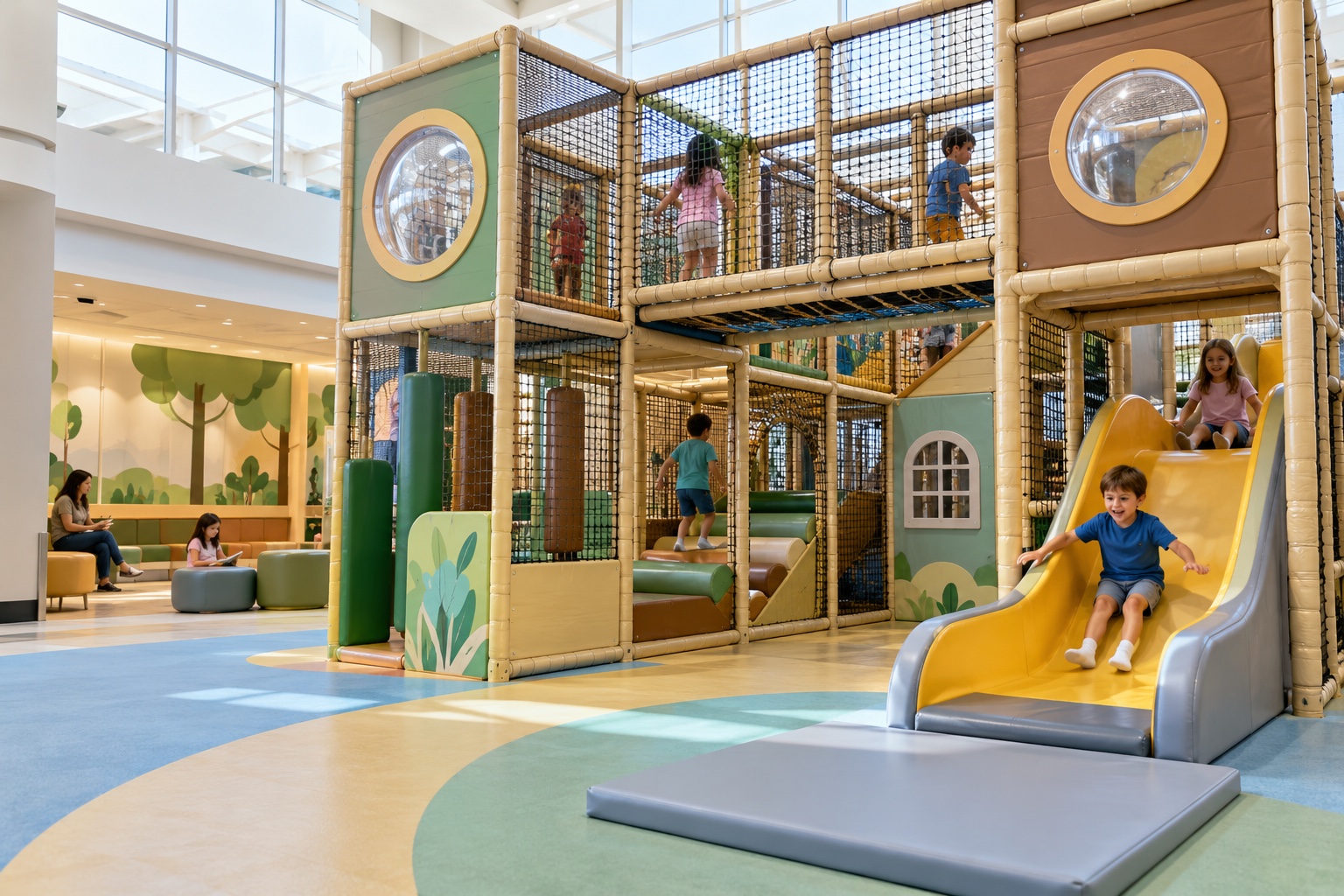
For a shopping mall, family entertainment center, restaurant, café, or educational venue, begin with a measured plan. Mark columns, usable floor area, ceiling height, exits, circulation, and places where caregivers and staff will stand. Then locate the quieter family area and the more active structure. Walk the likely paths: can a family reach the quiet area without crossing a slide landing? Can staff see both zones? Is there room to pause without blocking an entrance?
Review each proposed activity by age, movement, capacity, entry, exit, and nearby traffic. A low-looking feature can still be unsuitable for a particular child if it demands a grip, balance, or decision the child cannot manage. Likewise, adding foam does not by itself make an older-child structure suitable for infants.
Ask the supplier to identify the intended age range and the product category for the exact model. Request the dimensioned layout, component list, installation requirements, use limits, inspection and maintenance instructions, and the test or inspection documents that apply to that model and destination market. If the project includes an infant area, specify it separately and ask what products and operating arrangements are actually proposed for that area. Do not assume that documents for the older-child structure cover it.
For an existing venue, observe the routes during a busy period before adding equipment. A new structure may change sightlines, queues, access to exits, and the way children move between spaces. Staff rules, capacity controls, and routine checks should be updated to match the finished layout.
The useful meaning of “baby gym indoor” depends on the child and the setting. In a home, it may refer to a small infant activity setup. In a commercial venue, it may be used loosely for a much larger play environment. Keep those meanings separate, verify each product's stated users, and design the surrounding space for the people who will actually use it.
Learn How To Use A Fuel Pressure Gauge To Diagnose Pumps, Regulators, And Leaks In This Step-By-Step Guide.
Detayları görüntüle
Hafif Sabun Kullanarak Trambolini Nasıl Güvenli Bir Şekilde Temizleyeceğinizi Öğrenin. Kolay Kılavuzumuzla Çamaşır Suyundan Kaçının, Nazikçe Ovun ve Paslanmayı Önleyin.
Detayları görüntüle
Sabun Trambolini Mahveder mi? Hayır, Ancak Hafif Sabun Önemlidir. Doğru Temizlik Adımlarını Öğrenin ve Riskleri Anlayın.
Detayları görüntüle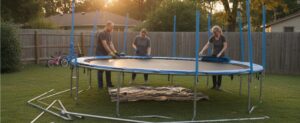
Trambolini Güvenli Bir Şekilde Sökmeyi Öğrenin. Ağı Sökün, Yayları Açın ve Çerçeveyi Adım Adım Sökün.
Detayları görüntüle