 Mimu Play


ürün arama
Kapalı Oyun AlanıNinja SavaşçısıAçık Oyun AlanıTrambolin
arama
An obstacle course can look complete in a rendering. A climbing wall, a net, balance obstacles, and a finish line seem to tell the whole story. In use, the harder questions are less photogenic: where people wait, how they pass one another, what happens when someone stops midway, and whether staff can see a problem in time. A workable adult indoor obstacle course starts with the participant's route, not a shopping list of obstacles.
A casual group outing, a timed challenge, and a coached training session place different demands on the same space. Before choosing equipment, describe the intended users, their likely range of ability and experience, the expected number of simultaneous participants, and how each session will be supervised. Those decisions shape the need for easier alternatives, release intervals, rest points, and exits along the course.
An attractive children's play structure is not evidence of adult suitability. Mimuplay's documented Kids Space indoor play structures are intended for children aged 3 to 15. Their padded, modular visual language may inspire a design, but an adult application needs its own review of loads, dimensions, anchoring, fall protection, and test evidence for the actual configuration. A child product's report should not be presented as proof for an adult course.
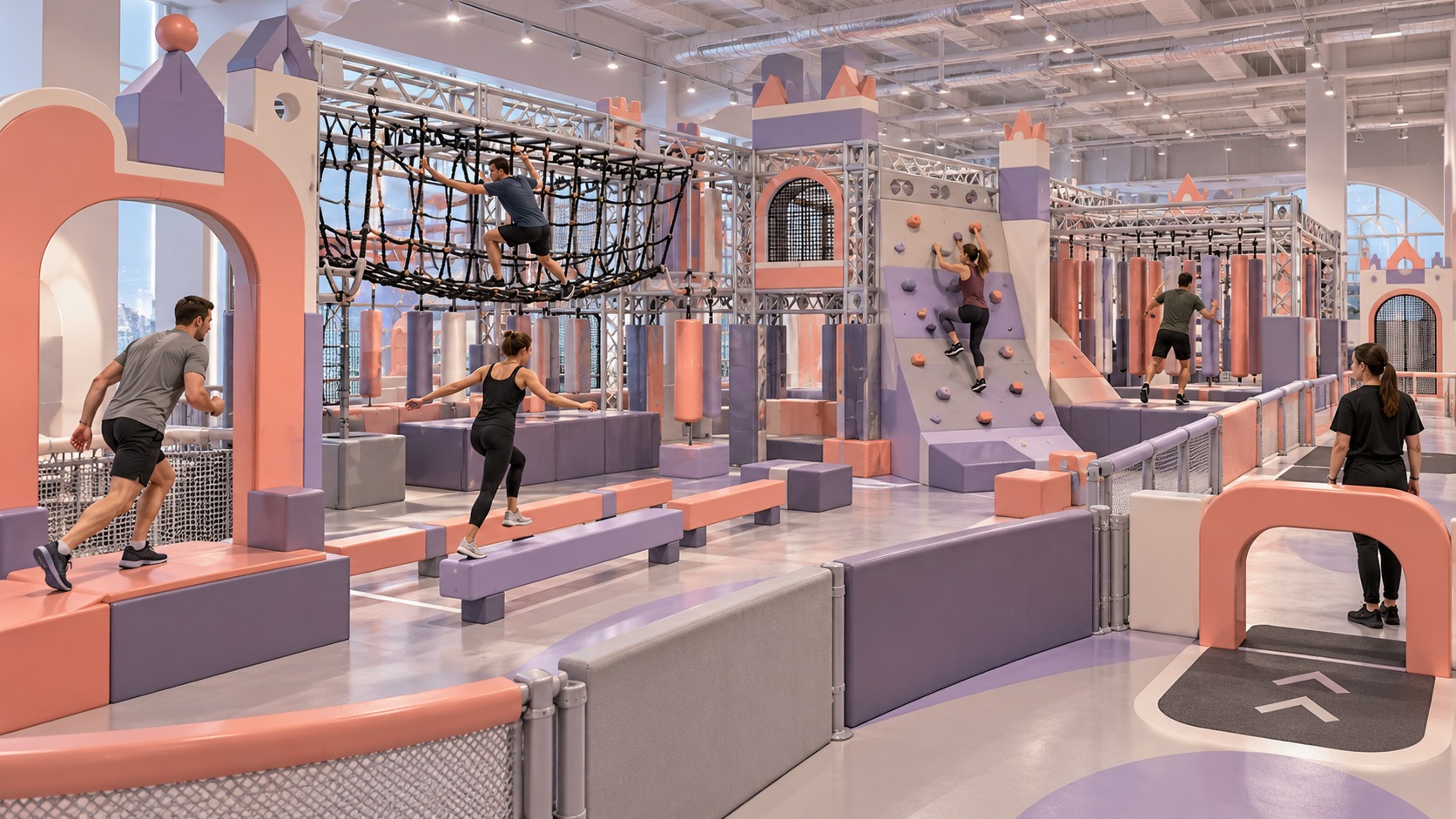
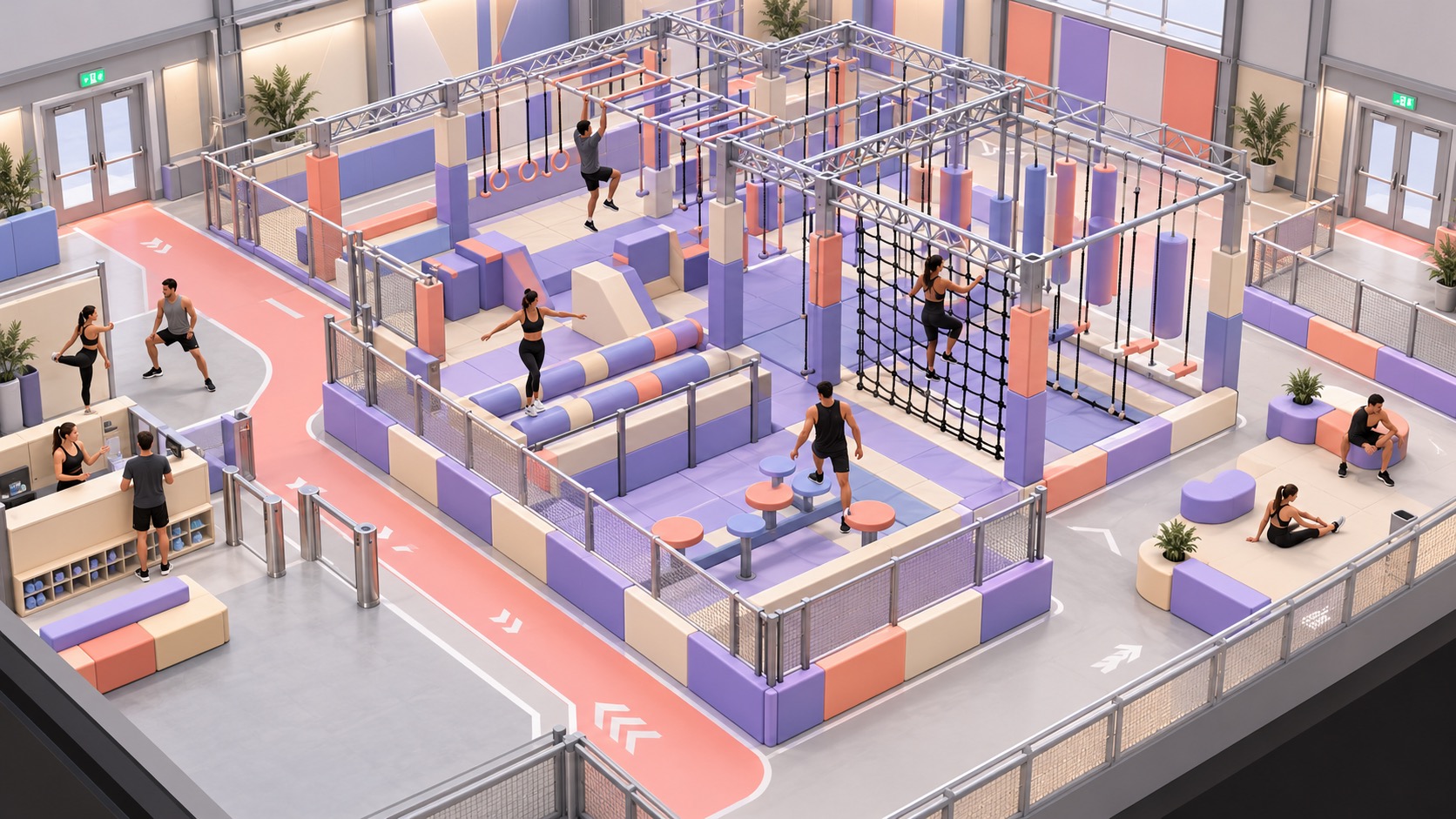
Start with a measured site plan. Mark the building edges, columns, beams, clear height, entrances, exits, circulation, and areas reserved for access to building equipment. Then place the activities. The entry should support a clear briefing and controlled release. Between obstacles, allow for waiting and movement. The finish should not send participants into the path of the next group.
Look beyond the line drawn between obstacles. A climber's fall path, a swinging user's reach, and a main walkway can conflict even when each obstacle fits on the floor plan. Participants also need a way to skip, return, or leave if they become tired or uncomfortable. Where a net passage, tunnel, or turn hides people from view, plan capacity control, exit observation, and emergency access from the start.
Balance, grip, stepping, traversing, and climbing create variety without every section becoming taller or harder. Pace, effort, and coordination with others can change the challenge as much as elevation does. For each section, ask: How does a person enter? How do they leave after completing or declining it? Where could they land if they lose their grip or footing?
Padding should be specified for the real activity rather than chosen by appearance. Review the intended footholds, fall paths, hard parts below or beside them, and the full use area. Rope or net elements call for checks of connections, anchoring, wear, and openings. Climbing elements need a review of grips, footholds, adjacent circulation, and the landing surface. Evidence for one layout or age group cannot automatically cover a redesigned adult route.
Give each prospective supplier the same site plan, intended users, target capacity, and activity list. Ask for a layout, component and material schedule, entry and exit details, foundation and anchoring requirements, padding and guarding plan, sightline review, maintenance instructions, and test or inspection documents relevant to the actual configuration and destination market. Check that each document identifies its model or sample, standard version, date, scope, and result. A certificate image by itself cannot validate every customized arrangement.
Compare the scope of the quotes as carefully as the equipment. Design, freight, site works, installation, inspection, training, spare parts, and ongoing maintenance may sit inside or outside the quoted price. Color and themed decoration matter to the visitor experience, but they do not resolve structural questions or define who is responsible for delivery and upkeep.
After installation, follow the route as a participant, a staff member, and an emergency responder. Check dimensions and clearance, anchoring, connections, landing surfaces, entry and exit points, sightlines, signs, and building interfaces against the approved drawings. Test the intended release and queue arrangements. Staff should be able to manage capacity by area, keep exits clear, and respond to an incident without improvising access.
Once the course is open, inspect specific obstacles and components rather than relying on a general visual sweep. Loose fittings, tears, displaced padding, declining cushioning, or departures from the approved configuration call for the affected area to be closed, repaired, and checked again before reopening. If the obstacles, materials, layout, or intended users change, review whether the original evidence still applies. A durable course is one with clear use limits, practical operating rules, and records that show what was checked and fixed.

Trambolin Satın Almadan Önce Güvenlik Özellikleri ve Boyutundan Ağırlık Sınırları ve Dayanıklılığa Kadar Bilmeniz Gerekenleri Öğrenin.
Detayları görüntüle
Plan An Adventure Playground Indoor With Clear Play Routes, Age-Aware Zones, Safe Exits, And Practical Supervision.
Detayları görüntüle
Trambolin Limitleri Dibe Vurmayı Önlemek İçin Dinamik Yükü Hesaplar. Yayların ve Çerçevelerin Güvenlik İçin Nasıl Test Edildiğini Öğrenin.
Detayları görüntüle
Plan An Adventure Indoor Playground With Clear Age Zones, Activity Routes, Sightlines, And Maintenance Checks.
Detayları görüntüle