 Mimu Play









product search
Indoor PlaygroundNinja WarriorOutdoor PlaygroundTrampoline
search
Yes, jumping on a trampoline is an exceptionally effective full-body exercise that is often more efficient than running. Rebounding is up to 68% more efficient than jogging, meaning that 10 minutes of bouncing can provide the same cardiovascular benefits as 30 minutes of running.
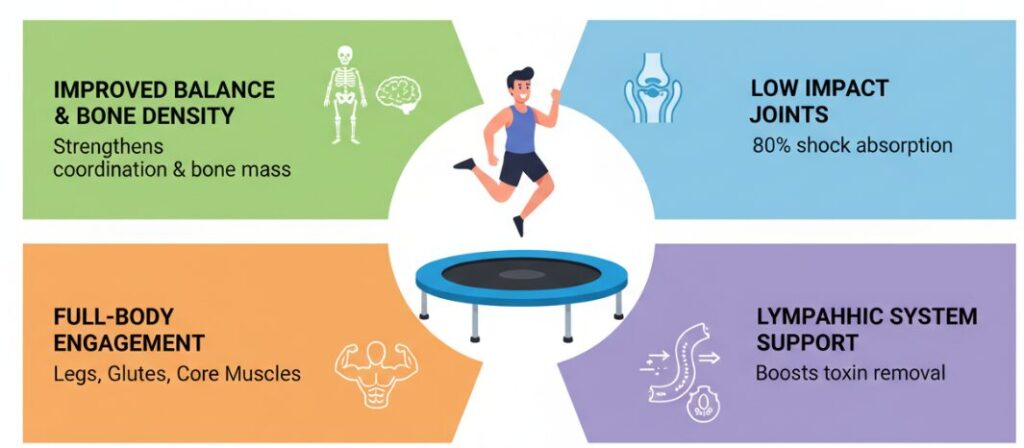
The constant need to stabilize strengthens bone density and improves coordination and vestibular function.
The trampoline’s mat absorbs up to 80% of the shock, making it gentler on your knees and ankles compared to running on hard surfaces.
Discover endless fun and spark imagination! Our indoor playground products create a safe, exciting paradise for children. Experience boundless joy now!
Embrace adventure and fresh air! Our outdoor playground products offer thrilling, safe experiences for kids to explore, play, and grow. Unleash the fun outside!
It engages every muscle group, specifically strengthening your legs, glutes, and deep core muscles with every bounce.
The G-force created by jumping stimulates lymph flow, helping the body flush out toxins and waste more effectively.
Some people say that trampoline is more efficient than running, which is mainly due to the cooperation of gravity and acceleration. NASA has done relevant tests, which are as accurate as the engine data we measured on the bench: the efficiency of trampoline is that it can mobilize the whole body without bringing too much mechanical load to the body like endurance running.
When you run, you are mainly tossing your legs and cardiovascular system. But on a trampoline, the situation is different. You are using three forces: acceleration, deceleration and gravity. This combination means that your body is operating at full capacity at the cellular level. According to my observation, a 10-minute jump can achieve the heart rate and metabolic output of a 30-minute jog on a treadmill or on the road. For people who want to save time and want to get heart and lung maintenance, this is a perfect quick repair plan.
Most of the time, people can’t keep exercising because of joint pain. This is the same as the car, has been running on the hard road, the suspension system will sooner or later. The traditional running is where the foot board repeatedly hits the ground and hits it hard. The trampoline design, just to solve this problem.
The bouncing mattress is actually a huge shock absorber. When you fall, the cushion and spring can absorb about 80% of the impact. If you were running on concrete, these forces would have been transmitted directly to your ankles, knees, hips and spine. So, if you want high-intensity training, but don’t want to withstand the bumps like that old hard tail frame, trampoline is the ideal choice. It allows you to pull up the heart and lung speed at the same time, keep the joint health, avoid the kind of hard impact caused by the risk of injury.
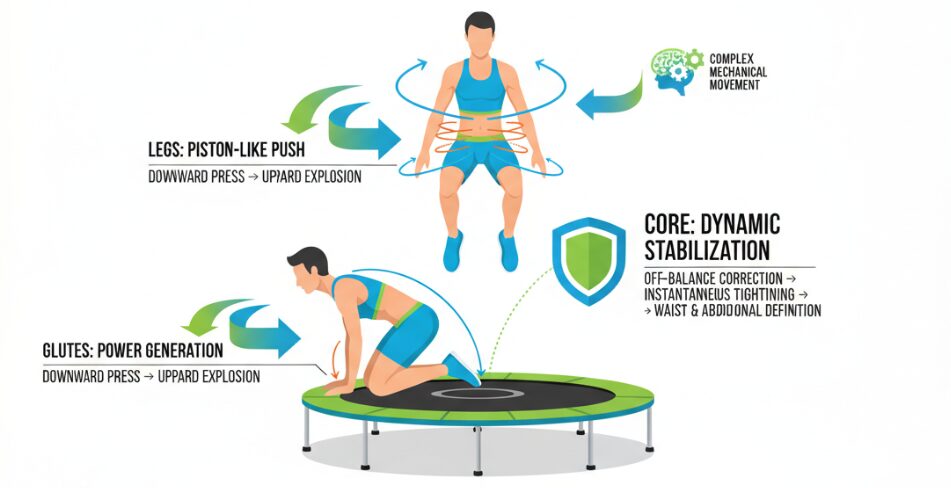
Although the trampoline is just jumping up and down, it is actually a complex mechanical movement that requires the whole body muscles to work together. It’s not like those fixed instruments that only practice one muscle, and trampolines require all parts of your body to work in sync.
Trampoline has a benefit that other aerobic exercises can hardly match, and that is the effect on the lymphatic system. You know, the cardiovascular system has a heart as a pump, but the lymphatic system does not have a pump. It relies entirely on muscle contraction and body movement to circulate body fluids and expel metabolic waste.
This vertical movement up and down creates a pump-like effect. At the lowest point of the jump, gravity (G-force) increases and the lymphatic valve opens; at the highest point (weightlessness), the valve closes. This shock greatly speeds up lymph flow, which is like a thorough cleaning of the body’s pipes, helping the immune system work more efficiently, and allowing you to recover faster from fatigue or minor ailments.
Finally, trampolines are very effective at strengthening the “structural rigidity” of the body-that is, bone density and balance.
Author:Dex
I am a Certified Personal Trainer and fitness writer specializing in low-impact, functional training. I am passionate about helping people understand the science behind efficient movement, focusing on exercises that boost cardiovascular health and bone density without compromising joint safety.