 Mimu Play








product search
Indoor PlaygroundNinja WarriorOutdoor PlaygroundTrampoline
search

In order to prevent the trampoline from being blown away by the wind, it is common practice to place sandbags, concrete blocks or water bags on each U-shaped bracket leg. If you want to pursue ultimate safety, my experience is to use a spiral ground anchor with a tension belt, or to smash heavy U-shaped windproof ground nails directly into the soil around the bracket leg. In addition, in extreme weather, removing the protective net and cover can also effectively reduce lift.
The following are currently recognized as the most effective fixed solutions in the industry:
I usually recommend this scheme for customers who do not want to drill holes in the terrace or do not want to destroy the lawn.
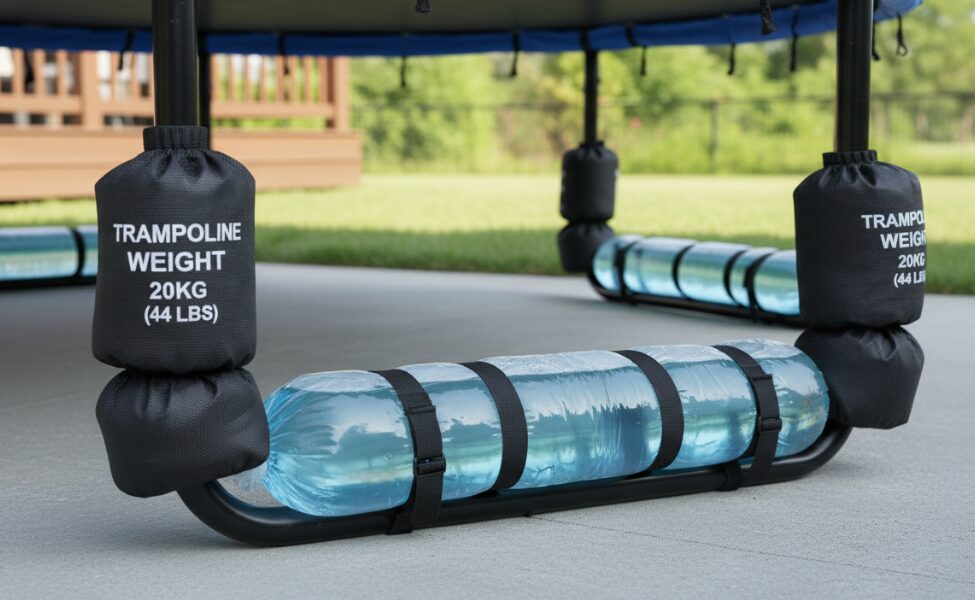
How to do it: Press one or two 20kg (about 44 pounds) sandbags directly on each U-shaped foot.
Why it works: This weight provides instant stability. There are also special weight bags specially wrapped on the bracket tube on the market, or go directly to the hardware store to buy heavy sandbags. This is the best solution when using trampolines on concrete floors or wooden decks.
If the trampoline is to be placed on the lawn, you can use Auger-Style Anchors.
Mechanism: This ground anchor has a corkscrew-like spiral pattern that can be screwed deep into the soil.
Connection mode: After the ground anchor is fixed, the anchor point is connected with the trampoline frame using an industrial-grade tension belt.
Judgment: Because they are “screwed” into the ground, they are extremely difficult to pull out than in-line ground nails.
If you have a limited budget or need to install quickly, U-shaped steel nails are a good alternative.
Installation: This ground nail is a huge “U” shape. You just need to straddle it on the horizontal crossbar of the stand and plunk it deep into the ground with a sledgehammer.
Experts suggest that at least two nails should be used for each leg, otherwise the frame may still be displaced in a slight gust.
Discover endless fun and spark imagination! Our indoor playground products create a safe, exciting paradise for children. Experience boundless joy now!
Embrace adventure and fresh air! Our outdoor playground products offer thrilling, safe experiences for kids to explore, play, and grow. Unleash the fun outside!
Sometimes, we can use the existing environment:
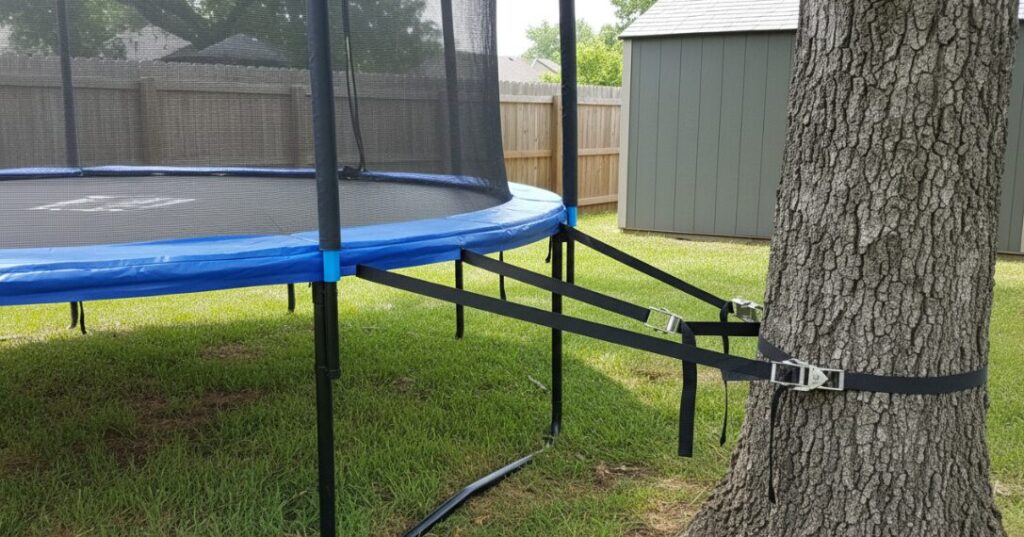
Tension straps to connect fixtures: If the trampoline is close to a strong fence, tree or warehouse, heavy tension straps can be used to directly tie the frame to these stable objects. This is very effective in preventing the trampoline from overturning.
Concrete block: directly on the bracket legs on the bulky hollow brick or concrete block. This is a relatively “rough” method. Although it works well, please make sure that these bricks are firmly placed and don’t let them slide down and become stumbling blocks.
It must be admitted that sometimes no amount of pressure can defeat the forces of nature. Before hurricanes or extreme storms, you must reduce the so-called “sail effect”:
Remove the safety net: The protective net is like a large sail, which will catch the wind and generate huge lift. According to my field investigation, removing the net is the most effective step to prevent the trampoline from taking off.
Remove the jumping mat: if time permits, remove the jumping mat. Without the wind receiving surface, the wind will pass directly through the frame.
Complete demolition: In the face of a hurricane warning issued by the weather station, the only 100 per cent safety plan is to dismantle the entire unit and lock it in the garage.
The weight distribution must be even: never press the weight on one side only. If your trampoline has 4 U-shaped legs, please make sure that the counterweights on all legs are exactly the same, otherwise uneven pressure is more likely to cause rollover.
According to the ground selection scheme:
Regular “inspection”: don’t think everything will be fine if you install it. The ground nails will loosen and the sandbags will be damaged by the sun and rain. I recommend that every few months, or before the storm season, always check that all the connection points are still tight.
By following these methods, you can enjoy trampoline without worrying about your equipment missing every windy night.
Author: James Thompson
“Hi, I’m an outdoor equipment specialist with a focus on backyard safety and maintenance. Over the years, I’ve helped countless families secure their play areas against unpredictable weather. I wrote this guide to share my hands-on experience on how to weigh down a trampoline effectively, ensuring your investment stays grounded and your family stays safe, even during the windiest seasons.”

Discover the startup costs of an indoor playground, including equipment, rent, permits, and key investment factors.
View details
Compare Rectangle Vs. Round Trampolines, Their Bounce, Safety, And Space Needs To Help You Choose The Perfect One.
View details
The first step in designing an indoor playground is to divide it into different age groups, as children at different stages of development vary greatly in physical development, cognitive abilities, and interests. Our indoor playground designs tai...
View details
Learn How To Transport A Trampoline Safely. Guide On Moving It Assembled On Trailers Or Disassembled For Highway Travel.
View detailsThis will close in 0 seconds