 Juego Mimu









búsqueda de productos
Parque infantil cubiertoGuerrero NinjaParque infantil al aire libreTrampolín
busque en
The Jungle Gym is visually presented as a multi-dimensional climbing matrix, usually composed of interlocking galvanized steel pipes, cedar wood or high-density nylon ropes, forming geometric forms such as hemispheres, multi-layer towers or abstract meshes. If your understanding of “what does the climbing frame look like” still stays in the rusty and hot metal pipes on the playground in the 1980 s, modern amusement landscape architecture will definitely subvert your imagination. Today’s top design has long been the visual focus of the backyard, a perfect blend of structural engineering and landscape aesthetics. Selecting the wrong appearance configuration or material will directly turn the backyard you spent heavily on upgrading into a crowded, dazzling waste pile. Next, I will directly disassemble the real visual effects of different climbing frames, their occupation logic of physical space, and which drawings really match the terrain of your home.
Past climbing frames were lifeless, but today’s have long evolved into dynamic, multi-sensory modular structures. In the past ten years, everyone’s aesthetic has changed, and they have become more and more fond of designs that are close to nature or follow minimalist geometric lines. You no longer have to sacrifice the beauty of the entire yard to give your child a big outdoor toy. Today’s high-end manufacturers use fade-resistant powder-coated steel, as well as weather-treated wood (this wood will naturally weather into a high-grade gray tone, or maintain a full dyeing effect). In this way, the climbing frame becomes the 1 piece of serious landscape art, rather than cheap plastic thrown on the lawn.
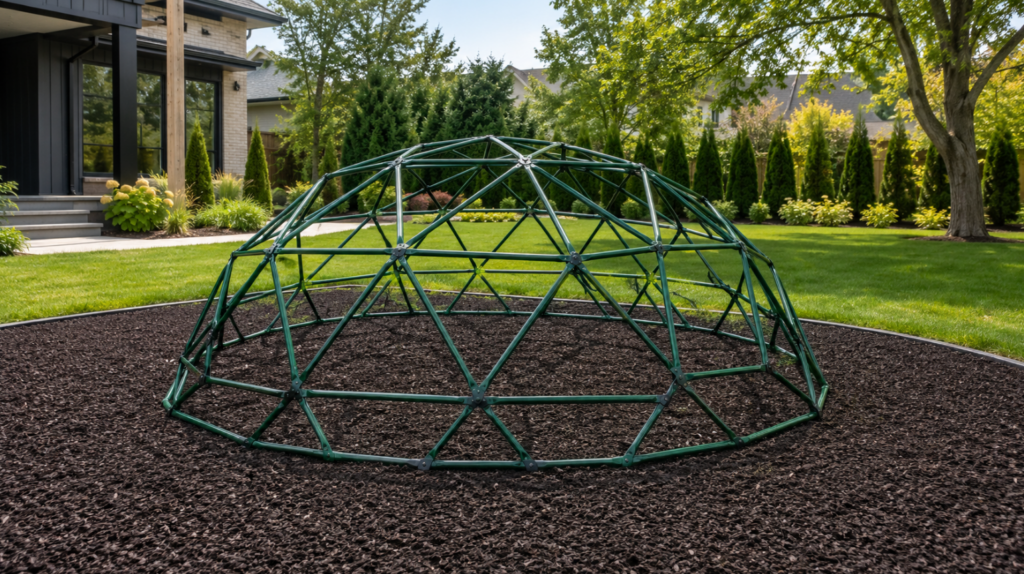
This dome is made up of 1 nesting triangles, looking like a visually extremely transparent hemisphere with a very low chassis. You can recognize it at a glance: there is no 1 support column in the middle, and the floor area looks light and refreshing. Because the chassis is low and there are no physical walls, it does not block the view of the yard at all. This style is perfect for a minimalism or modern courtyard. The coating will generally choose earth colors (such as green, brown), or choose some high saturation base colors according to the visual effect you want to express.
The cedar tower looked like 1 wooden fortress rising from the ground, tied to the ground by a few thick wooden pillars. This structure is definitely the “overlord” in the vertical space of the yard “. From a visual point of view, they are very solid buildings, usually with wooden slatted roofs, canvas awnings, and accessories such as slides or horizontal bars. Cedar is naturally wild with woodland or traditional suburban backyards, with a “pro-nature ecological” tone. In addition, if the anti-ultraviolet paint is not regularly brushed, cedar wood will slowly precipitate 1 kinds of silver-gray old paste after being used for a long time.
This climbing structure, created entirely by tensioning ropes, looks just like a giant spider web suspended in midair. It is typically secured between a central steel column or several wooden anchor points. This is undoubtedly the most modern and avant-garde design currently available on the market. Because it uses high-tensile synthetic ropes that are exceptionally thin, it appears almost invisible when viewed from a distance. Landscape architects are particularly fond of this type, as it provides an expansive climbing area without leaving a massive, dark structure in the yard that blocks out the light.
To put climbing frames in the yard, the space must be strictly divided, otherwise the beauty and safety will be blinded. When our team is designing, we will apply a “three-zone blueprint” to ensure that the equipment and the yard fit perfectly:
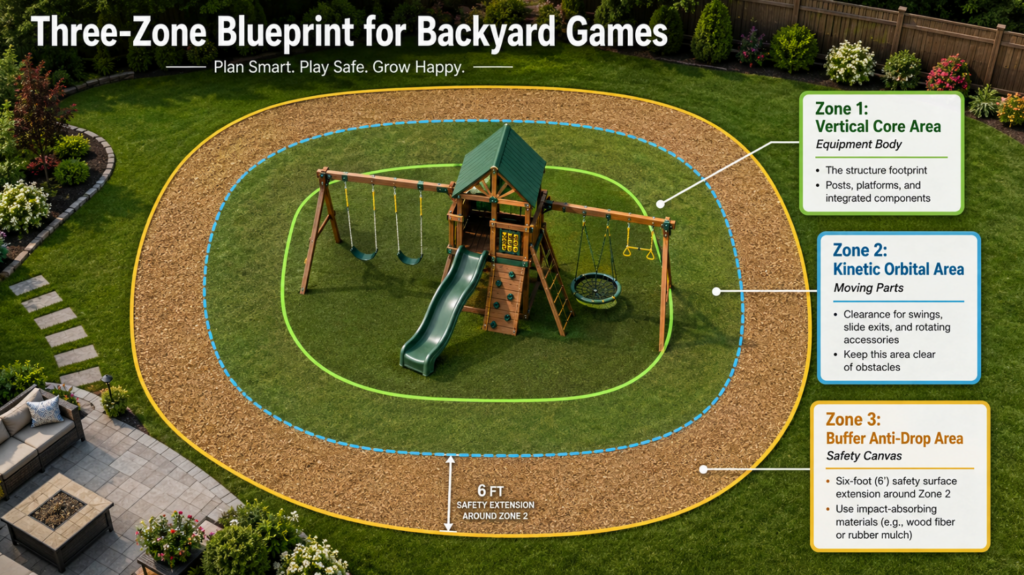
One of the most common “fatal injuries” made by buyers is to fall into the trap of “occupying an area of illusion. When advertising, businesses usually only mark the size of the device itself (such as a 10-foot x 10-foot wooden tower), which leads many people to naively think that everything will be fine as long as a 12-foot x 12-foot corner is vacated in the yard.
This is a big mistake! The safety specification requires that a clearance area of at least 6 feet be set aside on the periphery of the equipment (that is, the buffer anti-drop zone mentioned earlier). So, a seemingly 10 × 10 compact climbing frame actually requires you to carve out a full 22 × 22 feet of exclusive physical and visual space. If a large cedar tower is forced into a narrow dead corner without even leaving a buffer zone, it will not only violate ASTM safety standards, but also make the whole yard look extremely depressing. 1, it is planned to overturn. Remember: always measure your yard according to the “overall area of the fall buffer”, don’t just look at the size of the equipment on the box.
When installing amusement facilities on potholes or slopes, the visual geometry of the equipment will completely change. Last spring, our design team took over a wooded suburban backyard with a 15-degree slope.
Customers 1 started to call for that classic metal dome. We gave it no on the spot. You know, the dome must be placed on absolutely flat ground. Hard to cover the slope, not only looks awkward, the structure itself is also very dangerous. Finally, we have customized a set of terraced modular cedar towers for our customers. We used an extended 6 × 6 anchor post on the downhill side and stuck it into a deep concrete base. The result is amazing: the whole climbing frame is like a natural suspension on the slope. We also deliberately adjusted the wood paint to the same color as the surrounding oak trees, and finally showed 1 kind of architectural texture like the original house, not only retained 100 percent of the yard’s available game space, but also did not cause any soil erosion.
The best way to understand what a climbing frame looks like is to compare them in a real environment.
| Design Type | Visual Profile | Best Yard Terrain | Space Requirement | Maintenance Level |
|---|---|---|---|---|
| Metal Geodesic Dome | Low-profile, minimalist, and visually transparent | Perfectly flat ground only | Moderate | Low — inspect periodically for rust |
| Cedar Modular Tower | Vertical, solid, and architectural | Adaptable to slight slopes | Muy alto | High — requires yearly staining and sealing |
| Tension Rope Matrix | Modern, avant-garde, and visually “invisible” | Flat to mildly uneven terrain | Alta | Medium — requires routine cable-tension checks |
| Plastic Toddler Gym | Bulky, colorful, and temporary-looking | Flat patios or lawns | Bajo | Low — cleaning is simple, but UV fading may occur |
What’s the difference between a jungle gym and a large playset?
The core concept of a jungle gym is very clear: it consists purely of interconnected climbing components such as metal bars, domes, or ropes, with the primary focus on navigating through the space. A playset, on the other hand, is a more eclectic mix, typically featuring a platform, a slide, and a set of swings, with climbing often serving only as a secondary feature.
What materials are modern jungle gyms made of?
Today’s high-end jungle gyms are generally made of rust-resistant galvanized powder-coated steel, high-quality, corrosion-resistant woods like cedar or redwood, combined with high-density polyethylene (HDPE) plastic or steel-core synthetic ropes for the netting sections.
Do outdoor climbing structures need to be anchored to the ground?
Absolutely. No matter how stable they may look, all climbing structures must be securely anchored. Metal domes require ground stakes, while tall wooden towers must be secured with heavy-duty screw-in ground anchors or set directly into a concrete foundation to prevent the risk of tipping over during high winds or when children are playing energetically.
Can a climbing frame be installed on artificial turf?
Yes, it can, but a layer of artificial turf alone is not enough. To meet safety standards and provide effective fall protection, you must lay specialized playground shock-absorbing padding underneath the artificial turf.
How much yard space does a climbing dome actually require?
Simply add 12 feet to the diameter of the dome, as you’ll need to leave a required 6-foot safety buffer zone all around it. For example, a 10-foot-wide dome will actually occupy a circular area with a 22-foot diameter in your yard.
How long will a climbing dome last?
A high-quality galvanized steel dome or a well-maintained cedar tower will easily last 15 to 20 years. However, if the wood isn’t maintained, it may rot in less than 5 years; as for those cheap metal tubes with thin walls, they’ll rust through from the inside in no time in damp conditions.
Aprenda a nivelar una cama elástica en un terreno irregular. Utilice bloques de nivelación o cavar zanjas para fijar pendientes y garantizar la seguridad.
Ver detalles
Plan An Active Indoor Park Around Age Groups, Activity Flow, Sightlines, Capacity, And Practical Daily Operation.
Ver detalles
Discover What Is A Jungle Gym. Explore Top Playground Uses, Key CSS Benefits, And Hidden Safety Traps To Avoid.
Ver detalles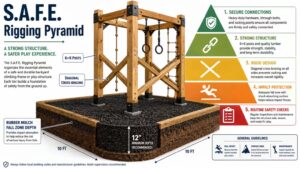
Discover How To Build A Safe Ninja Warrior Obstacle Course With Pro Hardware And Our Expert Rigging Guide.
Ver detalles