 Mimu Play









product search
Indoor PlaygroundNinja WarriorOutdoor PlaygroundTrampoline
search
Yes, you can leave your trampoline out in the winter, provided you properly winterize it to prevent damage from snow, ice, and wind. While high-quality frames are designed to withstand the elements, the soft components are vulnerable to freezing temperatures. To ensure its longevity and save on costly repairs, follow these essential steps:
By taking these preparatory steps, you can safely keep your trampoline frame outdoors all year round while maintaining its safety and bounce for the spring.
Although most trampolines today use rust-proof galvanized steel frames, those “soft components”—jumping cloth, safety nets and PVC spring covers—are not invincible. Extremely low temperatures, combined with the static weight of snow, can directly undermine the structural strength of these components. The way you handle these components directly determines whether your trampoline can play for 3 years or 10 years.
The most effective way is to remove the parts that are most afraid of the cold and put them away.
Put these things into a dry garage or basement, can avoid the “freeze-thaw cycle” on the material repeatedly ravaged.
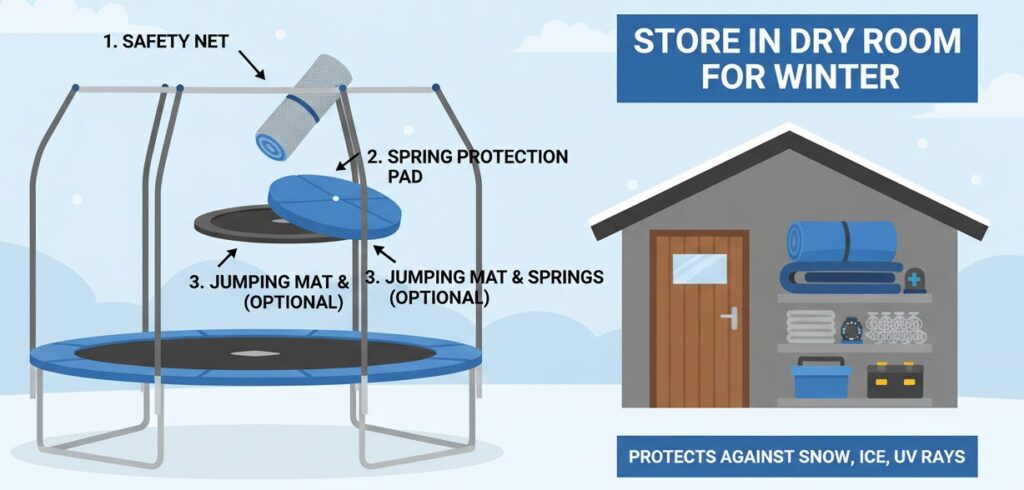
If you decide to leave the jump cloth on the frame, the rain cover is your second line of defense. A high-quality cover can perform the following functions:
Here is a detail: make sure that the cover is dedicated to the trampoline and must have a drainage hole in the center. If there is no hole, the water is fully pressed in the middle, and the spring will fatigue sooner or later.
Snow is probably the biggest threat to trampolines in winter. One cubic feet of wet snow can weigh more than 20 pounds.
My advice is: be sure to use a soft broom when clearing snow. Never use a shovel, which 1 accidentally puncture the rust layer of the jumping cloth or scratch frame.
Winter storms are usually accompanied by high velocity winds. Because of the large surface area of the trampoline, it is like a huge sail that can easily be blown off the ground by the wind.
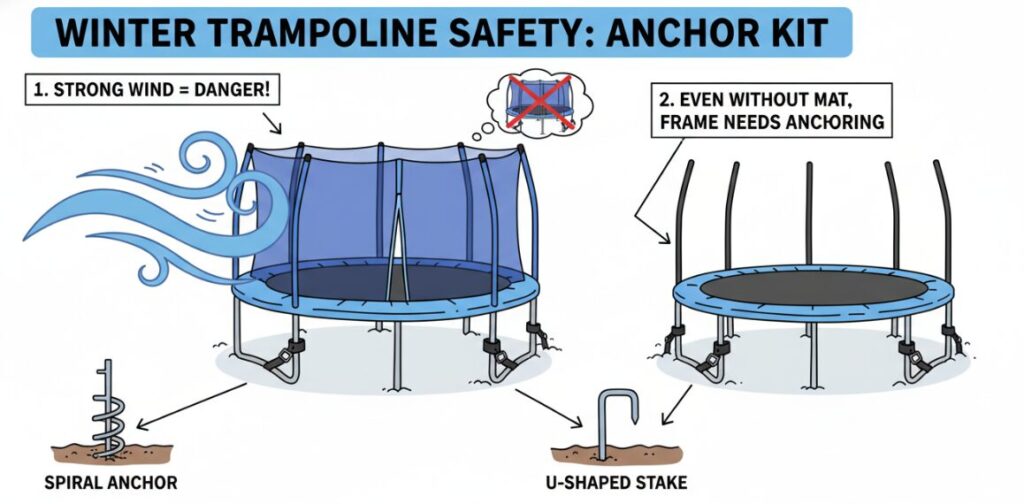
The metal frame is the skeleton of the trampoline. Before the first frost comes, it is best to do a quick check.
Author:Alex
“As a backyard gear enthusiast and maintenance expert, I’ve seen firsthand how a single harsh winter can take years off the life of a trampoline. I believe that with just a little bit of seasonal preparation, any high-quality frame can withstand the elements and provide a decade of fun.”