 Mimu Play








product search
Indoor PlaygroundNinja WarriorOutdoor PlaygroundTrampoline
search

First of all, what is the maximum load? Quite simply, it is the “upper limit” weight that the trampoline can withstand when designed to ensure safety and structural integrity. Please note that the “upper limit” here is very critical, because it is directly related to the safety of the player.
In particular, it should be emphasized that this maximum load-bearing usually refers to total weight, not single weight. Many people will mistakenly think that as long as a single person does not exceed the weight limit, but if three or five people go up together, the total weight can break through the limit in minutes. Moreover, even if the product is marked with a single load, you should take into account the impact of multiple people jumping on it. You think, everyone knows that trampolines don’t make you stand still, right?
This leads to a more professional concept: the difference between “static load-bearing” and “dynamic load-bearing”. Static load-bearing is the weight that the trampoline can bear when it is not moving at all. But this is not true in actual use! Jumping produces an impact that is several times the weight, and that’s what we really need to focus on-dynamic weight bearing.
A 100kg person, when jumping up, the instantaneous impact on the trampoline may be far more than 200kg, or even more. So, don’t just look at the numbers, understand the physics behind it.
Cause 1:
Security risks, this is a top priority! Once overweight, the structure of the trampoline can face disastrous consequences. I have seen too many cases, where the frame is bent and deformed, the spring falls off, and the jumping pad is cracked. In severe cases, the frame breaks directly, causing the user to fall from a height, which may even cause fractures, spinal injuries, and even permanent disabilities.
This is not alarmist talk, it is a bloody lesson. Once the equipment fails, your children, your friends or yourself may be injured.
2 reasons:
Trampoline life, with money bags are also related. Any product has its design life, and trampolines are no exception. If long-term overweight use, will undoubtedly greatly accelerate the trampoline wear.
The spring will fatigue faster, the fiber structure of the jumping pad will age in advance, and the metal fatigue of the frame will also increase. As a result, you may have to scrap the trampoline you just bought, or replace parts frequently, which is not a small expense. Therefore, for the sake of safety and for the sake of your investment, please be sure to abide by the load-bearing limit.
First of all, to ensure that everyone has a good time and safety, the first step is to find out how much weight your trampoline can bear.
If all the above methods have been tried, or can’t they be found? Then don’t hesitate to contact the manufacturer‘s customer service directly! They have detailed data on all the products. If you make a phone call or send an email, you will have a clear understanding, right?
After finding the weight-bearing number, the next step is to understand it.
Emphasis on:
Even if your trampoline is still within the total load-bearing range, it is strongly recommended to limit the number of people who use it at the same time, especially if there are children at home! This is not only a load bearing problem, more important is to avoid the collision risk.
Think about it, if two children jump up at the same time in the middle of the trampoline, they are likely to hit each other when they land, which can cause injuries more often than exceeding the load-bearing range. My experience is that children play trampoline, it is best to come one by one, take turns to jump, or at least ensure enough space so that they will not interfere with each other. Safety first, always right!
Choosing a trampoline, weight is definitely the top priority, which is related to safety and more related to your bouncing experience.
Let’s think about who can jump. This is the first and most important step.
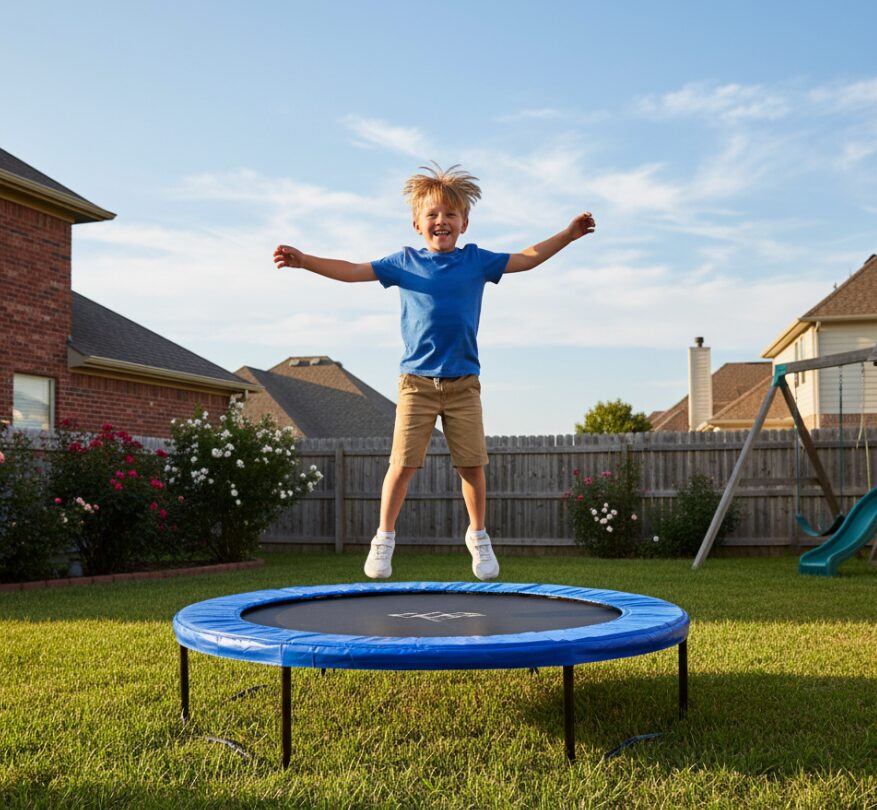
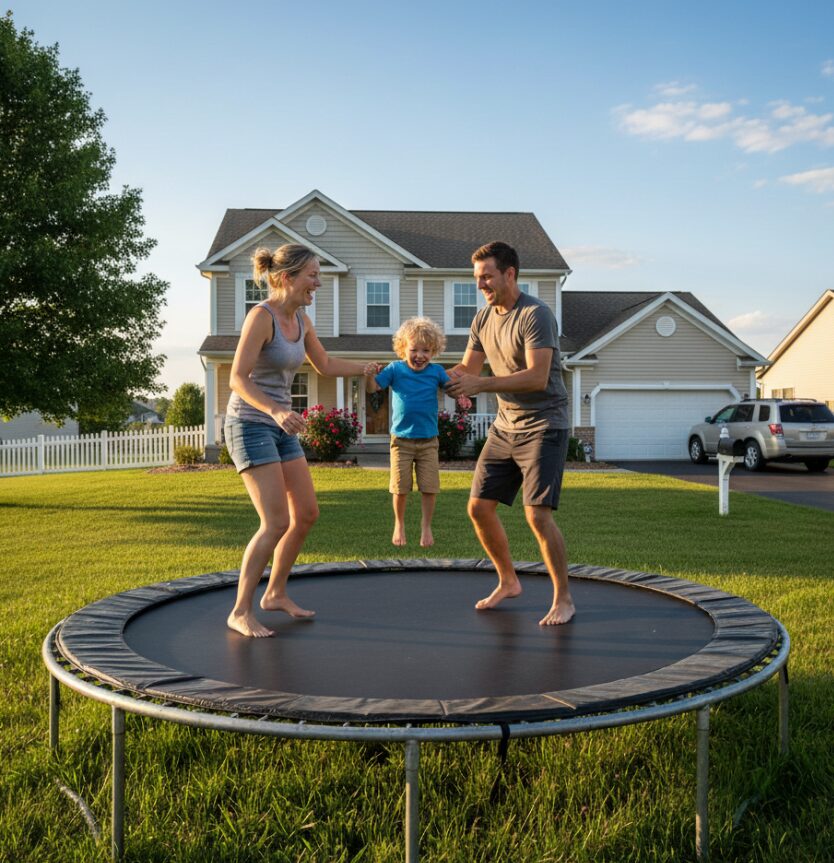

This point, I must knock on the blackboard to emphasize! Many newbies ignore it. My suggestion is that when buying, be sure to choose a trampoline with a load-bearing capacity slightly higher than your estimated total weight. Don’t ask why, this is a lesson in blood and tears! You think, when you jump up, it is not a static weight, the impact is great, coupled with some uncertain factors, such as multiple people jumping at the same time (although not recommended), or improper posture, will instantly increase the pressure on the trampoline.
Generally speaking, people will think that the load-bearing capacity of large-size trampolines is definitely higher. Well, in most cases, this is true. Do you want to ah, the area is larger, the force is more uniform. But! Nor is it absolute. The key also depends on the structural design and material of the trampoline.
Some small size trampoline, if the design is very clever, the material is very solid, its load-bearing capacity may not be worse than some large size. Therefore, don’t just look at the size, but also look at the brand and parameters, and ask more knowledgeable people.
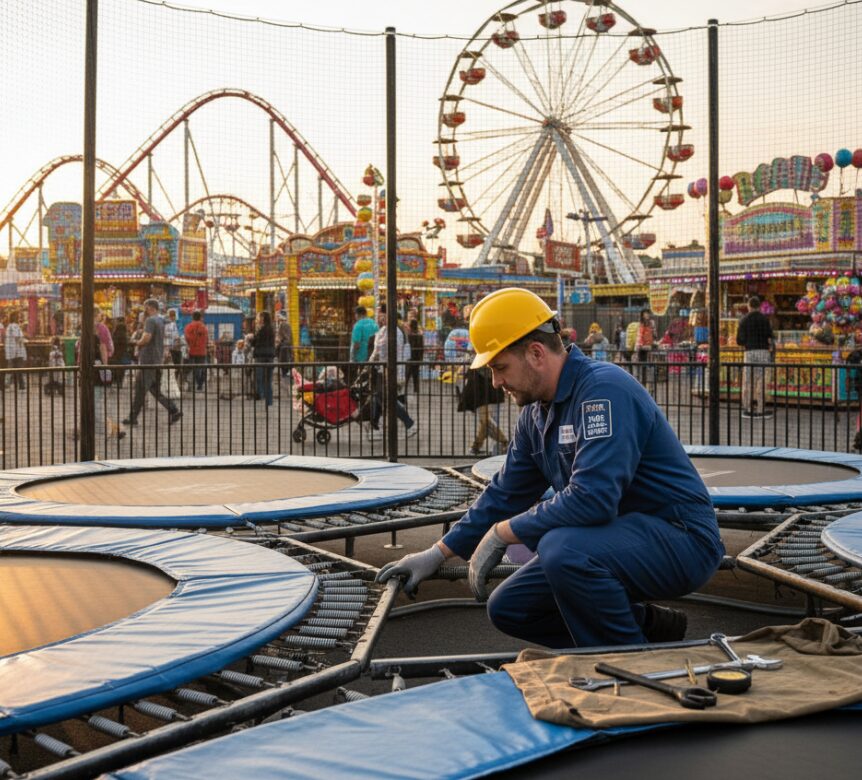
As the 1 expert focusing on sports safety, I must emphasize that the safe use of trampolines is not just a one-time choice at the time of purchase, it is an ongoing process that runs through every use and daily maintenance of trampolines. If the purchase is to lay a good foundation, then the daily safe use and maintenance is to build a good house, which is indispensable.
I have to stress again and again, please be sure to comply with the manufacturer’s maximum load limit! This is really nothing to discuss. This is not just a number, it is related to the structural integrity of the trampoline, more directly related to the safety of users.
You think, for any product, the designer will have its limit when manufacturing. Once this limit is exceeded, the fatigue damage of the component will accelerate and the risk will increase sharply.

When it comes to multi-person use, I would like to give you a very clear suggestion: as far as possible, only one person is allowed to jump at a time. I know that many people find it fun to dance with friends, but from a professional perspective, multiplayer use really brings too much uncertainty.
This is not only a question of total load bearing, but also the collision risk! I have seen too many cases of fractures, sprains and even more serious injuries caused by collisions in the air or on the ground caused by multiple people jumping. Even if your total weight does not exceed the standard, the instantaneous impact of jumping, coupled with the unpredictable trajectory between people, increases the risk factor exponentially.
If you really want to play with many people, please strictly control the total number and weight, and be sure to tell everyone to keep a distance. This is the final bottom line. But my professional advice is still: one jump, the safest.
This is like the car needs regular maintenance, trampoline also need your careful care. Don’t think these are small things. Many accidents often start with a small looseness or wear.
Dangerous moves, such as somersaults, difficult stunts, etc., unless you have professional training and professional protection, otherwise don’t try on the ordinary trampoline at home. These actions are very easy to cause neck or spinal injury, and the risk is extremely high.
For children, we as adults must supervise the whole process to ensure that they follow basic safety rules, such as not climbing out of the safety net, not pushing and fighting on it, etc.
Finally, don’t forget the trampoline installation environment is also very important.

Understand How To Anchor A Trampoline. Find The Best Way To Anchor A Trampoline Using Appropriate Trampoline Anchors.
View details
Is Trampoline Good For Knees? Yes! Cut Impact By 87%, Boost Synovial Fluid, And Strengthen Joints With The “Health Bounce.
View details
Choose the best soft play equipment by checking safety, durable foam, easy-clean covers & age-appropriate soft play sets.
View details
Custom Eagles Nest Indoor Playground. Factory Prices & Eu Certified. Get Free 3d Design From Mimu Play Today!
View detailsThis will close in 0 seconds