 Mimu Play








product search
Indoor PlaygroundNinja WarriorOutdoor PlaygroundTrampoline
search

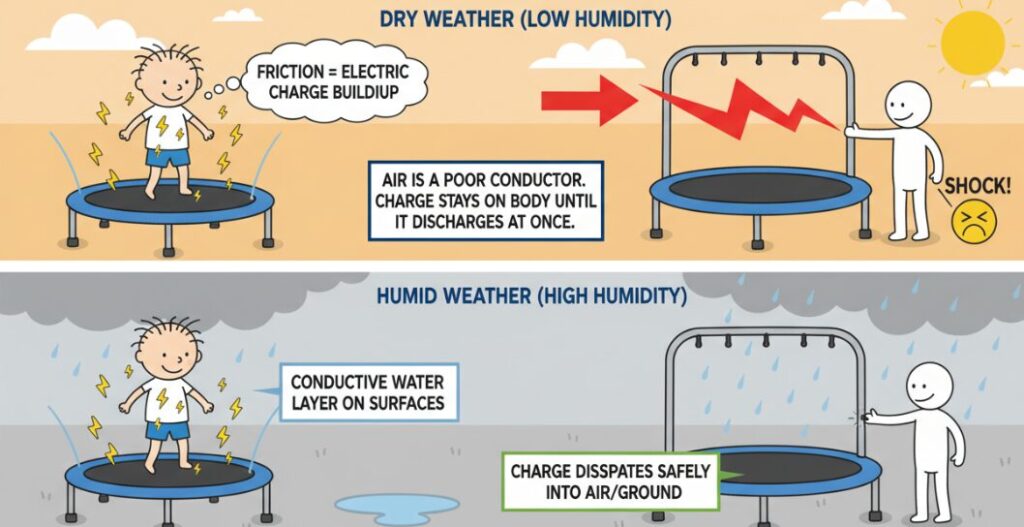
Trampoline produces electrostatic shock; the core reason is the “friction electrification effect” generated by static electricity. When jumpers bounce on the trampoline, there is constant friction between their clothing (usually synthetic materials such as polyester fibers) and the top of the trampoline (made of polypropylene plastic), resulting in a rapid exchange of electrons. Because the jumping mattress surface itself is an insulator, the charge cannot escape on its own and can only accumulate on the body of the jumping person. And when you touch a conductive object—such as a metal spring, a frame, or another person standing next to you—the accumulated charge is instantly released, creating that sharp “stinging” sensation, the electric shock you feel.
This is the form of contact electrification, where some materials charged when they come into frictional contact with another material. In the trampoline scenario, the action of bouncing creates a repetitive “contact-separation” cycle. Every time your foot or body lands on the mat and bounces, the electrons are constantly shifting.
In this process, the material (usually a trampoline mattress) tends to “steal” electrons and carry a negative charge, while the other (your clothes) loses electrons and carries a positive charge. This charge imbalance is the root cause of electrostatic shock.

The strength of the electrostatic shock depends largely on the specific materials that interact when bouncing. Almost all modern trampoline mattresses are made of polypropylene (PP) plastic. On the triboelectrification sequence (a scale ranked according to the material’s electronic propensity to gain or lose), polypropylene has a strong affinity for negative charges.
You may wonder why this electricity does not flow directly to the ground. The reason is the insulating properties of the trampoline structure.
Discover endless fun and spark imagination! Our indoor playground products create a safe, exciting paradise for children. Experience boundless joy now!
Embrace adventure and fresh air! Our outdoor playground products offer thrilling, safe experiences for kids to explore, play, and grow. Unleash the fun outside!
The last piece of the puzzle is the discharge. Static electricity always seeks equilibrium. The excess charge you build up rushes to lower potential areas (or the ground) to neutralize yourself.
Although the above principle is constant, the severity of the shock often depends on the day to eat. The triboelectric effect is strongest under dry conditions.
Author:Alan Physics
I’m a science educator and safety consultant. With a passion for mechanics, I specialize in explaining the invisible forces behind everyday activities—breaking down exactly why friction and materials cause that sudden static shock on your trampoline.
This will close in 0 seconds