 Mimu Play








product search
Indoor PlaygroundNinja WarriorOutdoor PlaygroundTrampoline
search

The best materials to put under a trampoline are rubber mulch, artificial turf, wood chips, or specialized grass mats, as they provide superior shock absorption, drainage, and weed suppression. For a permanent, low-maintenance solution, rubber mulch laid over heavy-duty landscape fabric is the top choice; it prevents mud pits, eliminates the need for mowing, and stays in place during heavy rain. If you want to maintain a green aesthetic, high-quality artificial turf is the best alternative to natural grass, which often dies from lack of sunlight under the frame. Avoid placing trampolines on hard surfaces like concrete or bare soil to ensure safety and prevent messy drainage issues.
| Material | Best For | Maintenance | Pros | Cons |
| Rubber Mulch | Safety & Longevity | Low | Best shock absorption; doesn’t rot or attract bugs. | Higher initial cost. |
| Artificial Turf | Aesthetics (Yan Value) | Very Low | Looks perfect year-round; no mud. | Can get hot in direct summer sun. |
| Wood Chips | Budget-Friendly | Medium | Natural look; affordable. | Needs topping up; can attract insects/mold. |
| Rubber Mats | Ease of Install | Low | Quick to lay down; easy to spray clean. | Less “cushion” than deep mulch. |
Laying Heavy-Duty Landscape Fabric (anti-grass cloth) under the mulch is the secret to a professional finish. Without it:
Keep these three things in mind:
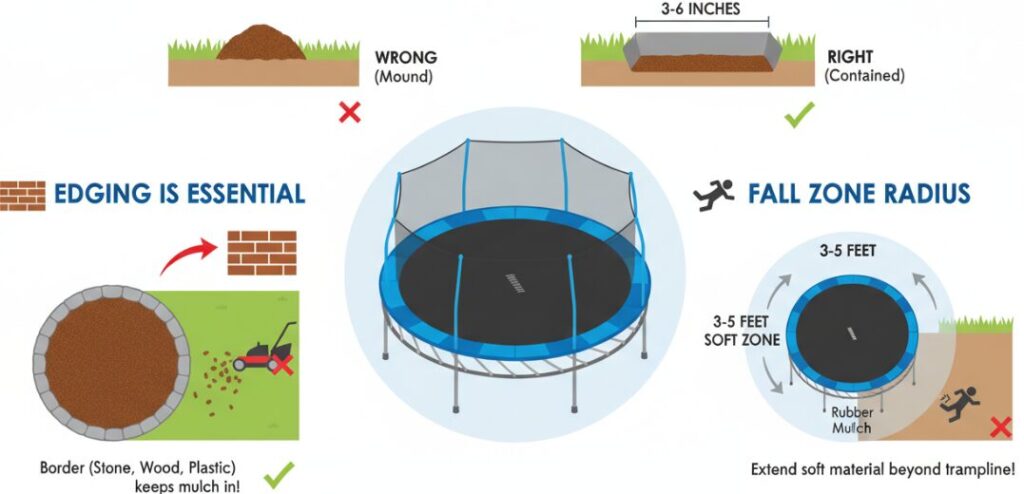
Concrete turns a fun toy into a liability.
Bare Soil eventually compacts until it is almost as hard as concrete, and the “mud factor” after rain makes the trampoline unusable for days.
Advice: Investing in the ground before you put the trampoline up will save you hours of frustration and potentially a trip to the emergency room.
Author: Jack
“Hi, I’m a backyard safety specialist and home landscaping enthusiast. With over seven years of experience in outdoor recreational design, I focus on helping families create play areas that are not only fun but also meet the highest safety standards. I’ve personally tested various shock-absorbing materials to find the perfect balance between durability and low maintenance, ensuring that your backyard remains a safe haven for kids year-round.”
This will close in 0 seconds