 Mimu Play


ürün arama
Kapalı Oyun AlanıNinja SavaşçısıAçık Oyun AlanıTrambolin
arama
When procuring climbing structures for public spaces such as schools, kindergartens, and parks, a limited budget should prioritize age-appropriate activities, comprehensive installation and safety surfacing, and components that facilitate future inspection and maintenance. Adding height, duplicating slides, or expanding themed decorations are only worth the extra expense if they address specific, well-defined operational needs.
The decisive factor in evaluating cost-effectiveness is whether a configuration improves the overall functionality of the entire site. A multi-functional play set that congests entrance points, crowds out circulation space, or introduces unsustainable maintenance burdens is often inferior to a smaller design with clear, unobstructed play routes.
Even when equipment quotes appear similar, the actual capital outlay can vary significantly. Foundation engineering, freight and offloading, installation, safety surfacing, drainage, and final inspection and certification all directly affect both the budget and the opening date.
Procurement comparisons should be calculated using the following formula:
Total Turnkey Cost=Equipment+Freight & Offloading+Site Work & Foundations+Installation+Safety Surfacing & Ancillaries+Inspection & CertificationTotal Turnkey Cost=Equipment+Freight & Offloading+Site Work & Foundations+Installation+Safety Surfacing & Ancillaries+Inspection & Certification
Every line item must clearly state who bears the cost and whether it is included in the quote. For imported equipment, trade terms (Incoterms) and applicable taxes must be standardized; otherwise, a seemingly low quote may simply omit several essential scopes of work.
Recommendation: Reserve funds for site prep, surfacing, and operational readiness first, and use the remaining budget to select the equipment. If you choose an oversized structure only to discover that the budget for foundations and surfacing is insufficient, reduce the equipment size rather than cutting essential safety and site works.
Lead times should be evaluated in the same order. Require bidders to itemize lead times for shop drawing sign-off, manufacturing, shipping, site construction, and post-installation inspection. Pre-engineered designs on well-defined sites are generally easier to schedule. Conversely, custom-sculpted structures, non-standard connections, or designs requiring iterative drawing revisions must account for extra approval and fabrication cycles within the opening schedule, rather than comparing manufacturing days alone.
The practical value of a climbing structure depends primarily on whether target users can access it, advance through it, and safely exit or retreat when encountering difficulties.
When evaluating design schemes, trace actual user circulation across the 2D layout:
Do not judge capacity solely by the manufacturer’s “nominal user capacity.” Whether components can be used concurrently without route interference provides a far more accurate measure of real-world value than a spec-sheet feature list.
Structural integrity, mechanical fasteners, foundation anchoring, compliant guardrails and barriers, head/neck entrapment prevention, and matched safety surfacing must be reviewed as an indivisible package. These requirements cannot be mitigated by adding supervisory staff or shortening operating hours.
Crucially, never estimate space requirements based solely on the equipment’s footprint. The actual use zone must encompass clear fall zones, ingress/egress corridors, and safety clearances from adjacent equipment. Furthermore, safety surfacing specifications must correspond to the specific equipment and its Critical Fall Height (CFH). Increasing a platform’s height or altering a climbing route will often invalidate the original surfacing specification.
This directly dictates the value-engineering order: if an elevated structure and its required ground treatment exceed the budget, downscale to a lower, smaller, age-appropriate design. Never retain the original height and scale by downgrading the surfacing or skimping on installation standards.
Accessibility (ADA/inclusive play requirements) must also be resolved during the initial layout phase. If local regulations require accessible routes, the associated ramps, unitary surfacing (e.g., poured-in-place rubber), and ground-level play components must be included in the baseline budget. Retrofitting these later often requires relocating equipment or tearing up finished surfacing.
| Add-On Feature | When It Is Worth Keeping | Benefits vs. Operational Burdens |
| Secondary Slide or Extra Exit | The existing exit creates a severe bottleneck, and the new exit has adequate, unobstructed clearance. | Gain: Relieves platform congestion. Burden: Expands equipment footprint, safety surfacing area, and inspection scope. |
| Higher Platforms & Challenging Climbers | Primary users demand greater physical challenges, and the current proposal lacks adequate difficulty. | Gain: Enhances physical engagement. Burden: Requires re-verifying age appropriateness, fall zones, CFH surfacing, and sightlines. |
| Climbers with Tiered Difficulties | User abilities vary widely, and a single route excludes less-capable children. | Gain: Broadens access and choice. Burden: Layout must be carefully designed to prevent choke points where routes converge. |
| Integrated Shade Structures | Solar exposure limits use during planned peak hours, and natural tree canopy/building shade is insufficient. | Gain: Extends daily usability of specific zones. Burden: Increases structural engineering requirements, footings, wind-load checks, and maintenance inspections. |
| Custom Themed Cladding & Sculptural Accents | The site has strict architectural branding requirements, and dedicated cleaning/repair budgets are secured. | Gain: Delivers distinct visual branding. Burden: Increases fabrication lead times, shipping costs, and replacement part lead times. |
| Modular, High-Wear Wearable Parts | The site experiences heavy foot traffic, and equipment downtime disrupts regular operations. | Gain: Streamlines repairs and reduces downtime. Burden: Requires upfront verification of spare parts pricing, lead times, and replacement protocols. |
Redundant components are not inherently wasteful, nor are custom features inherently worthwhile. A second slide that relieves severe congestion offers more real utility than a new decorative panel; however, if both slides originate behind the same congested access ladder, the return on investment is negligible.
Similarly, shade must be assessed by actual coverage area and sun angles throughout the day. A small decorative roof atop a tower does not mean the main climbing or waiting zones are protected. If UV protection is the justification for purchase, evaluate the shadow path during operating hours rather than relying on 3D renderings.
Generic marketing terms like “thicker,” “commercial-grade,” veya “heavy-duty” do not justify a price premium. Buyers need to know:
For coastal, high-humidity, or harsh outdoor environments, require vendors to explicitly specify base substrates, hardware grades (e.g., 304 vs. 316 stainless steel), surface coatings, and the corrosion treatment applied to cut edges and weld seams. A quote that merely lists a single material name (e.g., “galvanized steel”) provides no basis for evaluating long-term durability, let alone estimating service life.
Cost comparisons must drill down to high-wear, failure-prone components:
For high-use facilities with lean maintenance teams, prioritize systems designed for straightforward inspection and modular replacement. Even if the initial purchase price is slightly higher, a smaller replacement scope and lower labor overhead justify the investment.
Conversely, do not pay a premium for “maintenance-free” claims that lack explicit inspection guidelines, wear exclusions, and spare-part protocols. Beyond the purchase price, routine inspections, cleaning, minor repairs, and downtime must always be accounted for.
When the budget is constrained, value-engineer in the following sequence: cut non-functional decorations first, eliminate redundant features that solve no operational problem second, and downscale structural footprints third. Every revision must be accompanied by an updated drawing and re-quoted bill of materials, rather than simply subtracting line-item component costs from the original bid.
Code
[Step 1] Eliminate custom themes & non-essential aesthetic accents │ ▼ [Step 2] Remove redundant play elements that do not increase capacity │ ▼ [Step 3] Downscale structure size (footprint, platform count, fall heights) │ ▼ [Step 4] Consider phased implementation (only with pre-engineered interfaces)
Case Comparison:
On a preschool-dominant playground without strict thematic requirements, budget cuts should start by omitting decorative roofs and duplicate activity panels, followed by comparing the turnkey price of a downscaled structure. However, on a playground serving school-age children where a challenging rope bridge represents the sole advanced physical challenge, cutting that bridge would eliminate the playground’s primary utility—meaning savings must be found elsewhere.
The difference lies entirely in what play value remains for the target user after the cut is made.
In the next procurement round, require every competing vendor to submit three distinct pricing tiers based on a unified site plan:
All three tiers must standardize assumptions regarding shipping, site prep, crane/offloading, and safety certification. This forces procurement decisions to be based on explicit trade-offs: what is gained by spending more, what is compromised by spending less, and whether the site will open on schedule and remain manageable over its operational life.
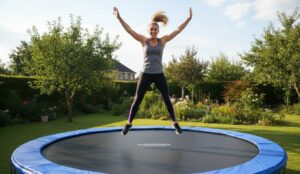
Trambolinin Nasıl Bir Araya Getirileceğine İlişkin Kılavuzumuzu İzleyin. Çerçeveyi Oluşturun, Yayları Takın ve Ağı Güvenli Bir Şekilde Sabitleyin.
Detayları görüntüle
Trambolin Satın Almadan Önce Güvenlik Özellikleri ve Boyutundan Ağırlık Sınırları ve Dayanıklılığa Kadar Bilmeniz Gerekenleri Öğrenin.
Detayları görüntüle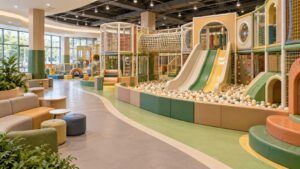
Plan a indoor playground around users, space, equipment, installation, inspection, and daily operations.
Detayları görüntüle
Trambolini Nasıl Seçeceğinizden Emin Değil misiniz? Boyutlandırma, Güvenlik Açıklığı ve Bahçeniz İçin Doğru Şekli Seçme Konusunda Uzman İpuçları Alın.
Detayları görüntüle