 Игра Миму


поиск товаров
Крытая игровая площадкаВоин-ниндзяОткрытая игровая площадкаБатут
поиск
A child may try the same climbing route three times indoors, then head outside and spend ten minutes balancing along a low path. The settings look different, but the child is doing familiar work: choosing, adjusting, watching others, and trying again. The benefits of indoor and outdoor play in early childhood depend on those experiences, rather than on the location alone.
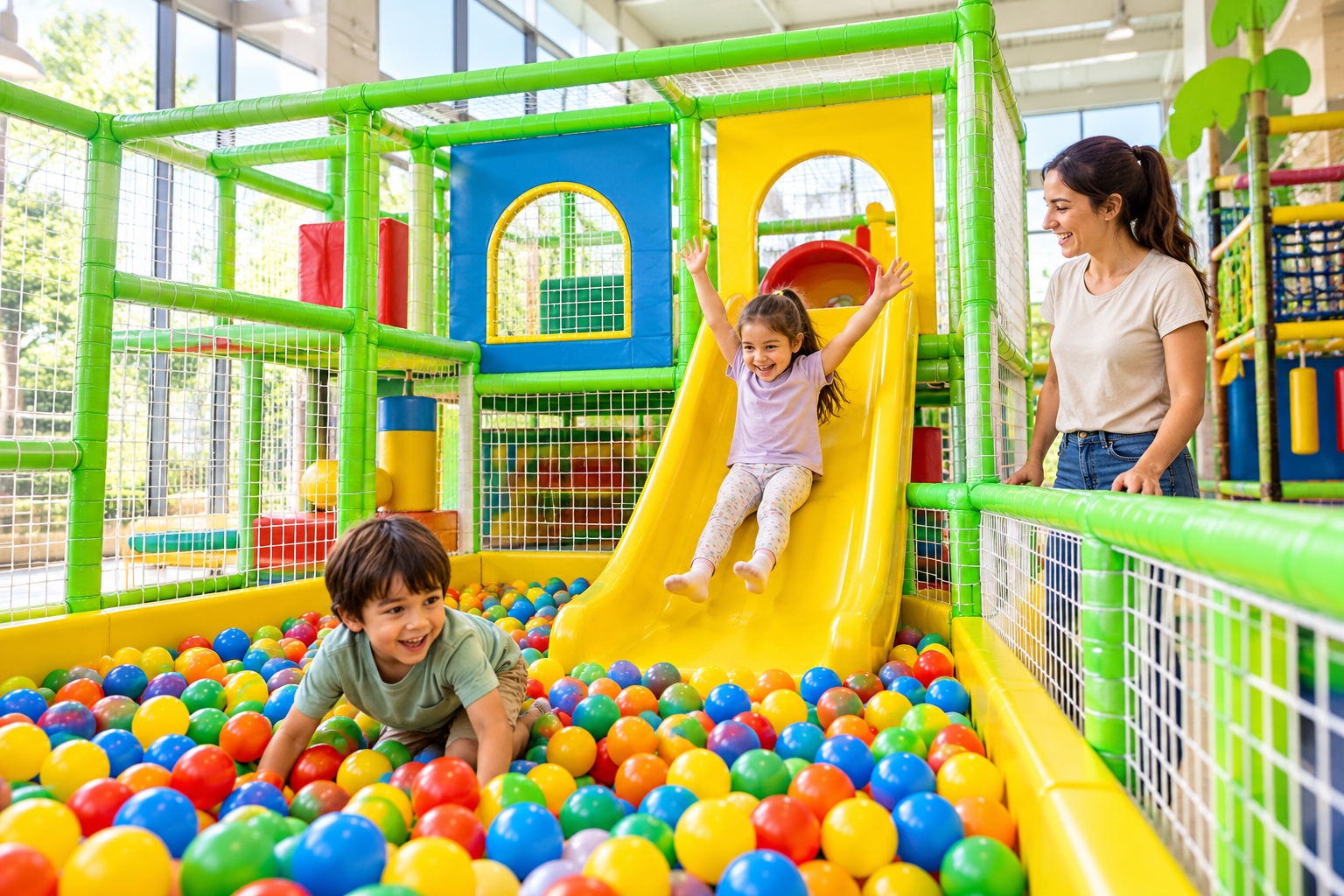
An indoor play area can bring climbing, sliding, crawling, building, and pretend play into clearly defined zones. Adults can follow a child's route and help them choose a challenge that fits their current abilities. Outdoor space may offer more room to move, pause, notice the surroundings, and invent a new route. Weather, available space, and the child's needs will shape the day. Neither setting has to win a contest against the other.
The useful questions are more specific. Can the child enter the activity? Do they want to stay with it? Can they change their approach? Is support available when they need it? A visually impressive space with only one prescribed route may offer less room for exploration than a simpler area where a child can make choices and repeat an attempt.
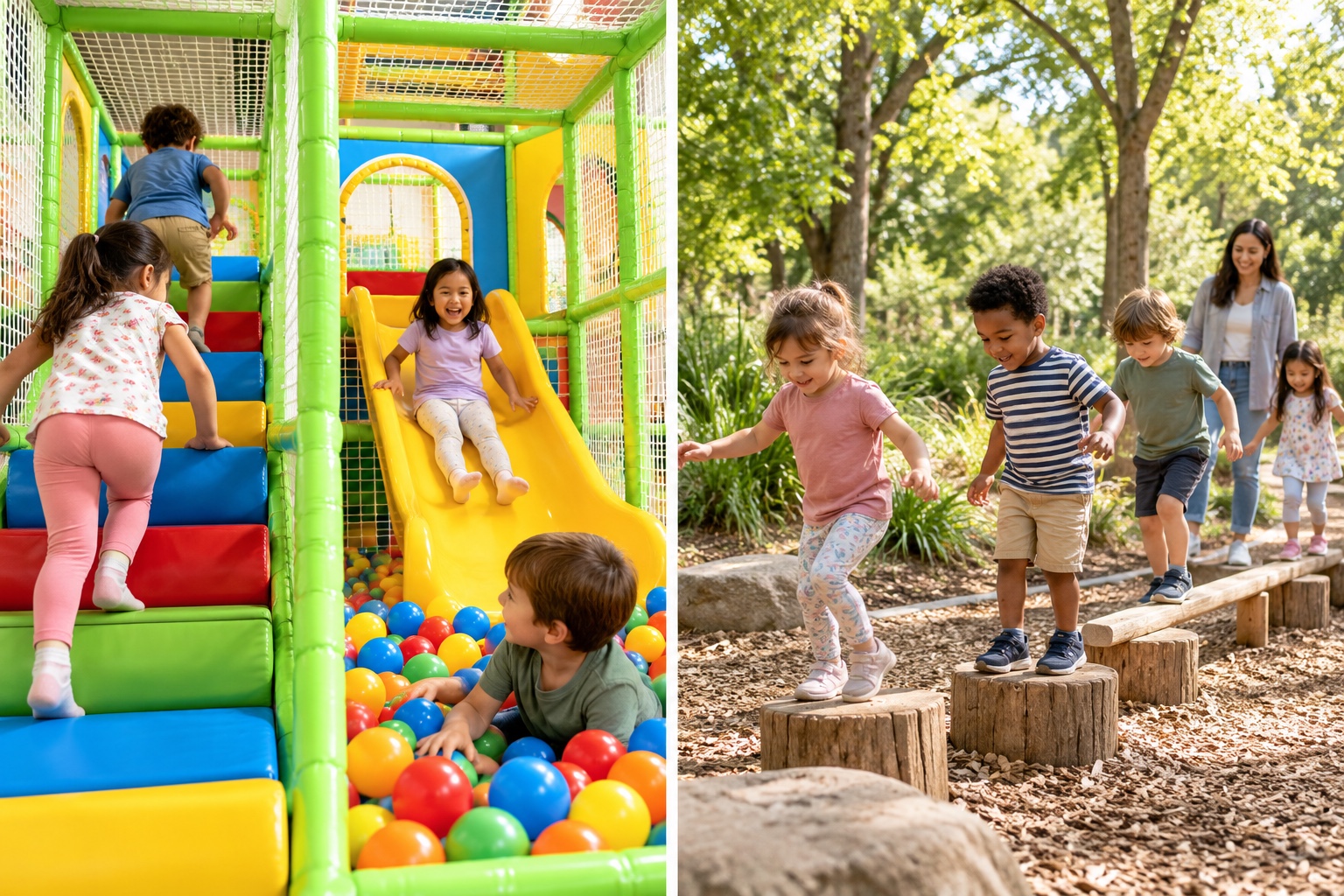
Movement includes more than running and jumping. Climbing over a low obstacle, finding a path through a play structure, and balancing on an appropriate surface can give children chances to practice body control. The challenge should suit the child's age and abilities, with a way to pause or choose another route. More height or speed does not automatically make play more useful.
Being near other children does not, by itself, create meaningful social play. Waiting for a turn, building a shared story, and negotiating roles give children reasons to speak, listen, and cooperate. An adult can offer materials or ask a question while leaving room for the children to develop their own solution.
Route choices, construction, matching, sorting, and pretend play also create different kinds of problems. When a structure falls, a child may rearrange the pieces and try again. The interesting part is the process: understanding the goal, trying another method, and receiving feedback. A single play session cannot prove that a skill has improved, and no one piece of equipment should be presented as a guaranteed developmental intervention.
Start with the child's energy, the available space, and a few activities that allow genuine choice. Outdoor time might leave room for free movement and observing the surroundings. Indoors, a child could choose between a climbing route, building materials, a story, or a quieter break. If they are deeply involved in one activity, there is little value in interrupting them just to complete a preset list.
Adults can prepare the environment, keep watch, and offer a prompt when needed. Asking "How else could you get across?" gives a child more room to think than demonstrating the only acceptable answer. If weather or access keeps the family indoors, one play visit can still contribute to the day. It should not be described as replacing the whole pattern of movement, rest, and sleep.
For a commercial or educational venue, begin with the intended users: their ages and abilities, how fast activities move, how children enter and leave each zone, and where adults can see them. Separate faster play from quieter activities and keep waiting areas away from main circulation routes. Age groups with different sizes and speeds need clear boundaries. Accessibility also involves whether a child can reach, use, leave, and take part in an activity, not merely pass through the entrance.
Mimuplay's Kids Space themed indoor play structure is documented for children aged 3 to 15. Its listed configurations include a galvanized steel tube frame, plywood, EPE foam, and PVC and PU coverings. These details help explain the structure and materials; they do not replace a specific model's age guidance, site design, operating rules, or inspection. In particular, a structure documented for ages three and up should not be presented as equipment for children under three simply because an article discusses early childhood.
Good play in either setting leaves children with something real to do: choose a route, connect with another person, and try again within a suitable safety boundary. Watching what a child actually does is more useful than relying on an "educational" label attached to a place or a product.

Применяйте 30-60 фунтов на ногу или используйте 10-дюймовые шнеки. Изучите правило 150% о балласте для бетона, чтобы предотвратить подъем ветра.
Посмотреть детали
Ограничения батута рассчитывают динамическую нагрузку, чтобы предотвратить падение на дно. Узнайте, как проверяются пружины и рамы на безопасность.
Посмотреть детали
Узнайте, как построить открытую игровую площадку, используя профессиональные стандарты безопасности, материалы ASTM и рекомендации CPSC.
Посмотреть детали
Узнайте о размерах больших батутов (12-15 футов) и о 20-футовой зоне, необходимой для безопасности и установки на заднем дворе.
Посмотреть детали