 Mimu Play








pesquisa de produtos
Parque infantil interiorGuerreiro NinjaParque infantil exteriorTrampolim
pesquisa

Starting a children’s indoor playground requires a systematic approach to selecting certified, high-performance play equipment that meets modern safety, structural, and environmental standards. The long-term commercial success of your indoor playground business relies on procuring equipment that combines structural longevity, non-toxic material properties, and immersive interactive play. Investing in certified, eco-friendly equipment minimizes future liability, reduces maintenance overhead, and ensures parents trust your facility’s environment. While physical aesthetics attract customers, prioritizing engineering specifications and material safety certifications from the outset protects your playground from premature wear and costly safety compliance failures.
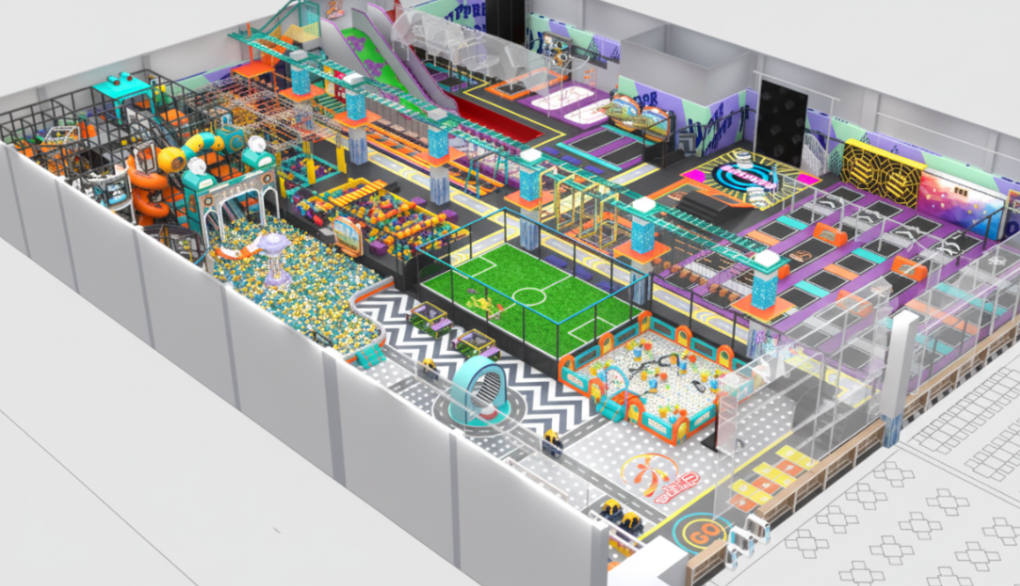
Material Safety Standards: Phasing Out Toxins in 2026
Material selection directly determines the safety and cleanability of your indoor playground equipment. High-net-worth parents prioritize facilities that utilize non-toxic, eco-friendly materials that prevent chemical exposure and skin irritation.
Thermoplastic Polyurethane (TPU) is replacing traditional PVC as the industry standard for high-end soft play coverings. Standard PVC relies on phthalate plasticizers to remain flexible, which can off-gas and degrade over time under constant physical friction. Bio-based TPU offers superior tear resistance, eliminates chemical off-gassing, and stands up to medical-grade sanitizers without cracking or losing its structural integrity.
BiaoGe ChaRu (Suggested Table: Comparison of Soft Play Coverings: Bio-TPU vs. Traditional PVC, evaluating Phthalate Content, Tear Resistance, Sanitizer Resistance, Lifespan, and Environmental Footprint)
Soft play internal components must be built with high-density, fire-retardant foams to withstand heavy daily impact while keeping children safe. The structural core of soft play steps, ramps, and platforms must utilize Expanded Polyethylene (EPE) or Cross-linked Polyethylene (XPE) foam with a density profile of at least 30 to 40 kg/m ³. These foam materials must meet strict international flame retardancy certifications, such as Class B1 according to EN 13501-1 or California Technical Bulletin 117 (TB 117).
Structural engineering failures can cause catastrophic injuries and lead to immediate facility closures. Choosing equipment engineered with industrial-grade metals and high-tensile connection systems is the only way to build a sustainable indoor playground business.
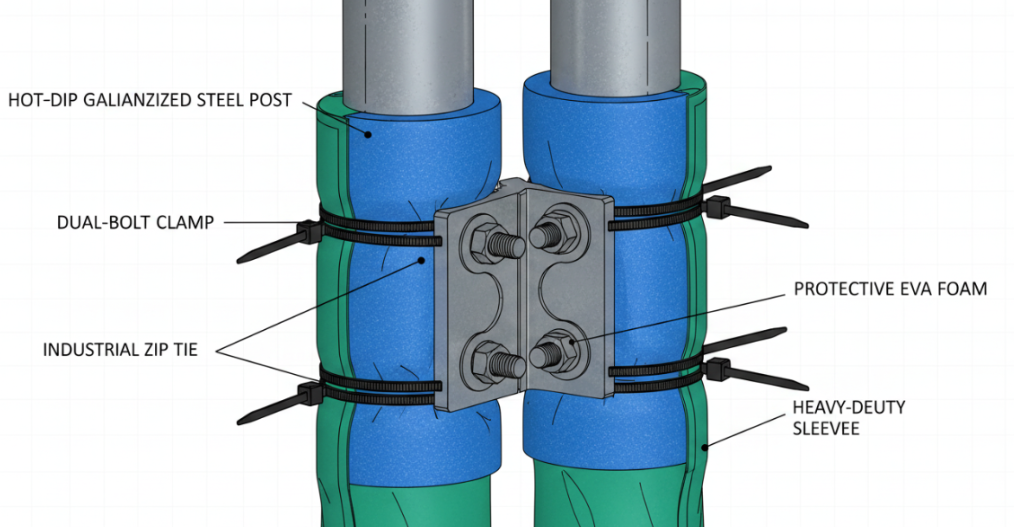
The structural framework of multi-level playgrounds must consist of hot-dip galvanized steel pipes with a minimum outer diameter of 48mm and a wall thickness of no less than 2.2mm. Raw steel must undergo interior and exterior galvanization to prevent rust caused by humidity and cleaning agents. Standard steel structures must be joined using high-strength cast iron fastening clamps secured with dual-lock bolts, eliminating any sharp edges that could tear safety padding or injure a child.
Safety netting and barrier gaps must be designed to eliminate head, neck, and finger entrapment hazards. Any gap between soft padding, structural steel, or netting must measure either less than 3.5 inches (preventing a child’s body from slipping through) or greater than 9 inches (allowing a child’s head to pass through safely without getting caught). Safety netting must be made of high-tenacity polyester or nylon with a mesh size small enough to prevent fingers or clothing buttons from catching, maintaining a minimum tensile strength of 240 kg per mesh string.
Optimizing your play space layout requires balancing physical challenges with age-appropriate physical safety. The S-E-L configuration framework ensures your layout scales from low-impact toddler play to dynamic, high-energy physical challenges.
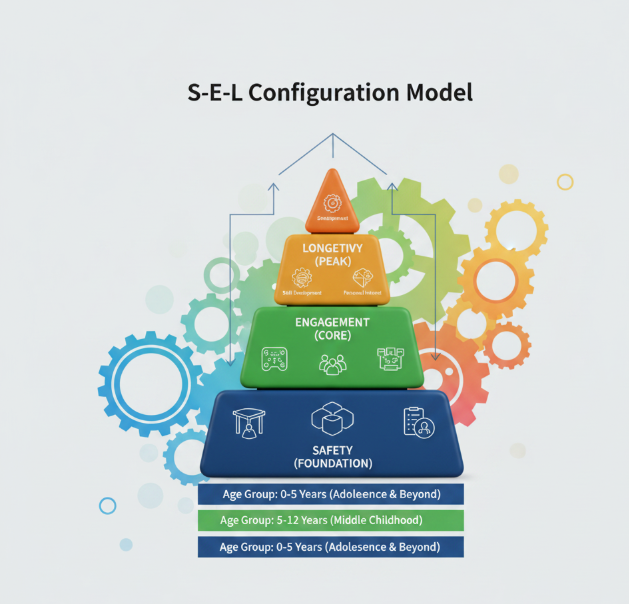
The toddler zone requires completely independent physical separation from the main play area to protect smaller children from older, fast-moving players. Toddler equipment must limit fall heights to a maximum of 24 inches, using extra-soft, high-density XPE foam blocks, low-profile crawling tunnels, and sensory play panels. Every physical surface in this zone must be padded with at least 2 inches of closed-cell foam wrapped in seamless, medical-grade TPU.
Equipment for older children must offer complex physical challenges like rope bridges, climbing walls, and multi-lane slides while incorporating active deceleration features. Slides must feature a flat deceleration zone at the exit, measuring at least 3.9 feet in length, to reduce the user’s velocity to a safe stop before they reach the run-out pool. Climbing towers require offset platforms every 6 feet of vertical height to prevent a child from experiencing an uninterrupted vertical fall.
Integrating digital technology with physical playground equipment increases repeat customer visits by offering dynamic, software-driven experiences. When executing this setup, you must ensure that electronic hardware does not compromise physical safety or cleanability.
Interactive slides, digital climbing walls, and motion-activated floor projection games merge physical exercise with cognitive gaming. Projection systems must be paired with high-precision infrared camera sensors to track children’s movements accurately without requiring physical wearables. By updating the interactive software themes periodically, you can refresh your play environment without purchasing new physical equipment.
All electronic components, interactive sensors, and digital projection systems must operate on low-voltage DC power (typically 12V or 24V) to eliminate electrical shock hazards inside play zones. Power supplies and wiring harnesses must be routed through fire-retardant, rigid conduits hidden deep within the structural steel padding, completely out of reach of children. Projectors and tracking cameras must be housed in ventilated, tamper-proof overhead enclosures that allow for adequate heat dissipation while preventing dust accumulation and physical impacts from loose balls or toys.
Investing in play equipment requires rigorous physical quality checks before finalizing any manufacturer order. Purchasing uncertified equipment to save on upfront costs often leads to failed local inspections and high insurance premiums.
| Feature | ASTM F1918-12 (USA) | EN 1176 / Part 10 (EU) | Non-Certified Equipment |
| Primary Scope | Soft Contained Play Equipment (SCPE) specifically. | General playground equipment; Part 10 for enclosed play. | Generic/Residential grade or unverified commercial. |
| Structural Steel Thickness | 2.2mm to 3.5mm (Typically 2.5mm galvanized steel). Focus on stability & corrosion resistance. | 2.0mm to 3.0mm (Typically 2.5mm). Must withstand calculated live loads & fatigue. | 1.5mm to 1.8mm (or less). Prone to bending or structural failure under high occupancy. |
| Foam Fire Rating | UL 94 (V-0/V-2) and/or NFPA 701. High-density flame retardant foam. | EN 13501-1 (Class B1/B2) ou EN 1021-1/2. Low smoke and self-extinguishing. | No Rating / Untreated. Often uses flammable PU foam that produces toxic smoke. |
| Net Strength (Tensile) | Must resist a 50 lbf (222 N) torso probe force without failing or exposing hard objects. | Minimum mesh strength often required to exceed 200kg (~2000 N) system-wide break test. | Unrated. Thin, lightweight netting that can be torn by hand or easily cut by shoes. |
| Net Mesh Density | Tight weave to prevent finger entrapment and “climbability.” | Mesh size must prevent head/neck entrapment (typically <100mm). | Large mesh gaps; often climbable or poses entanglement risks. |
| Testing Lab Verification | Intertek, SGS, or TUV (Third-party certification to ASTM standards). | TUV Rheinland, TUV SUD, or GS (Geprüfte Sicherheit) mark. | “Self-Certified” or internal factory report (unreliable for insurance). |
| Galvanization | Hot-dipped galvanized (internal & external) required for longevity. | Required; strictly audited for anti-corrosion and smoothness. | Cold-spray or external-only coating (rusts quickly from the inside). |
Your equipment manufacturer must provide third-party test certificates verifying compliance with ASTM F1918-12 (North American Standard) or EN 1176 (European Standard). These certificates must be issued by internationally recognized testing bodies such as TÜV SÜD, SGS, or Intertek. Standard manufacturer self-declarations of safety are not sufficient to pass commercial building inspections or satisfy commercial insurance underwriters.
Choosing cheap, uncertified equipment often results in higher operational costs due to rapid material degradation and frequent replacement needs. High-quality galvanized steel, bio-TPU soft play coverings, and premium high-density foam structures have an operational lifespan of 5 to 8 years under heavy commercial use. Cheap PVC-coated alternatives with thin steel framing often begin to tear, sag, and rust within the first 12 to 18 months, leading to facility downtime and costly emergency repairs.
Indoor playground equipment must carry verified third-party certifications under ASTM F1918-12 in North America or EN 1176 in Europe. These standards cover structural stability, material toxicity limits, entrapment hazard prevention, and impact attenuation for safety flooring.
TPU does not require harmful phthalate plasticizers to remain flexible, meaning it does not release toxic odors or break down over time. It offers twice the tear resistance of standard PVC and stands up to frequent cleanings with heavy-duty commercial disinfectants without cracking.
High-quality multi-level play structures must be constructed from hot-dip galvanized steel pipes with a minimum outer diameter of 48mm and a wall thickness of at least 2.2mm to 3.0mm. This ensures the structural framework can support the weight of both children and supervising staff members simultaneously.
Safety standards dictate that all openings and gaps in structural equipment must be smaller than 3.5 inches or larger than 9 inches. This prevents a child’s head or neck from becoming trapped while their feet are suspended off the ground.
Premium equipment made with hot-dip galvanized steel, Bio-TPU coverings, and high-density XPE foam is designed to last between 5 and 8 years under heavy daily commercial use. Lower-tier equipment using non-galvanized metals and standard PVC soft covers often requires replacement or major repairs within 12 to 24 months.
Yes, interactive projection systems can be retrofitted onto existing slides, climbing walls, or open floor areas. The key requirement is having a stable overhead mounting surface out of children’s reach, access to a dedicated low-voltage power supply, and an environment with controlled ambient lighting to maintain projection clarity.
Não meça a rede antiga! Aprenda a medir uma rede de trampolim verificando o tamanho da estrutura, a contagem de postes e os acessórios superiores.
Ver pormenores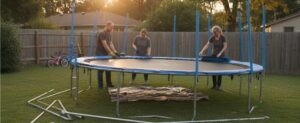
Aprenda a desmontar um trampolim com segurança. Remova a rede, solte as molas e desmonte a estrutura passo a passo.
Ver pormenores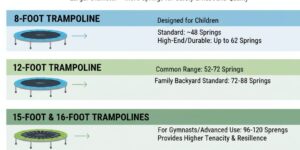
Descubra quantas molas existem no seu trampolim. Saiba como o tamanho e a forma afectam a contagem para um salto seguro e de qualidade.
Ver pormenores
Os limites do trampolim calculam a carga dinâmica para evitar a queda. Saiba como as molas e os quadros são testados para segurança.
Ver pormenores