 Mimu Play


pesquisa de produtos
Parque infantil interiorGuerreiro NinjaParque infantil exteriorTrampolim
pesquisa
Before you sign a lease for an indoor playground, work out how many children’s tickets you can sell per session. The building’s occupancy limit must leave room for accompanying adults and staff. The soft play structure and toddler area have their own limits. Any one of those limits can cut the number of tickets you can sell, even in a large venue.
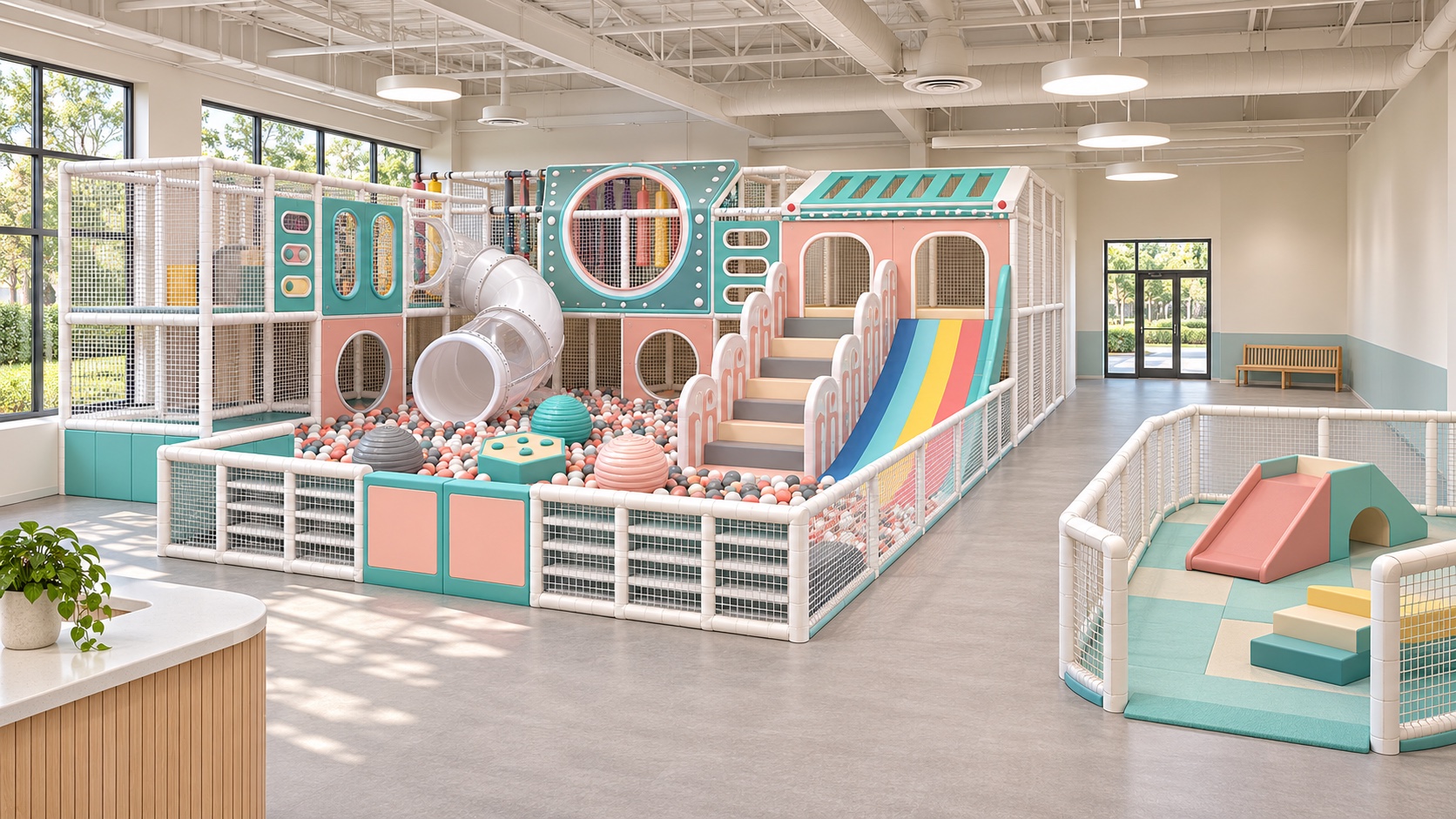
This guide follows an indoor playground that charges by the session and requires parents to stay. The layout includes a padded climbing structure, slides, and a separate toddler area. Use the same numbers to assess the site, set a budget, review the equipment layout, and decide how many bookings to accept on opening day.
Take the site address, existing floor plan, and a description of the proposed operation to the local planning, building, and fire authorities. Specify whether you will install a multi-level enclosed play structure, how many children and adults you expect at once, and whether you plan to offer party rooms, food service, or staff-supervised childcare. Ask the design professional handling your application to confirm whether the existing use allows the operation, what building changes are needed, and which approvals and inspections must be complete before opening.
In New York City, for example, a Certificate of Occupancy (CO) states a building’s legal use or permitted occupancy type. A change to a building’s use, egress, or occupancy type requires a current or amended CO that reflects the change. Before signing, agree with the landlord on who pays for any upgrades, when rent starts, and whether you can end the lease if a required approval falls through. Ask the relevant authorities about the equivalent documents and procedures for your location. NYC Department of Buildings: Certificate of Occupancy e NYC Small Business Services: Commercial Lease Guide.
Check food service and childcare requirements separately. In England, a new food business must register with the local authority at least 28 days before trading. If staff take responsibility for children, assess whether the service requires childcare registration. Ofsted’s exemption for short-term crèches depends on the children’s ages, the duration and nature of care, and whether parents are close enough to return immediately. Decide which services you will offer at launch before finalizing the layout and opening schedule. Food Standards Agency: Register a Food Business e Ofsted: Childcare Registration Exemptions.
Example. Suppose the venue can hold 60 people, eight staff work at peak times, and each child comes with one adult. That leaves 52 places for customers, or at most 26 children’s tickets per session. This limit still applies if the two play zones can hold a combined 36 children. Track bookings by zone as well. If the toddler area fills first, spare places in the climbing area can only go to children who meet that area’s use restrictions.
At three sessions per day over 26 operating days, the most you could sell is 2,028 children’s tickets per month. If you receive $15 net per ticket, spend $3 in variable costs per paying child, and have $15,600 in monthly fixed operating costs, you need to sell 1,300 tickets to cover those costs. That’s about 64% of theoretical capacity. This example excludes recovery of the initial investment. If private parties replace public sessions, remove those sessions from your ticket inventory and calculate party revenue and direct costs separately. U.S. Small Business Administration: Startup Costs and Break-Even Analysis.
Estimate weekday mornings, after-school sessions, and weekends separately. Ask local families when they would come, how many adults would accompany them, and how long a session they would pay for. Set one budget for the deposit, design, approvals, fit-out, freight, installation, and inspection. Keep a separate cash reserve for rent during delays and for early operating costs such as wages, insurance, and cleaning. If the numbers only work when weekday sessions are nearly full, revisit the rent, reduce the initial scope, or assess another site.
Have your designer verify the site dimensions and overlay the equipment plan on the building plan. Mark the underside of beams, ducts and sprinklers, along with columns, door openings, exit routes, and the delivery path. Check the actual clear height where each elevated platform will sit. A low duct directly over the top of a slide can force the whole unit to move. After a layout change, check where children land, where families queue, and whether parents and staff can still see the main entrances.
Check the accessible route on the same drawing. For U.S. projects subject to the ADA play area provisions, a soft contained play structure with up to three entrances must have at least one entrance on an accessible route. With four or more entrances, at least two must be on an accessible route. Trace the path all the way to the play structure with the shoe racks, gates, and queue barriers shown in place. U.S. Access Board: Play Areas Guide.
Confirm the applicable standard and edition for each type of equipment before placing the order. ASTM F1918-21 is a safety performance specification for soft contained play equipment. BS EN 1176-10:2023 sets additional safety requirements and test methods for fully enclosed play equipment. A report for the main structure only covers the items and configurations listed in its scope. Ask the local reviewer or inspector what evidence each zone requires, then request drawings, test reports, installation instructions, and maintenance instructions for the final configuration. ASTM: F1918 Scope e BSI: BS EN 1176-10:2023 Scope.
Compare the model, configuration, standard edition, and tests listed in each report with the equipment delivered. If the installer substitutes the impact-attenuating surfacing at a slide exit, check whether the test evidence covers the flooring as installed. Inspect the finished netting connections, anchors, and clear space at slide exits on site.
Allow time for a post-installation inspection, fixes, and reinspection. Have a qualified inspector record each defect, who is responsible for fixing it, and the result of the follow-up check. RoSPA’s soft play guidance recommends a post-installation inspection before opening, followed by routine checks and independent annual inspections. Track building, fire, and other opening approvals separately according to local requirements. RoSPA: Soft Play Area Standards.
Before admitting the public, rehearse with staff. Who stops admissions when the toddler area fills? Who blocks access to a slide if its exit needs to close? During an evacuation, who directs families and who takes the headcount at the assembly point? Give staff a checklist of locations to inspect before opening. If an anchor is loose, a part is missing, or a surface is damaged, close the affected equipment until it has been repaired and checked. Minnesota Department of Health: Indoor Play Area Maintenance and Sanitation.
Once you have the required approvals, start with advance bookings below the planned limit. Record peak headcounts by zone and time the gap between the last family leaving and the venue being ready for the next group. Allow more time between sessions if the team regularly runs late. Set a separate toddler-area booking limit if that zone fills while the rest of the venue still has room. Put the revised session schedule and ticket limits back into your break-even calculation before setting your regular timetable.
Parque infantil interior Eagles Nest personalizado. Preços de fábrica e certificado pela UE. Obtenha um desenho 3d gratuito da Mimu Play hoje mesmo!
Ver pormenores
Fixar corretamente o trampolim. Saiba como utilizar âncoras e sacos de areia para fixar o trampolim na relva ou no betão.
Ver pormenores
Aprenda a construir um parque infantil exterior utilizando normas de segurança profissionais, materiais ASTM e diretrizes CPSC.
Ver pormenores
Compreender o limite de peso do trampolim, a carga máxima e as dicas de segurança para proteger os utilizadores e prolongar a vida útil do produto.
Ver pormenores