 Mimu Play










pesquisa de produtos
Parque infantil interiorGuerreiro NinjaParque infantil exteriorTrampolim
pesquisa
When an existing children’s climbing structure requires updating, priority should be given to localized repairs or modular component replacement—provided that a professional inspection confirms the main structure and footings remain viable, the issues are confined to replaceable components, and the specifications, availability, and installation procedures for replacements are well defined. However, if the structural integrity of the main frame remains unverified, or if remediation requires addressing multiple structural, connection, and foundation defects concurrently, a full replacement should be included in the formal competitive bidding process.
The key to determining the best approach is whether the investment will restore the equipment to safe operation on schedule while minimizing the burden of recurring repairs, procurement cycles, and operational downtime. Cheaper components may not ultimately save money if they involve extended lead times, on-site modifications, or unanticipated additional work.
The scope of procurement cannot be determined solely by surface fading, localized rust, or equipment age. An aged appearance does not necessarily warrant decommissioning the entire unit, nor does a fresh coat of paint prove structural soundness for continued use.
Engage a qualified playground equipment specialist to inspect specific components and categorize findings into three distinct outcomes:
Inconclusive findings directly impact procurement commitments. If post bases, concealed fasteners, or subsurface foundations have not been thoroughly evaluated, repair quotes must account for these contingencies; unverified areas must never be budgeted as “requiring no intervention.”
Upon identifying issues that could compromise user safety, isolate the affected equipment or zone immediately before scheduling inspections or procurement. The feasibility of partial operation must be determined based on site conditions—equipment should not remain in service merely because visible damage appears minor.
| Procurement Scope | Best Suited For | Main Differences in Cost & Timeline | Long-term Operational Trade-offs |
| Localized repairs & minor parts replacement | Clear issue boundaries, verified condition of retained parts, confirmable part specifications. | Smaller scope of teardown and assembly; however, low-quantity orders may face minimum order quantities (MOQs), high freight, or extended lead times. | Original functionality preserved; remaining aging components still require ongoing maintenance. |
| Retaining main structure & replacing modular components | Damage localized to specific modules (e.g., climbing nets, ladders); main structure and mounting points viable for continued use. | Higher initial purchase cost than piecemeal patching, but reduces iterative repairs and repeated teardowns. | Resolves a cluster of issues in one pass; interfaces between new and existing structures remain a critical focus. |
| Complete replacement | Extensive structural repair required, compatible parts unobtainable, or existing layout no longer fits operational needs. | Must budget for demolition, freight, foundations, installation, and safety surfacing remediation; larger overall construction scope. | Reorganizes functionality and maintenance workflows, but introduces site adaptation and layout reconfiguration requirements. |
These criteria serve as initial screening tools. The final decision must satisfy two conditions: verified technical justification for retained elements, and an end-to-end procurement plan that guarantees final installation and return to service.
The cost-effectiveness of retaining the structure hinges on the availability and fit of replacement parts, not just structural health alone.
When original model numbers and component records are intact, verifying dimensions, connection details, and installation requirements is straightforward. Provide vendors with equipment model numbers, part numbers, site photos, and critical dimensions—avoid ordering parts based solely on visual similarity.
If original parts are discontinued or only generic equivalents are available, carefully verify connection methods, material specifications, and overall functional compatibility post-installation. Matching hole patterns solves only part of the problem.
For solutions requiring on-site drilling, cutting, welding, or custom mounting brackets, clarify the following before issuing a purchase order:
If these questions cannot be answered, the quote cannot be considered an actionable repair plan. At this juncture, evaluate the cost of modular replacement or total renewal rather than negotiating over unit part prices.
A repair quote covering only parts cannot be directly compared to a turnkey replacement quote that includes installation. Require all bidders to itemize goods, freight, taxes, demolition, installation, foundation works, surface restoration, and handover inspections, while explicitly stating any provisional/unverified items.
Pay particular attention to three cost drivers that frequently alter the financial outcome:
Avoid relying solely on a fixed threshold (e.g., “repair cost reaching a certain percentage of replacement cost”). The same repair expenditure could deliver a definitive, long-term restoration—or merely patch immediate damage while leaving compounding issues unresolved. Their true procurement value is fundamentally different.
A vast operational gap exists between “parts in stock” and “safe for reopening”—spanning shipping, scheduling, assembly, and safety compliance inspections.
Repairs may appear faster due to minimal teardown, but can be derailed by custom fabrications, discontinued parts, or split shipments. While a full replacement entails a broader scope of work, clear equipment supply and installation schedules often make it easier to project reliably.
Demand a comprehensive schedule from design sign-off to full reopening, separating firm commitments from estimates. Where foundation or safety surface work is required, factor in proper curing and settling times.
If facing a hard deadline—such as a school reopening or peak operating season—prioritize the path with the fewest scheduling variables. A low-cost bid lacking firm delivery commitments is not comparable to an executable plan with guaranteed milestones.
Full replacement rarely allows direct reuse of existing foundations, safety surfacing, and surrounding clear zones. New layouts, anchoring footprints, and fall zones often differ, broadening civil works.
Modular updates also create systemic impacts. When replacing a climbing element, evaluate not only the part itself, but also interface integrity, impact attenuation surfacing, and compliant free space around adjacent activities.
Prior to requesting proposals, specify whether the equipment serves residential, commercial, or public municipal spaces, along with target user age groups, environmental conditions, and local statutory safety standards (e.g., EN 1176, ASTM F1487). This prevents comparing proposals built on mismatched regulatory assumptions.
If the primary shortcoming has shifted from component degradation to outdated layout or non-compliant functionality, ongoing repairs merely perpetuate obsolescence. Replacement value should deliver concrete upgrades—such as accommodating new demographics, improving sightlines and circulation, or eliminating high-maintenance elements—rather than just cosmetic appeal.
The immediate next step is compiling inspection results into a structured schedule detailing components to be retained, repaired, replaced, or subjected to further evaluation. Bidders must quote against this identical scope.
Prior to contract execution, incorporate precise component specifications, work boundaries, change-order protocols, delivery milestones, acceptance criteria, and post-installation parts support into the contract documents. Only then will budgets and reopening schedules rest on a reliable, enforceable foundation.

Plan An Adventure Park Indoor Playground With Age-Fit Routes, Clear Sightlines, Protected Exits, And Practical Checks.
Ver pormenores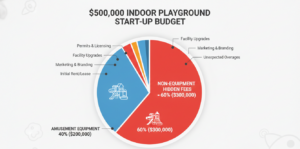
Cost To Set Up Indoor Play Area: 7 Hidden Fees Exposed. Expert Budgeting Guide For Commercial Playground Success.
Ver pormenores
Saiba como criar um plano de negócios para um parque infantil coberto com análise de custos, etapas de instalação e dicas de marketing.
Ver pormenores
Saiba o que deve saber antes de comprar um trampolim, desde as caraterísticas de segurança e o tamanho até aos limites de peso e à durabilidade.
Ver pormenores