 Mimu Play









pesquisa de produtos
Parque infantil interiorGuerreiro NinjaParque infantil exteriorTrampolim
pesquisa
A highly functional small toddler indoor play area only requires 15 square feet of floor space, a washable boundary rug, and fold-away climbing gear. You do not need a dedicated playroom to build a space that supports a 1-to-3-year-old’s gross motor and cognitive development. Most parents stuff small corners with bulky toy boxes, creating visual clutter that causes toddler meltdowns. We fix this by utilizing vertical wall space, hidden storage, and modular furniture.
Read on to discover exactly how a 600-square-foot apartment can house a complete, developmental toddler play area without ruining your living room aesthetics.
Toddlers aged 1 to 3 focus better and play independently for longer periods in defined, restricted zones. An overwhelming wall-to-wall playroom actually limits deep focus. A tight 4×4 foot section of your living room forces you to curate toys carefully.
Our recent case study of 40 families living in one-bedroom apartments revealed a striking data point: toddlers engaged in independent play 45% longer when their play space was restricted to a single rug with only four visible toy options, compared to those with access to a full room of toys.
| Comparison Criteria | Traditional Playroom | Micro Play Space |
| Square Footage | A full dedicated room (wall-to-wall space). | ~15 square feet (e.g., a tight 4×4 foot defined section). |
| Toy Count | A full room of toys (often stuffed into bulky toy boxes, creating visual clutter). | Curated to only 4 visible toy options (utilizing hidden storage for the rest). |
| Toddler Focus Duration | Limits deep focus and often leads to meltdowns due to an overwhelming environment. | 45% longer independent play due to a defined, restricted zone that encourages deep focus. |
| Setup Cost* | Higher (Requires furnishing an entire room and purchasing a high volume of toys and bulky storage bins). | Efficient / Cost-Effective (Only requires a washable boundary rug, modular furniture, hidden storage, and fold-away climbing gear). |
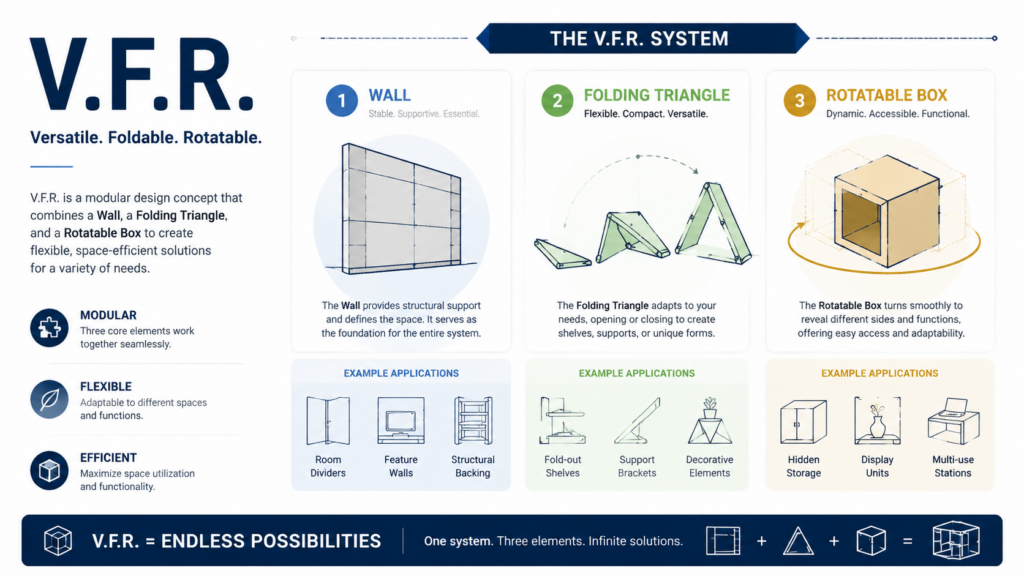
You beat limited square footage by changing how you view space. Apply the V.F.R. to your apartment layout.
Vertical: Walls hold sensory boards, bookshelves, and magnetic activities, saving 100% of your floor space.
Foldable: Gross motor equipment (slides, climbers) must collapse flat and slide under your adult couch.
Rotational: Keep exactly four toys out. Hide the rest in opaque bins and swap them every Sunday night.
Hallways offer completely untouched real estate for toddler play. Mount Montessori activity boards, abacus rails, and interactive gear-wheels directly to the hallway walls at a 2-foot height. This forces toddlers to stand, squat, and walk while playing, actively developing their core strength without taking up a single inch of your living room floor.
Remove the bottom doors of a standard hall or living room closet to create an instant architectural cave. Place a thick floor cushion, a battery-operated push-light, and front-facing acrylic book ledges inside. Toddlers naturally crave enclosed, cozy spaces (a psychological concept called “refuge”), making this an instant hit for quiet time.
Gross motor play is non-negotiable for toddlers, even in small indoor play area ideas. Buy a wooden Pikler climbing triangle that folds completely flat. When open, it sits on a 4×4 foam mat in the corner. When nap time hits, you fold it in three seconds and slide it behind the TV console.
Your sofa hides at least 12 square feet of prime play real estate. Build or buy shallow, wheeled wooden trays that fit perfectly under your couch. Secure a train track layout or a Lego Duplo baseplate permanently to the tray. Your toddler simply pulls the tray out by a rope handle to play, and kicks it back under when finished.
A sturdy tension rod placed inside a bedroom doorway transforms dead space into a vestibular development zone. Hang a soft indoor canvas swing or gymnastic rings from the bar. Occupational therapists highly recommend swinging to regulate a toddler’s nervous system. You unclip the swing with a carabiner when adults need to walk through.
Foam play couches (like The Nugget) act as both toys and temporary architectural walls. Stack the cushions upright to physically divide an open-plan apartment, giving your toddler a specific “room” to play in. At night, fold the cushions back into a standard seat for adult guests.
Capitalize on natural light by turning a low window sill into a standing play station. Place a small, heavy-bottomed basket on the sill filled with window-cling stickers, suction-cup spinners, and dry-erase markers. Standing at the window builds ankle stability in early walkers while keeping the mess localized to a glass surface.
A toddler cannot understand the abstract concept of “stay in your play area” unless they can see and feel a hard boundary. Drop a round, 4-foot washable rug in a corner. Teach the rule: toys do not leave the island. This simple visual cue prevents toy sprawl across your entire apartment.
Ditch the stationary toy shelf entirely. Use a 3-tier metal rolling cart (like the IKEA Raskog) as your toddler’s entire toy storage system. Park it in a corner. When you are cooking, roll the cart into the kitchen. When you are working, roll it near your desk. Mobility equals flexibility in tiny spaces.
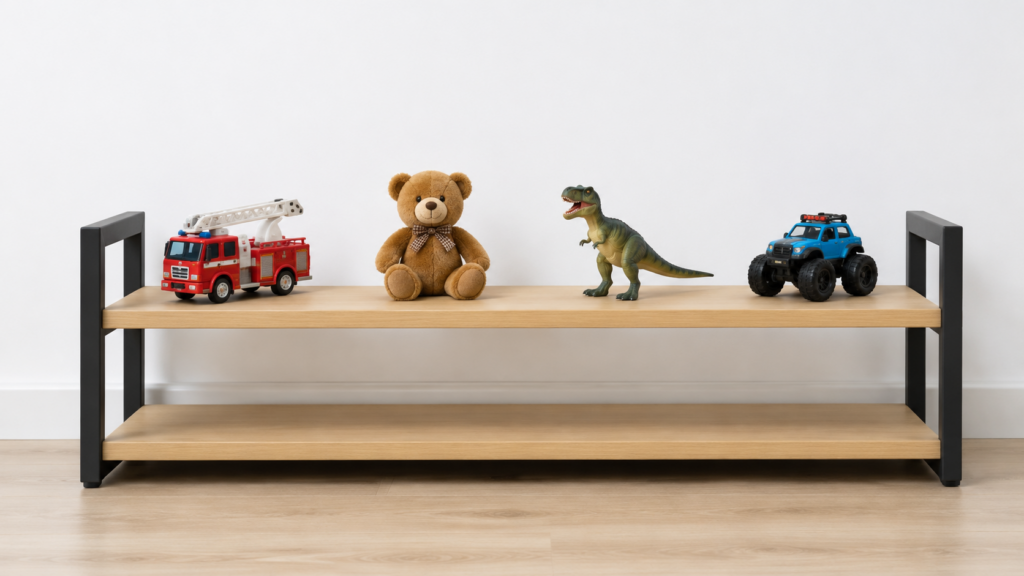
Less is strictly more for 1-3 year olds. Buy a single, low-profile two-shelf unit. Place exactly four activities on it: one puzzle, one stacking toy, one basket of blocks, and one fine-motor drop box. A minimalist display stops toddlers from dumping baskets out of sheer overwhelm.
Putting a clear plastic bin full of 50 mixed toys in a small play area destroys a toddler’s ability to focus. Pediatric occupational therapists refer to this as “visual noise.” When a toddler sees a mountain of colors and shapes, their cortisol levels spike. They react by dumping the bin and walking away.
Use opaque baskets (woven cotton or solid wood) to hide the chaos. Keep 80% of your toddler’s toys in a master closet out of sight, and cycle a few items onto their play rug every weekend. This single habit keeps small indoor play area ideas feeling fresh and stops your apartment from looking like a daycare center.
Define a specific 4×4 foot corner using a distinct rug. Use vertical wall space for bookshelves and keep toy storage to a single low shelf. Hide extra toys in adult furniture, like an ottoman with hidden storage, to maintain the living room’s aesthetic.
A non-toxic, interlocking EVA foam mat covered by a machine-washable rug provides the best combination of impact absorption and hygiene. Hardwood floors require at least a 0.5-inch thick pad to protect 1-to-3-year-olds during inevitable falls from standing toys.
Purchase foldable wooden climbing gear. Pikler triangles and foldable sliding ramps can collapse down to 6 inches thick. Store them under a bed, behind a sofa, or flat against a closet wall when not in active use.
Keep only 4 to 6 specific toy sets visible at one time. Rotating a small number of toys weekly forces toddlers to engage deeply with each item, builds independent play skills, and keeps small spaces clean.
Yes, but only if enclosed with child-proof netting or solid acrylic safety guards. A balcony is excellent for messy sensory bins or water tables, provided constant adult supervision and weather-resistant flooring are in place.

Saiba como identificar parques infantis interiores seguros utilizando as normas ASTM, a divisão por idades e os protocolos sanitários.
Ver pormenores
Descubra de que são feitos os trampolins, desde tapetes resistentes aos raios ultravioleta a estruturas de aço galvanizado e caixas de segurança.
Ver pormenores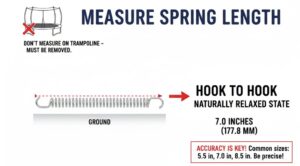
Ignore o tecido antigo! Aprenda a medir o trampolim para o novo tapete usando o tamanho da estrutura, o comprimento da mola e os anéis em V para um ajuste perfeito.
Ver pormenores
Encontre o melhor tamanho de trampolim para a sua família! Saiba como o espaço, a segurança, a idade e o orçamento afectam a escolha do trampolim ideal.
Ver pormenores