 Mimu Play








product search
Indoor PlaygroundNinja WarriorOutdoor PlaygroundTrampoline
search

To pick the perfect trampoline, start by measuring your yard and ensuring 3 to 5 feet of safety clearance around the entire perimeter. For most recreational use, a 12ft to 14ft Round Trampoline is the ideal choice as it naturally directs jumpers back to the center for safety. Always prioritize models with an internal enclosure net (attached inside the springs to prevent pinching), a hot-dip galvanized steel frame for rust protection, and a weight capacity that exceeds your heaviest user by at least 20%. If your child is training for gymnastics, choose a Rectangular shape for a higher, even bounce; for smaller or narrow yards, an Oval shape maximizes jump space without sacrificing clearance.
Below we start to talk about specific doorways.
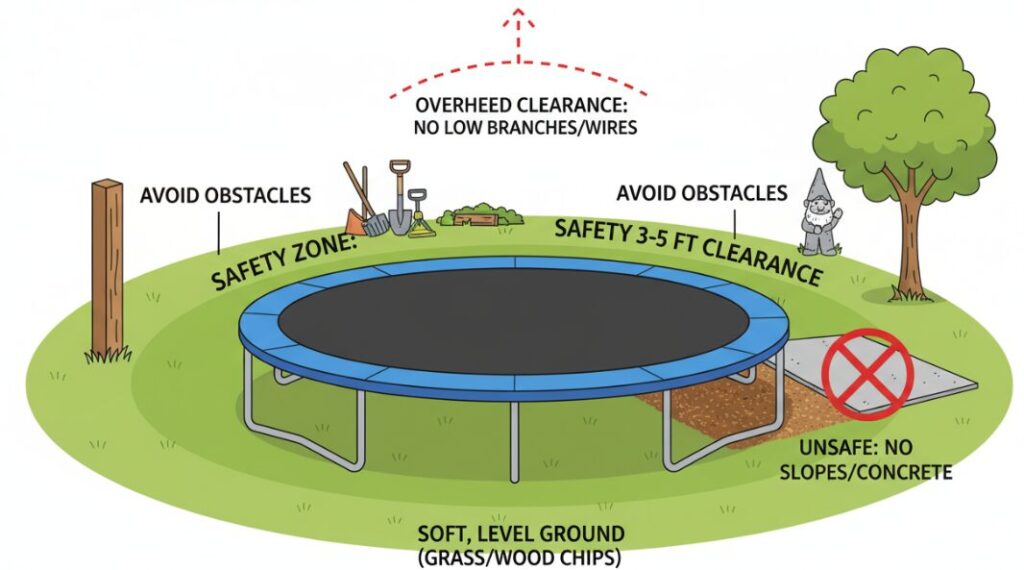
Before browsing those fancy models, the core of figuring out “how to pick a trampoline” is actually figuring out your available space. Many people think that as long as the trampoline shelf can be stuffed into the backyard, this is definitely a misunderstanding. You have to count the “safe zone” in.
There can be no obstacles within 3 to 5 feet of the trampoline perimeter. This buffer zone is crucial, and too many cases of injuries caused by jumpers losing control and crashing into fences, tree trunks, garden debris and even concrete walls.
When you study the home entertainment trampoline, you will find that the circle is the current “rule”.
High-quality materials determine whether your trampoline will be scrapped in one summer or can accompany you for ten years. When looking at the parameter table, just stare at these two core components:
The safety net is a necessity, but the design is very delicate. Whether novice or veteran, I recommend choosing an intranet model.
Intranet vs. Extranet: The intranet is fixed inside the spring, while the extranet covers the outside of the spring.Prevent pinching injury: The internal network design completely isolates the spring from the jumping area, eliminating the gap between the jumping pad and the frame. This can fundamentally eliminate the risk of small feet stepping into the spring, and avoid the kind of pinch injury accident that looks painful.
The frame is the skeleton of the trampoline. To be durable, you must look for “hot-dip galvanized steel”.
Anti-rust principle: “hot-dip plating” means that the steel is completely immersed in molten zinc, achieving full coverage inside and outside. This process allows the frame to have a strong resistance to corrosion. This is essential if you plan to leave the trampoline outside all year round in the rain, snow or in a humid environment for a long time.
Discover endless fun and spark imagination! Our indoor playground products create a safe, exciting paradise for children. Experience boundless joy now!
Embrace adventure and fresh air! Our outdoor playground products offer thrilling, safe experiences for kids to explore, play, and grow. Unleash the fun outside!
Neglecting weight restrictions is one of the most common causes of trampoline damage. When selecting, you should pay attention to the “single weight limit” or the overall structural weight bearing.
Why leave a margin?
Because jumping creates a dynamic force (G-force), which is much higher than static weight. Reserve 20% of the buffer space to ensure that the spring and jumping mat will not be stretched to the limit every time you take off. This not only extends the life of the equipment, but also ensures that the rebound foot is always sensitive and powerful.
Although the circular trampoline is excellent in safety, it is not the only choice. If your needs are specific-such as having professional training goals or an exotic yard shape-then you have to think differently.
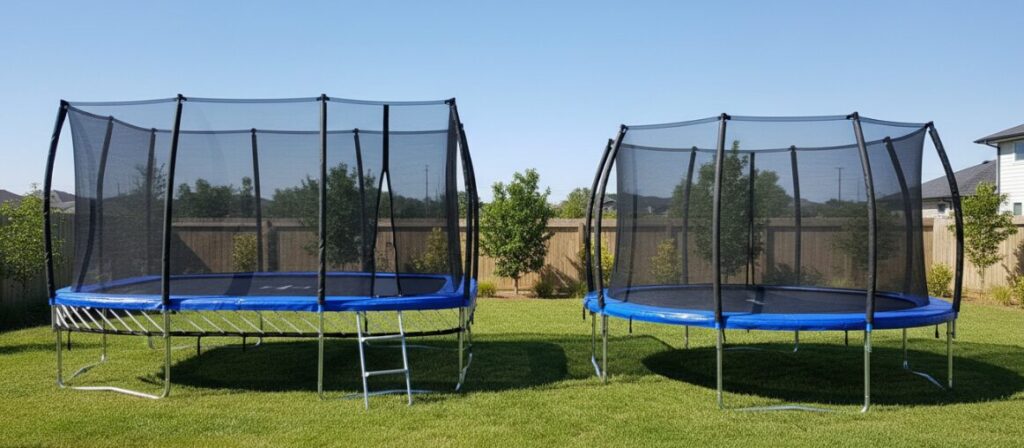
If your child is practicing gymnastics or competitive sports, rectangle is definitely the choice of crushing level.
For families with small or long, narrow yards, the oval shape is a smart solution.
Author: Mark Stevens
With over a decade of experience in the outdoor recreation industry, I specialize in backyard safety and equipment durability. I understand that a trampoline is a big investment for your family. I hope to help you cut through the marketing noise and focus on the technical specs that matter most—from galvanized steel frames to the physics of bounce—ensuring you choose a model that is safe, fun, and built to last.
This will close in 0 seconds