 Mimu Play








product search
Indoor PlaygroundNinja WarriorOutdoor PlaygroundTrampoline
search

Cleaning trampoline, the most effective “old-style” method for cleaning a trampoline is actually warm water with mild detergent (the ratio is about 1 gallon of water to two tablespoons). In the process, first use a soft wool broom to clean up the loose garbage, then connect the garden hose to thoroughly wet the mat and soak up the stubborn dirt. Next, gently scrub the surface with a soft brush or sponge—don’t forget to brush the safety pad and spring, too. The last and most critical step is to rinse thoroughly with clean water, rinse all soap residues, and then dry naturally. If you want to remove mold, replace the soap with white vinegar solution (1 part vinegar to 9 parts water).
Next, I will tell you the whole set of specific operation plans that I have used for more than ten years. Whether you want to do a simple spring renovation or save a moss-covered “disaster site”, this set of procedures will ensure that your trampoline looks like new and the structure is still stable.
If your trampoline has just been taken out of the warehouse in winter, or if it is just a layer of ash and bird droppings, don’t come up and do “heavy cleaning”. What you need is a gentle set of procedures, focusing on the UV coating that protects the mat—this invisible shield is the key to preventing the plastic from becoming brittle in the sun.
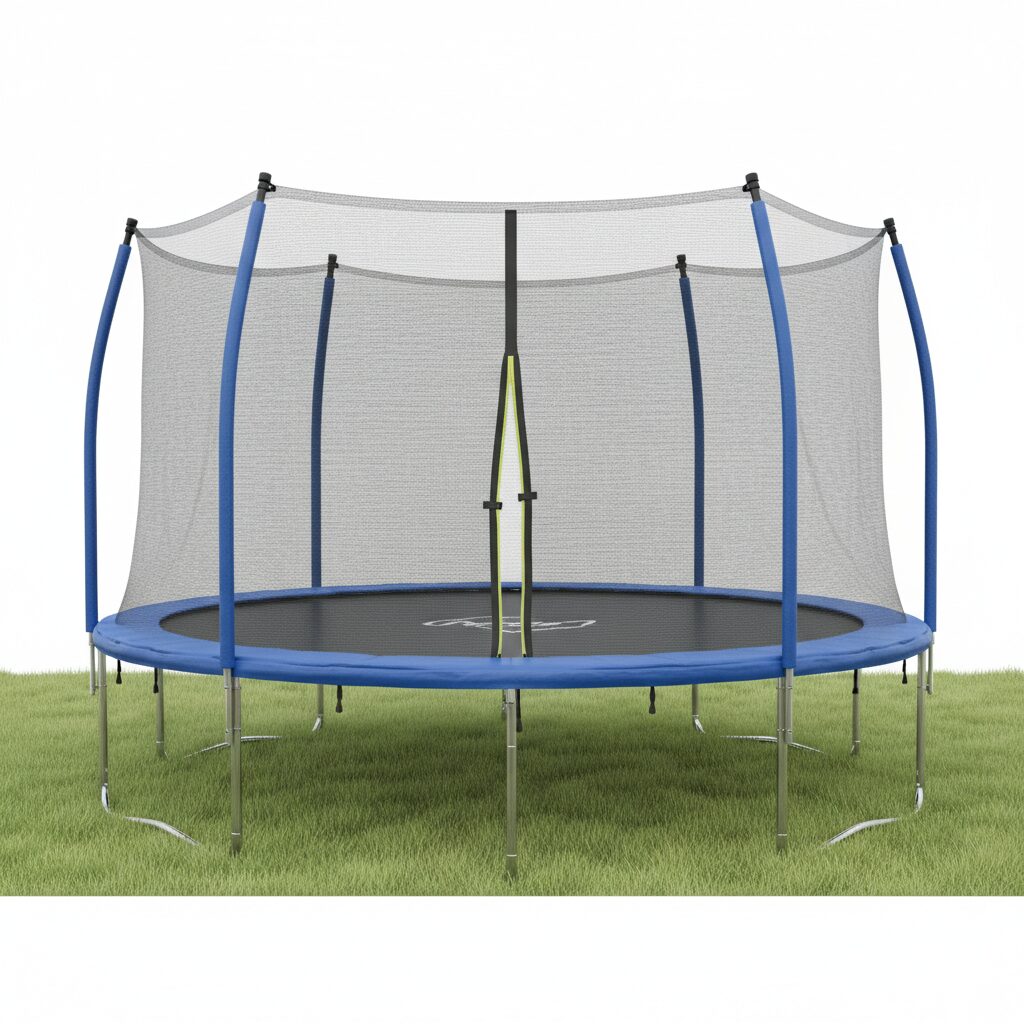
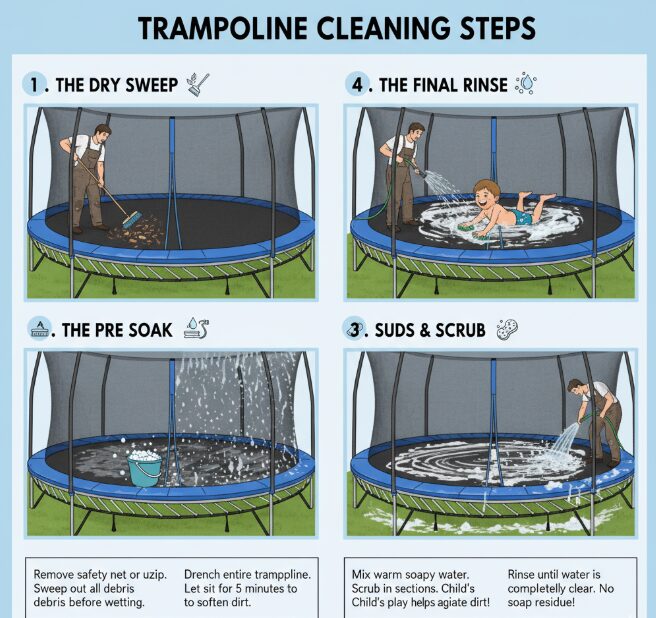
Before getting anything wet, remove the safety net (if it is easy to remove) or unzip the entrance zipper. Climb in and sweep out all the leaves, branches and pine needles.
Expert experience: If you skip this step, once you touch the water, those dry leaves will turn into mud like tea residue, which is not only difficult to clean, but also leaves permanent stains on the mat.
Take a hose and drench the entire shelf—jump mats, pads, safety nets—all over. Let the water stop for about 5 minutes. This step is to make the dried bird droppings and caked mud absorb water and soften again, so that it can be easily removed without a deadly brush.
Mix your warm soapy water well. I used to divide the trampoline into four areas and wash them one by one. Scrub the jump pad in a circle. Don’t forget the pads: those PVC safety pads are usually dirtier than jump pads. Hand gently when wiping, too much action can easily crack the vinyl surface.
Interesting link: This is also a good opportunity to walk the baby! Give your child a sponge and let them slide around on a mat full of soap bubbles. Their weight and movement are just enough to help stir up the dirt and wash it cleaner.
You must rinse until the water is completely clear. If the soap remains and becomes sticky after drying, the result is that it will absorb more dust next week, then you have been busy for half a day.
If you’re dealing with green algae, black mold, or sticky gum, detergent alone is not enough. However, bleach must still not be used (chlorine will directly destroy the polymer bonds of the mat, resulting in embrittlement). In this case, this is the number of fixes in the industry:
Mold can make trampolines very slippery and extremely dangerous.
Sticky gum is annoying and tends to stick to clothes.
On this question, my answer is: “Yes, but you must strictly abide by the following rules”:
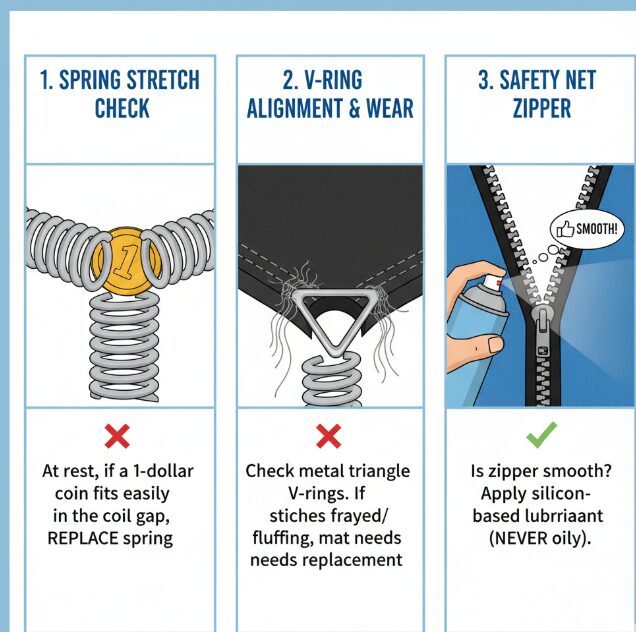
Since they have all been washed, it is convenient to have a check by the way:
About the author: Mike
I’m mike, a certified backyard safety inspector with over 18 years of experience in outdoor equipment maintenance. More importantly, I’m a dad of two active boys who put our gear to the test daily. I specialize in practical, safe DIY solutions that extend the life of your backyard investments without expensive tools or harsh chemicals. When I’m not inspecting safety nets, you can find me in my own backyard, teaching my kids the perfect bounce technique.
This will close in 0 seconds