 Mimu Play








product search
Indoor PlaygroundNinja WarriorOutdoor PlaygroundTrampoline
search

To keep the trampoline warm, you can partially disassemble it or fix it outdoors. For maximum protection, remove the safety net, springs, and jumping mat to store them indoors, which prevents rust and fabric stretching. If keeping the trampoline assembled outdoors, you must remove the enclosure net to minimize wind drag, apply silicone lubricant to metal parts, secure the frame with heavy-duty storm anchors, and protect the mat with a weather cover while clearing snow regularly.
Depending on the severity of your winter climate and your available storage space, you can choose the method that best fits your needs. Below, we break down these two approaches in detail.
If you live in an area where the snow is particularly heavy, or the temperature often drops to many degrees below zero, don’t hesitate to choose this plan directly.
The safety net is usually the most “squeaky” part of the trampoline. The low temperature will make this synthetic material brittle, and then press on the snow or ice, the mesh can easily tear. What is more dangerous is that if the net is not removed, it will produce a “sail effect” on windy days. The wind resistance is too large to directly drag the entire trampoline to run or even overturn.
Operation suggestion: remove the net from the column and fold it neatly. Most importantly, keep it indoors in a dry, rat-proof box-don’t let the rats chew on the net in winter.
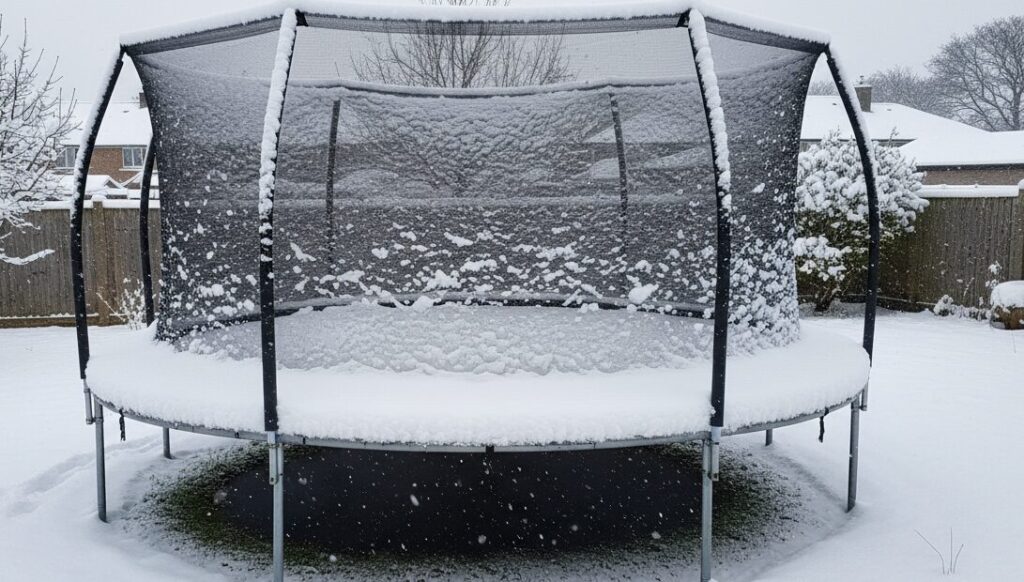
The jumping mat and spring are always in a tight state. When heavy snow presses on the mat, the weight puts excessive tension on the spring. I have seen too many cases where the spring permanently loses its resilience due to overload and stretches, destroying the entire trampoline.
Operation suggestion: Be sure to use the matching spring-pulling tool to disassemble safely, and don’t break it with your bare hands.
Operation suggestion: After the cushion is removed, check whether there is any damage by the way, clean it and fold it for storage.
Tip: Before storing the springs, it is best to spray them with a layer of light oil (such as WD-40 or similar antirust agent), and then put them in a plastic bucket, which can effectively prevent them from rusting during the idle period.
Generally speaking, the metal frame is made of galvanized steel, which is designed to resist rust and weather. Unless you are extremely obsessive and want to vacate the yard completely, the frame itself usually does not need to be disassembled.
Discover endless fun and spark imagination! Our indoor playground products create a safe, exciting paradise for children. Experience boundless joy now!
Embrace adventure and fresh air! Our outdoor playground products offer thrilling, safe experiences for kids to explore, play, and grow. Unleash the fun outside!
If you really don’t have a place to store, or if the winter is mild and the children have to jump up and down occasionally, it is also feasible to keep the assembly state. However, you must do the following maintenance work to ensure that it can survive this winter.
Even if you don’t remove the mat, you must remove the fence. As mentioned earlier, a purse seine is a “joyride” sail. Winter storms are usually accompanied by high winds, and without the fence, the wind goes straight through the frame without uprooting the trampoline and throwing it onto the neighbor’s fence-something I ‘ve dealt with too many times.
The moisture brought by snow and rain is the natural enemy of metal. Although the trampoline frame is galvanized, those joints and connection points are the hardest hit by corrosion.
Operation suggestion: find some high-quality silicone oil or waterproof grease and apply it to the connection between all spring hooks (if you haven’t removed the spring) and the frame. This creates a barrier that keeps moisture out and prevents the parts from rusting together.
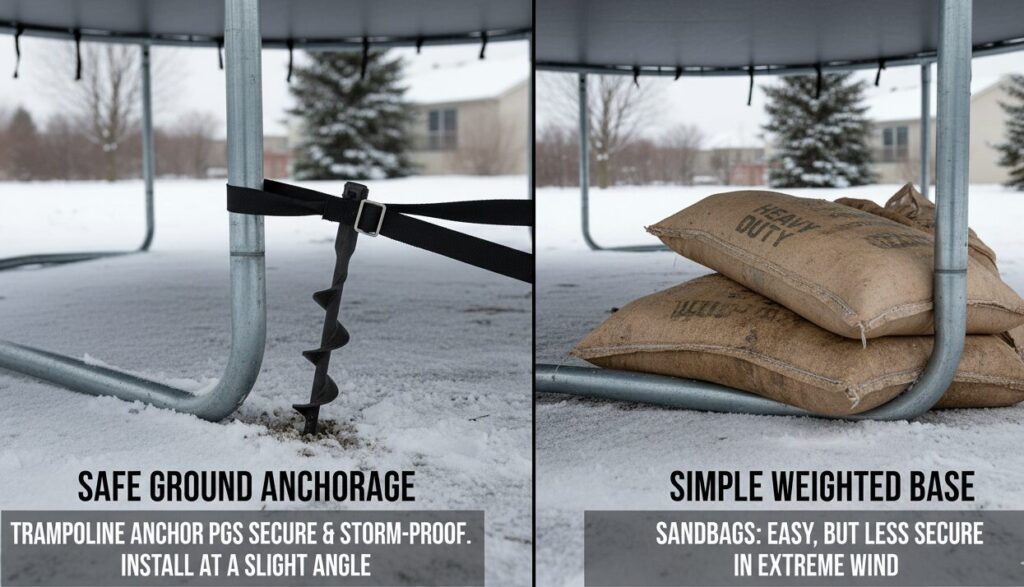
Don’t expect the trampoline’s own weight to withstand winter snowstorms.
Operational recommendations: to buy a set of heavy trampoline anchor kit (usually the kind of spiral pile).
Operation suggestion: Screw the anchor pile deeply into the ground, and then tie the frame tightly to the top with a strap. In this way, even if the wind gusts are strong, the trampoline can firmly “grasp” on the ground.
In order to protect the jumping mat from ultraviolet rays and avoid direct contact with the ice, it is necessary to make a special weatherproof cover. But note that the cover can block the water, not the weight of the snow.
Important Reminder: Many people are easy to make mistakes in this step-please use a soft hair broom to sweep the snow. Never use a plastic or metal shovel. The sharp edge of the shovel can easily cut the rain cover, or even directly cut the jump pad below.
Operational recommendations: see the snow quickly clear. With or without a cover, don’t let the snow pile up on the mat for too long.
Author:Alex
“Hi, I’m a backyard recreation specialist dedicated to extending the lifespan of outdoor play equipment. With years of experience in equipment maintenance, I understand the damage harsh winters can cause to frames and fabrics.”
This will close in 0 seconds