 Mimu Play








product search
Indoor PlaygroundNinja WarriorOutdoor PlaygroundTrampoline
search

The safest way to clean up the trampoline is to clean up the loose debris such as fallen leaves and branches with a soft broom, so as to avoid scratching the mat surface. Next, mix warm water and mild detergent in a bucket to make a cleaning solution-pay special attention here, don’t use bleach or irritating chemicals, they will damage the anti-ultraviolet coating of the jumping pad.
Gently scrub mats and safety pads with a soft sponge or brush, focusing on muddy spots, then rinse the entire structure thoroughly with a garden hose until all remaining soap bubbles are washed away. The last step is critical: wipe the spring and frame with a dry towel to prevent rust, and let the mat dry thoroughly in the sun before putting it into use.
This video demonstrates the process of cleaning a trampoline:
Based on the recommended cleaning method, you need to prepare the following items:
The first step is to clean the surface. You must remove any leaves, branches or small stones that have piled up on the mat. While it may be tempting to grab a shovel or hard rake, I strongly recommend that you strictly stick to a soft broom.
Hard or sharp tools can easily catch the mesh of the jumping mat or scratch the safety mat. Gently sweep outward from the center of the trampoline to ensure that the surface is clean before you touch the water. This will prevent loose dust from turning into a puddle of unhandled mud during the cleaning process.
The integrity of the trampoline depends largely on the chemicals you use. When mixing the solution in a bucket, combine warm water with mild detergent.
When the solution is ready, use a soft sponge or a soft brush to soapy water. Apply solution to pads and vinyl safety pads.
Concentrate on dealing with muddy spots or bird droppings, scrubbing gently in circles. Be extra careful when handling safety pads (colored rings covering springs). These are usually made of vinyl or PVC and can easily break if you scrub too hard. The goal is to remove dirt, not wear the surface texture.
Discover endless fun and spark imagination! Our indoor playground products create a safe, exciting paradise for children. Experience boundless joy now!
Embrace adventure and fresh air! Our outdoor playground products offer thrilling, safe experiences for kids to explore, play, and grow. Unleash the fun outside!
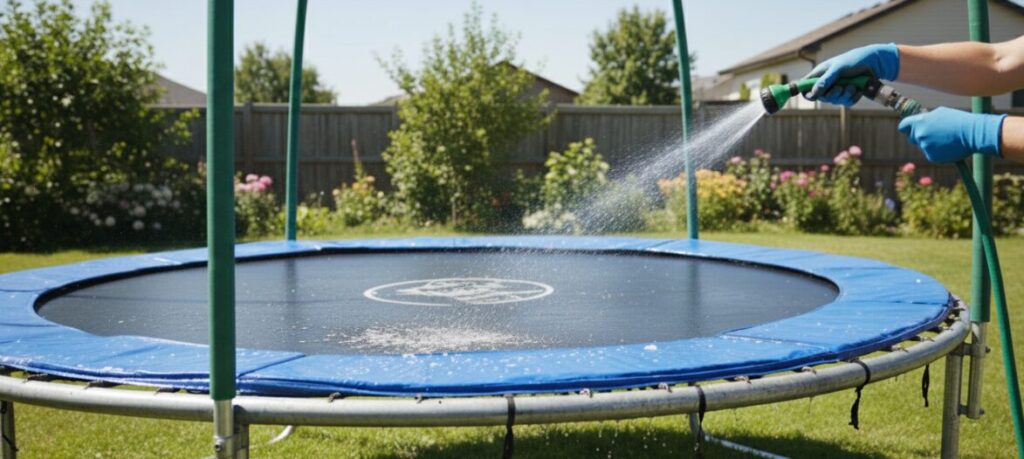
After scrubbing, rinse the entire structure with a garden hose. I usually don’t recommend using high-pressure cleaners because they may damage the mat fibers or force water into the filling foam. A standard hose provides enough pressure to flush away the dirty foam.
It is important to keep flushing until the water is clear. If soap residue is left on the mat, it will become extremely slippery when wet and sticky when dry, posing a safety hazard to the jumper.
The final stage of the cleaning process involves a “two-step” drying technique to ensure safety and durability.
Don’t let anyone jump on the trampoline until it’s dry, because the surface can be slippery and very dangerous. Following this process-cleaning, washing with mild soap, rinsing and drying properly-can ensure that your trampoline will remain clean, safe and in good condition for years to come.
A: No, you should strictly avoid using bleach. You should only use a solution of warm water and mild detergent. Bleach is an irritating chemical that degrades the UV protection layer of the jumping pad. Once this UV coating is destroyed by bleach, sunlight will damage the mat fibers faster, directly reducing the life and safety of the trampoline.
A: To care for springs and frames, you should wipe them with a dry towel immediately after rinsing. Although the jump pad needs to be dried in the sun, the metal parts (spring and frame) need to be dried manually. Leaving water on these parts or allowing them to air dry naturally can cause oxidation. Wipe thoroughly with a towel can remove moisture, which is the most effective step to prevent rust.
A: The recommended method is to use a garden hose to flush the structure. The water flow provided by the garden hose is relatively gentle, which can effectively remove soap residues without excessive impact. Although there is no explicit prohibition, according to my observation, high-pressure water flow is often too aggressive and may damage the woven structure of the mat or force the water into the safety mat, causing them to become heavy and difficult to dry. Gentle rinsing with scrubbing is sufficient.
A: It is best to let the mat and the entire structure dry completely in the sun before use. For safety pads, you should gently scrub and rinse thoroughly. Ensuring that they are dry prevents moisture from being trapped on the metal frame or spring, which-like the spring problem just mentioned-helps prevent rust and ensures that the trampoline is safe for jumpers.
Author: Mark Davis
“With years of experience in outdoor equipment maintenance, I specialize in practical care guides. I advocate for gentle cleaning methods to extend your gear’s lifespan—believing that a soft brush, mild dish soap, and proper drying techniques are all you need to keep your trampoline safe and rust-free.”
This will close in 0 seconds