 Mimu Play








recherche de produits
Terrain de jeux intérieurNinja WarriorAire de jeux extérieureTrampoline
recherche

La création d’une aire de jeux couverte pour enfants nécessite une approche systématique pour sélectionner des équipements certifiés et hautement performants, conformes aux normes modernes en matière de sécurité, de structure et d’environnement. Le succès commercial à long terme de votre entreprise d’aires de jeux couvertes repose sur l’acquisition d’équipements alliant longévité structurelle, matériaux non toxiques et jeux interactifs immersifs. Investir dans des équipements certifiés et respectueux de l’environnement minimise les risques de responsabilité future, réduit les frais d’entretien et garantit que les parents font confiance à l’environnement de votre structure. Si l’esthétique physique attire les clients, privilégier dès le départ les spécifications techniques et les certifications de sécurité des matériaux protège votre aire de jeux contre l’usure prématurée et les manquements coûteux aux normes de sécurité.
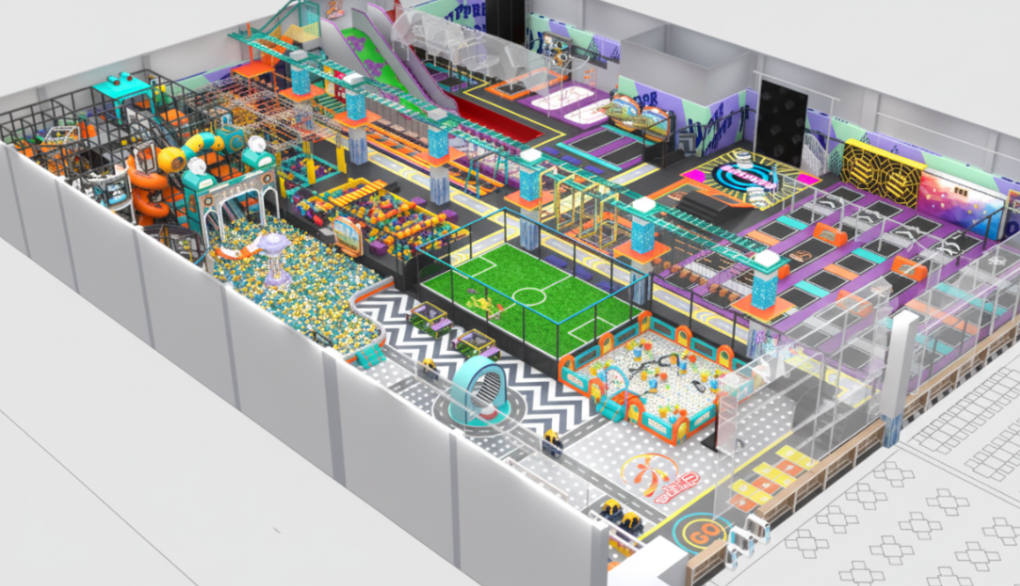
Normes de sécurité relatives aux matériaux : élimination progressive des substances toxiques d'ici 2026
Le choix des matériaux détermine directement la sécurité et la facilité de nettoyage de vos équipements d'aires de jeux intérieures. Les parents aisés privilégient les installations qui utilisent des matériaux non toxiques et respectueux de l'environnement, permettant d'éviter toute exposition aux produits chimiques et toute irritation cutanée.
Le polyuréthane thermoplastique (TPU) est en train de remplacer le PVC traditionnel en tant que norme industrielle pour les revêtements haut de gamme destinés aux aires de jeux souples. Le PVC standard utilise des plastifiants à base de phtalates pour conserver sa souplesse, mais ceux-ci peuvent dégager des émanations et se dégrader au fil du temps sous l'effet d'un frottement physique constant. Le TPU d'origine biologique offre une résistance supérieure à la déchirure, élimine les émanations chimiques et résiste aux désinfectants de qualité médicale sans se fissurer ni perdre son intégrité structurelle.
BiaoGe ChaRu (Tableau proposé : Comparaison des revêtements pour aires de jeux : Bio-TPU vs PVC traditionnel, évaluant la teneur en phtalates, la résistance à la déchirure, la résistance aux désinfectants, la durée de vie et l'empreinte environnementale)
Les composants internes des structures de jeux souples doivent être fabriqués à partir de mousses ignifuges à haute densité afin de résister aux chocs quotidiens importants tout en garantissant la sécurité des enfants. Le cœur structurel des marches, rampes et plates-formes des structures de jeux souples doit être constitué de mousse de polyéthylène expansé (EPE) ou de polyéthylène réticulé (XPE) présentant une densité d’au moins 30 à 40 kg/m³. Ces mousses doivent répondre à des certifications internationales strictes en matière d’ignifugation, telles que la classe B1 selon la norme EN 13501-1 ou le California Technical Bulletin 117 (TB 117).
Les défaillances structurelles peuvent entraîner des blessures graves, voire catastrophiques, et conduire à la fermeture immédiate des installations. Opter pour des équipements conçus à partir de métaux de qualité industrielle et dotés de systèmes d'assemblage à haute résistance est la seule façon de développer une activité durable dans le domaine des aires de jeux intérieures.
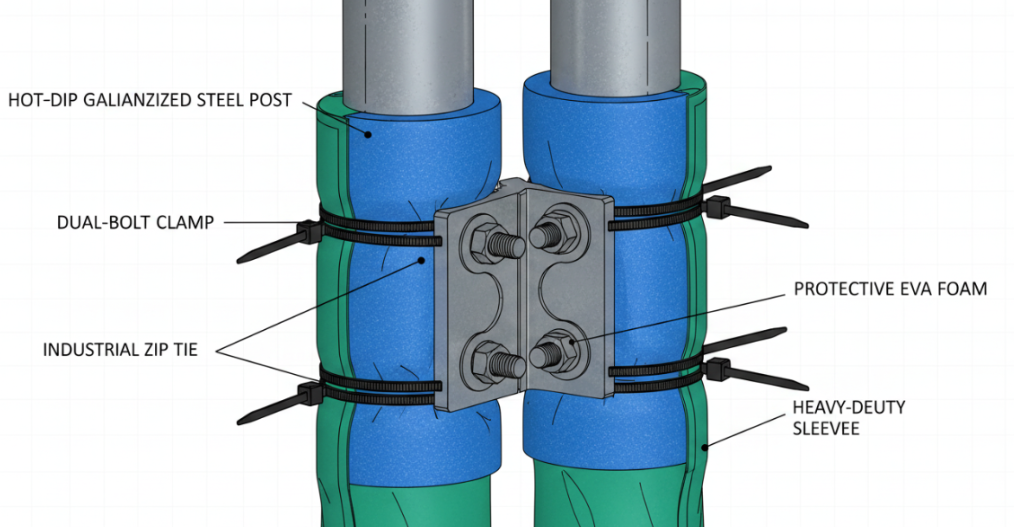
La structure porteuse des aires de jeux à plusieurs niveaux doit être constituée de tubes en acier galvanisés à chaud, d’un diamètre extérieur minimal de 48 mm et d’une épaisseur de paroi d’au moins 2,2 mm. L’acier brut doit subir un traitement de galvanisation à la fois à l’intérieur et à l’extérieur afin d’empêcher la formation de rouille due à l’humidité et aux produits de nettoyage. Les structures en acier standard doivent être assemblées à l’aide de colliers de fixation en fonte à haute résistance, fixés par des boulons à double verrouillage, afin d’éliminer tout bord tranchant susceptible de déchirer le rembourrage de sécurité ou de blesser un enfant.
Les filets de sécurité et les espaces entre les barrières doivent être conçus de manière à éliminer tout risque de coincement de la tête, du cou et des doigts. Tout espace entre le rembourrage souple, l’acier de structure ou le filet doit mesurer soit moins de 3,5 pouces (pour empêcher le corps d’un enfant de se glisser à travers), soit plus de 9 pouces (pour permettre à la tête d’un enfant de passer en toute sécurité sans rester coincée). Les filets de sécurité doivent être fabriqués en polyester ou en nylon à haute ténacité, avec une taille de maille suffisamment petite pour empêcher les doigts ou les boutons des vêtements de s’y accrocher, tout en conservant une résistance à la traction minimale de 240 kg par fil de maille.
Pour optimiser l'aménagement de votre aire de jeux, il faut trouver le juste équilibre entre les défis physiques et la sécurité adaptée à l'âge des enfants. Le cadre de configuration S-E-L garantit que votre aménagement s'adapte aussi bien aux jeux à faible impact destinés aux tout-petits qu'aux défis physiques dynamiques et intenses.
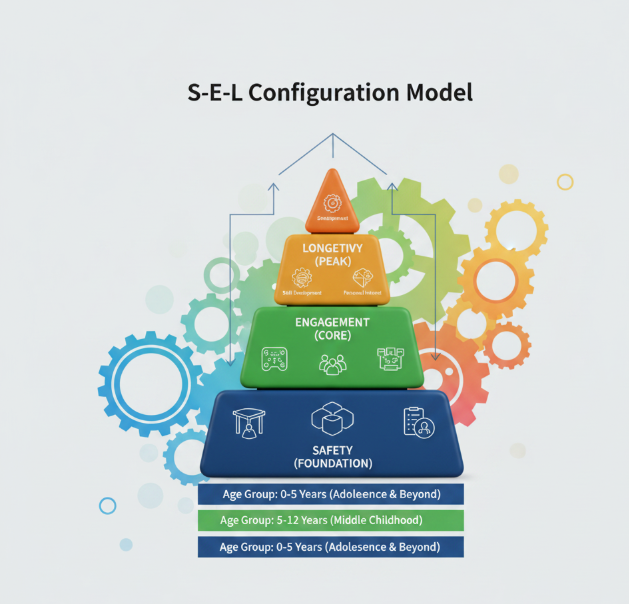
La zone réservée aux tout-petits doit être physiquement séparée de manière totalement indépendante de l’aire de jeux principale afin de protéger les plus jeunes des enfants plus âgés qui se déplacent rapidement. Les équipements destinés aux tout-petits doivent limiter la hauteur de chute à 24 pouces maximum, grâce à l’utilisation de blocs en mousse XPE ultra-moelleuse et haute densité, de tunnels de rampement à profil bas et de panneaux de jeux sensoriels. Chaque surface physique de cette zone doit être rembourrée d’au moins 2 pouces de mousse à cellules fermées, recouverte de TPU sans couture de qualité médicale.
Les équipements destinés aux enfants plus âgés doivent proposer des défis physiques complexes, tels que des ponts de corde, des murs d’escalade et des toboggans à plusieurs voies, tout en intégrant des dispositifs de décélération active. Les toboggans doivent comporter une zone de décélération plane à la sortie, d’une longueur d’au moins 3,9 pieds, afin de réduire la vitesse de l’utilisateur jusqu’à un arrêt en toute sécurité avant qu’il n’atteigne le bassin de réception. Les tours d’escalade doivent comporter des plates-formes décalées tous les 6 pieds de hauteur verticale afin d’empêcher un enfant de subir une chute verticale ininterrompue.
L'intégration de la technologie numérique aux équipements de jeux physiques permet d'augmenter la fréquence des visites des clients en leur proposant des expériences dynamiques pilotées par des logiciels. Lors de la mise en place de cette installation, vous devez vous assurer que le matériel électronique ne compromet ni la sécurité physique ni la facilité de nettoyage.
Les toboggans interactifs, les murs d'escalade numériques et les jeux de projection au sol activés par le mouvement allient exercice physique et jeux cognitifs. Les systèmes de projection doivent être associés à des capteurs infrarouges de haute précision afin de suivre avec exactitude les mouvements des enfants, sans qu'il soit nécessaire de porter des appareils portables. En mettant régulièrement à jour les thèmes du logiciel interactif, vous pouvez renouveler votre environnement ludique sans avoir à acheter de nouvel équipement physique.
Tous les composants électroniques, capteurs interactifs et systèmes de projection numérique doivent fonctionner sur une alimentation en courant continu à basse tension (généralement 12 V ou 24 V) afin d’éliminer tout risque d’électrocution à l’intérieur des aires de jeux. Les alimentations électriques et les faisceaux de câbles doivent être acheminés à l’intérieur de gaines rigides ignifugées, dissimulées en profondeur dans le rembourrage en acier de la structure, hors de portée des enfants. Les projecteurs et les caméras de suivi doivent être logés dans des boîtiers suspendus ventilés et inviolables, permettant une dissipation thermique adéquate tout en empêchant l’accumulation de poussière et les chocs physiques causés par des balles ou des jouets égarés.
L'investissement dans des équipements de jeux nécessite des contrôles de qualité physiques rigoureux avant de finaliser toute commande auprès d'un fabricant. L'achat d'équipements non certifiés dans le but de réduire les coûts initiaux entraîne souvent l'échec des inspections locales et des primes d'assurance élevées.
| Fonctionnalité | ASTM F1918-12 (États-Unis) | EN 1176 / Partie 10 (UE) | Équipements non certifiés |
| Champ d'application principal | Plus précisément, les équipements de jeu souples et fermés (SCPE). | Équipements généraux pour aires de jeux ; Partie 10 : jeux en espace clos. | Usage général/résidentiel ou usage commercial non vérifié. |
| Épaisseur de l'acier de construction | de 2,2 mm à 3,5 mm (Généralement de l'acier galvanisé de 2,5 mm d'épaisseur). L'accent est mis sur la stabilité et la résistance à la corrosion. | de 2,0 mm à 3,0 mm (Généralement 2,5 mm). Doit résister aux charges mobiles calculées et à la fatigue. | de 1,5 mm à 1,8 mm (ou moins). Risque de déformation ou de défaillance structurelle en cas de forte fréquentation. |
| Indice de résistance au feu de la mousse | UL 94 (V-0/V-2) et/ou NFPA 701. Mousse ignifuge haute densité. | EN 13501-1 (classe B1/B2) ou EN 1021-1/2. Faible dégagement de fumée et auto-extinguible. | Pas de note / Non traité. On utilise souvent de la mousse de polyuréthane inflammable qui dégage une fumée toxique. |
| Résistance nette (à la traction) | Il faut résister à un 50 lbf (222 N) mesurer la force exercée sur le torse sans que la sonde ne cède ni ne révèle la présence d'objets durs. | La résistance minimale des mailles doit souvent être supérieure à 200 kg (~2 000 N) test de rupture à l'échelle du système. | Non classé. Un filet fin et léger qui peut être déchiré à la main ou facilement coupé par des chaussures. |
| Densité du maillage | Tissage serré pour éviter que les doigts ne restent coincés et empêcher toute “ escalade ”.” | La taille des mailles doit empêcher tout risque de coincement de la tête ou du cou (généralement < 100 mm). | Mailles larges ; souvent franchissables ou présentant un risque d'enchevêtrement. |
| Vérification en laboratoire d'essais | Intertek, SGS ou TÜV (Certification par un organisme tiers conforme aux normes ASTM). | TÜV Rheinland, TÜV SÜD ou GS Le label « (Sécurité certifiée) ». | “ Auto-certifié ” ou un rapport interne de l'usine (qui ne fait pas foi auprès des assurances). |
| Galvanisation | Galvanisation à chaud (intérieure et extérieure) requise pour garantir la longévité. | Obligatoire ; soumis à des contrôles rigoureux en matière de résistance à la corrosion et de régularité de surface. | Revêtement par projection à froid ou uniquement extérieur (rouille rapidement de l'intérieur). |
Le fabricant de votre équipement doit fournir des certificats d'essais réalisés par un organisme tiers attestant la conformité à la norme ASTM F1918-12 (norme nord-américaine) ou à la norme EN 1176 (norme européenne). Ces certificats doivent être délivrés par des organismes d'essais reconnus à l'échelle internationale, tels que TÜV SÜD, SGS ou Intertek. Les simples déclarations de conformité à la sécurité émanant du fabricant ne suffisent pas pour passer les contrôles des bâtiments commerciaux ni pour satisfaire les assureurs du secteur commercial.
Le choix d’équipements bon marché et non certifiés entraîne souvent des coûts d’exploitation plus élevés en raison de la dégradation rapide des matériaux et de la nécessité de les remplacer fréquemment. L’acier galvanisé de haute qualité, les revêtements de jeux souples en bio-TPU et les structures en mousse haute densité haut de gamme ont une durée de vie opérationnelle de 5 à 8 ans dans le cadre d’une utilisation commerciale intensive. Les alternatives bon marché revêtues de PVC, dotées d’une ossature en acier de faible épaisseur, commencent souvent à se déchirer, à s’affaisser et à rouiller dès les 12 à 18 premiers mois, ce qui entraîne des temps d’arrêt de l’installation et des réparations d’urgence coûteuses.
Les équipements d'aires de jeux intérieures doivent être accompagnés de certifications vérifiées par un organisme tiers, conformément à la norme ASTM F1918-12 en Amérique du Nord ou à la norme EN 1176 en Europe. Ces normes portent sur la stabilité structurelle, les limites de toxicité des matériaux, la prévention des risques de coincement et l'atténuation des chocs pour les revêtements de sol de sécurité.
Le TPU n'a pas besoin de plastifiants à base de phtalates nocifs pour conserver sa souplesse, ce qui signifie qu'il ne dégage pas d'odeurs toxiques et ne se dégrade pas avec le temps. Il offre une résistance à la déchirure deux fois supérieure à celle du PVC standard et résiste à des nettoyages fréquents avec des désinfectants professionnels puissants sans se fissurer.
Les structures de jeux à plusieurs niveaux de haute qualité doivent être construites à partir de tubes en acier galvanisé à chaud présentant un diamètre extérieur minimal de 48 mm et une épaisseur de paroi comprise entre 2,2 mm et 3,0 mm. Cela garantit que la structure porteuse est capable de supporter simultanément le poids des enfants et celui des membres du personnel d'encadrement.
Les normes de sécurité stipulent que toutes les ouvertures et tous les interstices présents dans les équipements structurels doivent mesurer moins de 3,5 pouces ou plus de 9 pouces. Cela permet d'éviter qu'un enfant ne se coince la tête ou le cou alors que ses pieds ne touchent pas le sol.
Les équipements haut de gamme, fabriqués en acier galvanisé à chaud, dotés de revêtements en Bio-TPU et de mousse XPE haute densité, sont conçus pour durer entre 5 et 8 ans dans le cadre d'une utilisation commerciale quotidienne intensive. Les équipements de gamme inférieure, fabriqués à partir de métaux non galvanisés et dotés de revêtements souples en PVC standard, doivent souvent être remplacés ou faire l'objet de réparations importantes dans un délai de 12 à 24 mois.
Oui, les systèmes de projection interactifs peuvent être installés a posteriori sur des toboggans, des murs d'escalade ou des espaces ouverts existants. Les conditions essentielles sont de disposer d'une surface de fixation en hauteur stable, hors de portée des enfants, d'un accès à une alimentation électrique dédiée à basse tension, ainsi que d'un environnement où l'éclairage ambiant est contrôlé afin de garantir la clarté de la projection.
Découvrez les coûts de démarrage d'une aire de jeux intérieure, y compris l'équipement, le loyer, les permis et les principaux facteurs d'investissement.
Voir les détails
Découvrez 10 idées d'espaces de jeux d'intérieur pour les tout-petits. Découvrez les meilleures idées d'espaces de jeux d'intérieur pour les petits appartements !
Voir les détails
Les trampolines enterrés sont-ils plus sûrs ? Oui, en éliminant les hauteurs de chute. Mais sans filets ni circulation d'air, les risques demeurent.
Voir les détails
Protégez votre trampoline cet hiver ! Apprenez à nettoyer, ancrer et enlever la neige correctement pour éviter la rouille et les dommages.
Voir les détails