 Juego Mimu









búsqueda de productos
Parque infantil cubiertoGuerrero NinjaParque infantil al aire libreTrampolín
busque en
Mimuplay Kids Space indoor play structures bring movement activities together in a connected play area for children ages 3–15. Explore five models for commercial indoor venues and request a layout discussion for your space.
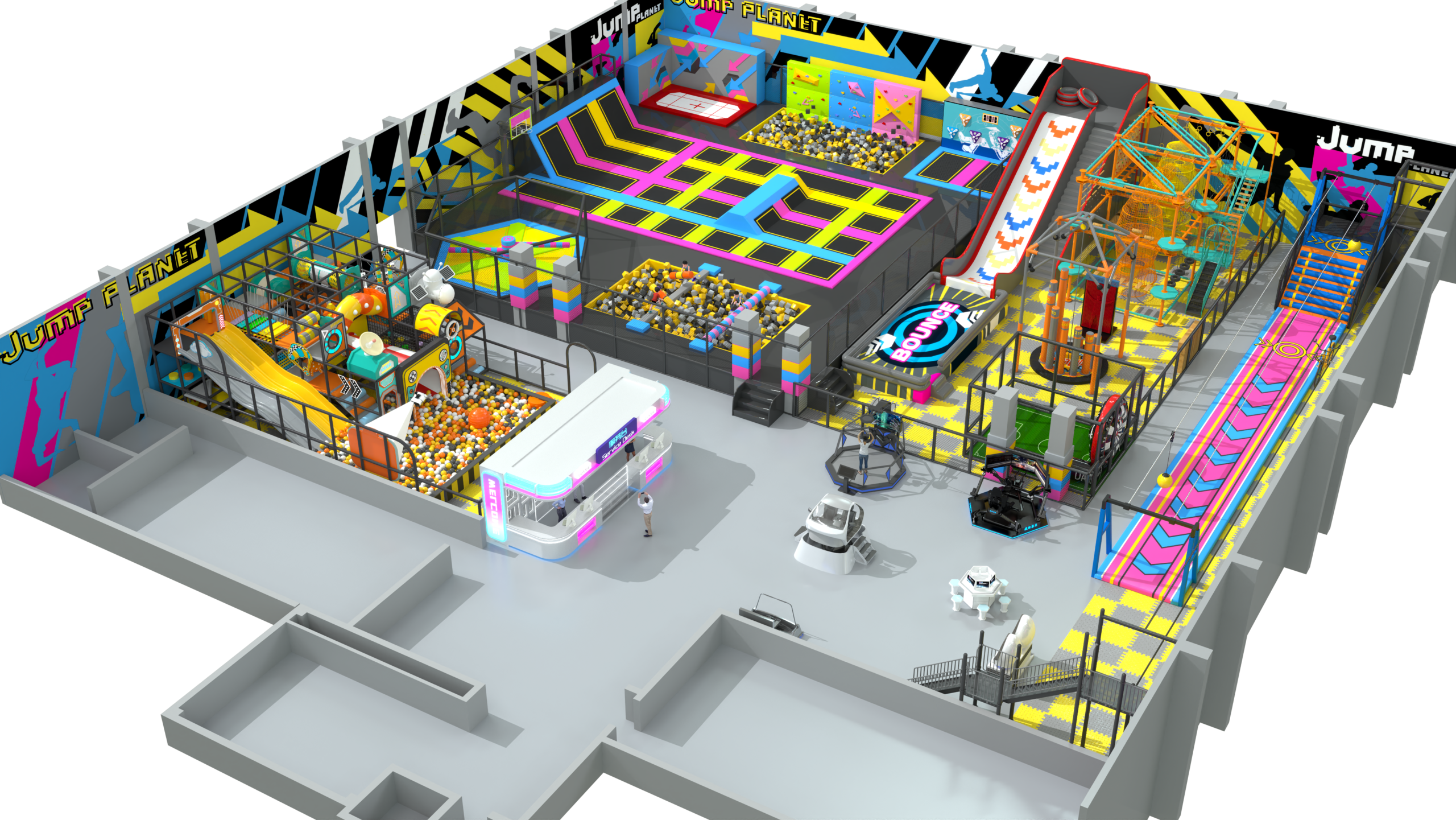
A connected play structure links multiple play areas into one route. Climbing, passages, and slides can create different ways to move through it; the activity mix depends on the selected layout.
Mimuplay’s featured models are Kids Space themed indoor play structures. Their linked format gives a venue a defined active play area with more than one place to enter, move, or pause when the layout provides those routes.
The Kids Space range is presented for family entertainment centers, shopping malls, indoor amusement parks, restaurants and cafés, and educational institutions. A family entertainment center may set aside a larger connected play zone. A restaurant or café needs a layout that separates play from dining circulation while retaining a view for caregivers. An educational setting may need easier and harder routes for children with different abilities.
The featured products list ages 3–15, a broad range that calls for activity choices matched to each group’s abilities. Before selecting a layout, set aside access and exit routes, check the available ceiling height and columns, and place supervision points where the routes remain visible. These constraints can rule out an arrangement even when its listed size category matches the venue’s total area.
MHC-1064, MHC-1063, and MHC-1061 are listed in the 1,000–2,000 m² size category; MHC-1060 and MHC-1059 are listed in the 500–1,000 m² category. Compare their images for the appearance shown under each model number, then use your venue dimensions to define the final footprint and activities.
Kids Space indoor play structure; listed size category: 1,000–2,000 m² (approximately 10,800–21,500 sq ft).
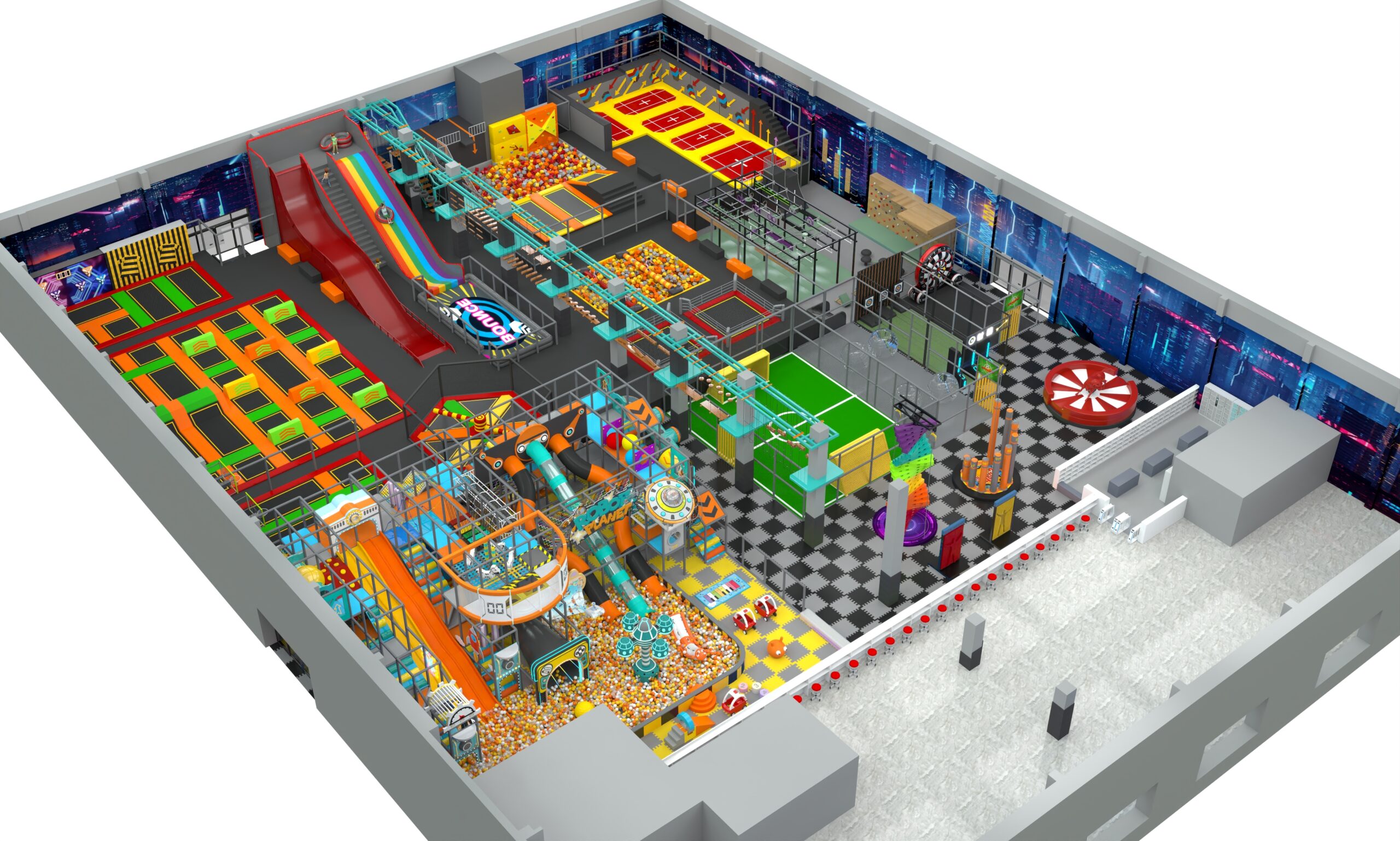
Kids Space indoor play structure; listed size category: 1,000–2,000 m² (approximately 10,800–21,500 sq ft).
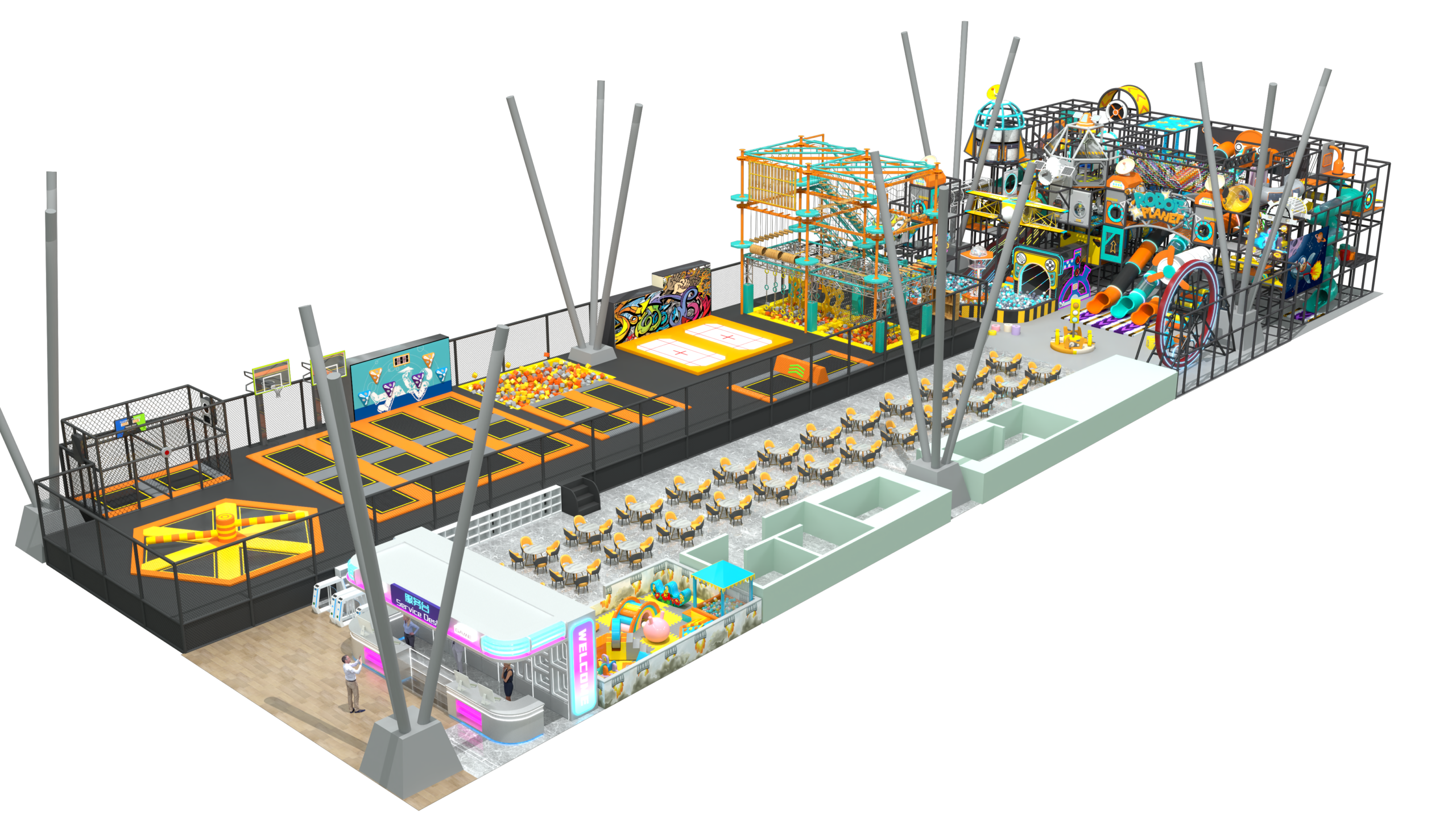
Kids Space indoor play structure; listed size category: 1,000–2,000 m² (approximately 10,800–21,500 sq ft).
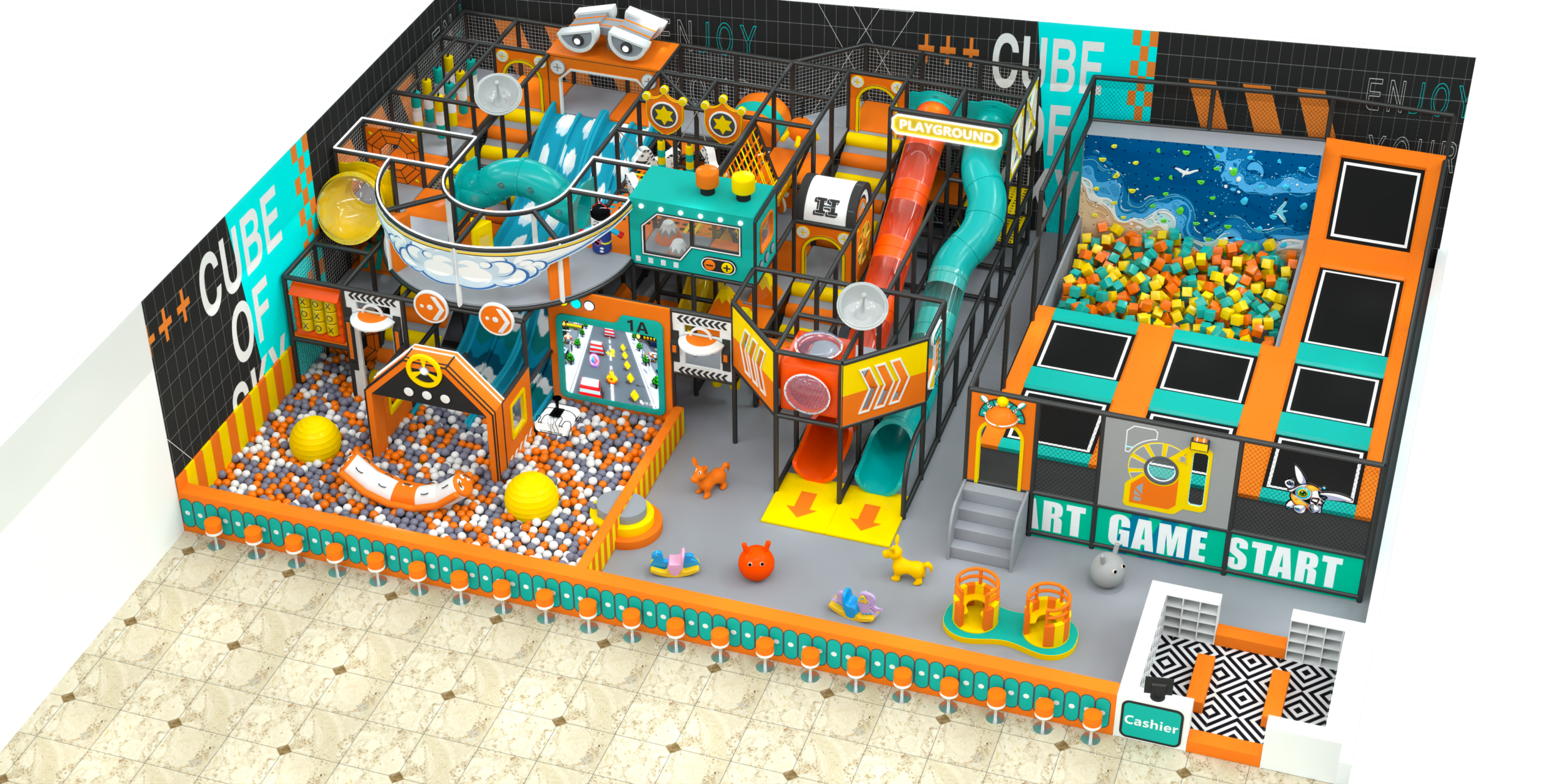
Kids Space indoor play structure; listed size category: 500–1,000 m² (approximately 5,400–10,800 sq ft).
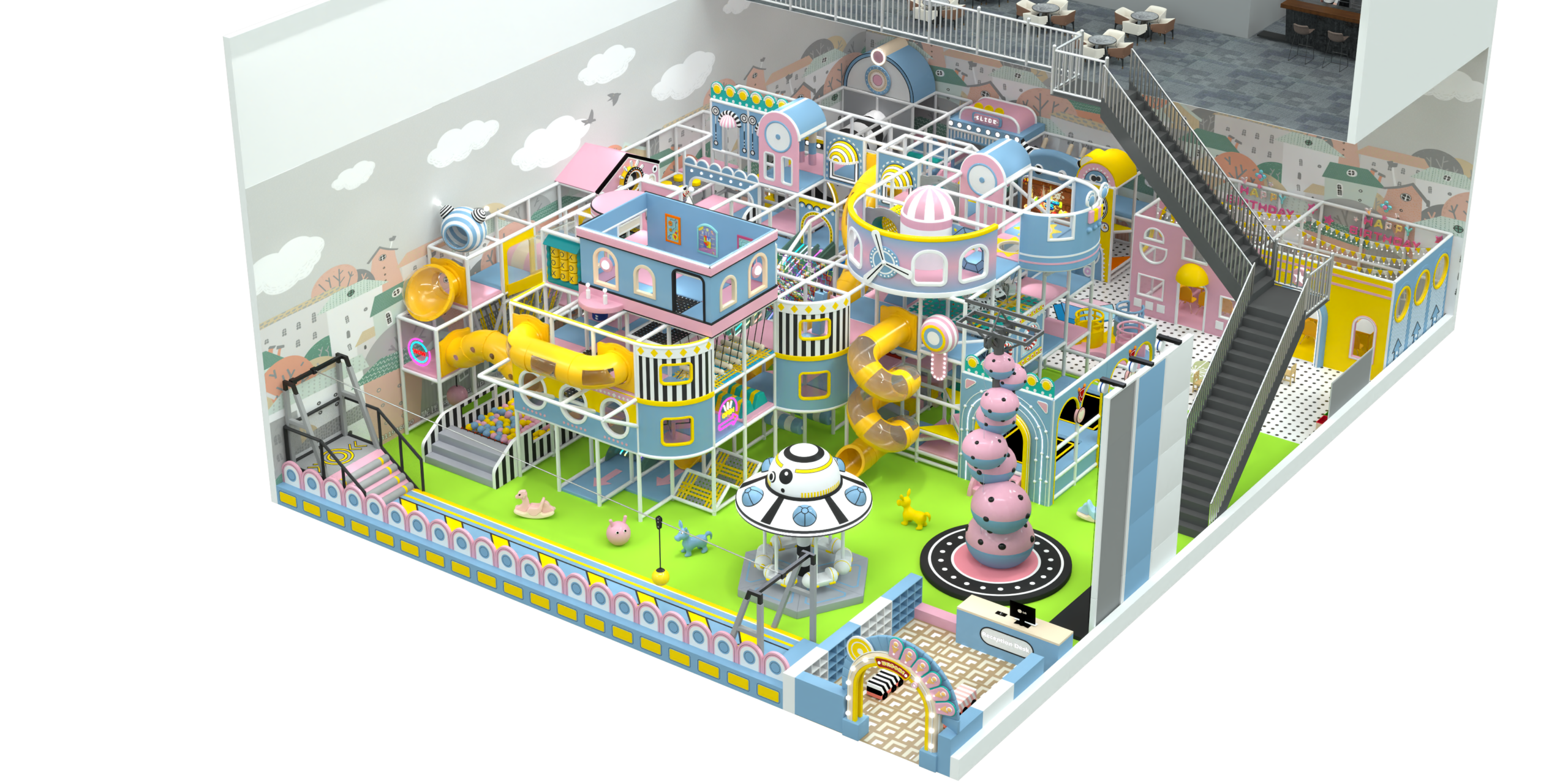
Kids Space indoor play structure; listed size category: 500–1,000 m² (approximately 5,400–10,800 sq ft).
The main frame uses 48 mm galvanized steel pipe. The listed wall thickness is 1.5 mm, increasing to 2 mm for structures with more than two levels. That distinction matters when reviewing a multilevel layout: confirm the level count and frame specification together rather than carrying a single wall thickness across every arrangement.
Platforms combine 18 mm multilayer board, 20 mm pearl cotton padding, and primarily PVC leather covering. Side panels and decorative windows use multilayer board, foam, and primarily PU leather. These layers serve different purposes: the frame supports the structure, while padding and coverings form the surfaces children encounter.
An activity sequence changes how a connected structure is used. A climbing route leading to a slide offers a clear progression from ascent to descent. An alternate lower route lets children choose a different level of challenge without requiring every child to follow the same path. The right combination depends on the intended ages, abilities, and supervision approach.
Activity transitions also affect flow. If a slide exit feeds directly into a climbing entrance, children leaving one activity can cross those waiting for the next. Spacing the exit and entry apart gives each group a clearer route. For a venue serving a wide age range, a separate slower route can reduce crossings between children moving at different speeds. Use the model images to discuss the desired overall arrangement, then define the route sequence for the actual space.