 Juego Mimu


búsqueda de productos
Parque infantil cubiertoGuerrero NinjaParque infantil al aire libreTrampolín
busque en
When a family visits an indoor play venue with a baby, the first question is not which theme looks most inviting. It is which part of the venue is actually intended for that child. A family entertainment center may welcome babies, preschoolers, and older children under one roof, but their equipment, movement patterns, entrances, and supervision needs should be planned separately.
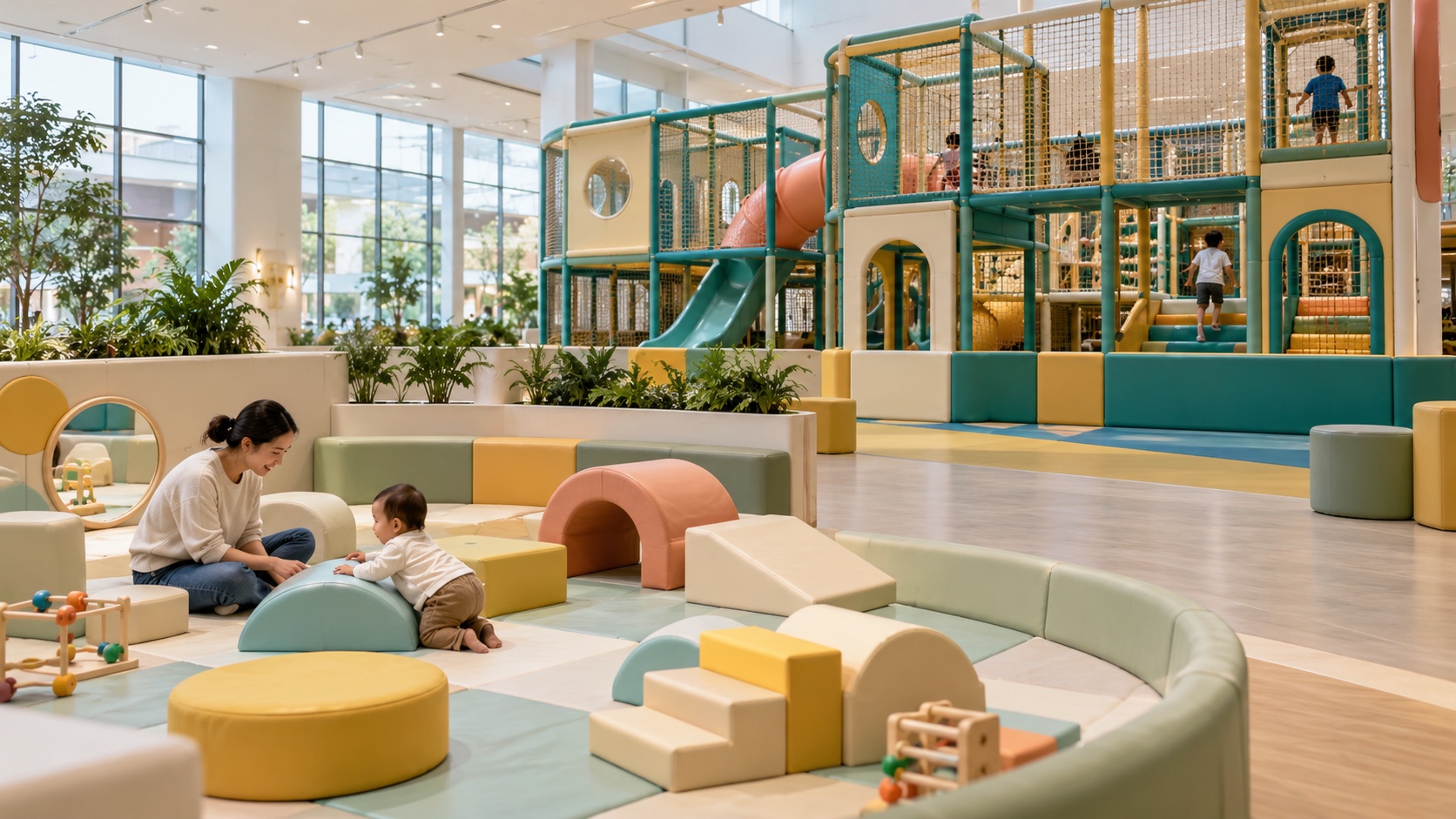
The phrase baby indoor playground can describe a dedicated infant corner, or it can be used loosely for a toddler play area. It does not establish an age rating. Operators should define the intended users and check the stated age range, use limits, and supervision requirements for each specific model. Parents should read the equipment label before assuming that soft padding, a playful theme, or a ball pool makes an area suitable for a baby.
This distinction matters with multi-level play structures. The available product information for Mimuplay's Kids Space themed indoor structure identifies an intended age range of 3 to 15 years. That structure may inform a zone for older children, but its location inside a family venue does not make it infant equipment. A venue that wants to serve younger children needs a separately specified product category, model, and set of use conditions for that age group.
An infant area should not double as the route to a slide, climbing structure, or other fast-moving activity. Begin a layout with building entrances, exits, access routes, and circulation that must remain clear. Then place the entrances, waiting points, and activity spaces for each age group. Distinct routes and a buffer between groups do more than a change in floor color to reduce cross-traffic.
Supervision needs a place on the plan as well. From the intended seating or staff position, can an adult see the infant area's entrance, activity floor, and corners? Could a column, divider, or taller play structure hide a child? If a corner can only be seen by walking into it, revise the layout or the staffing arrangement. Clear age signs help, but the boundary also needs to work in practice rather than relying on verbal reminders alone.
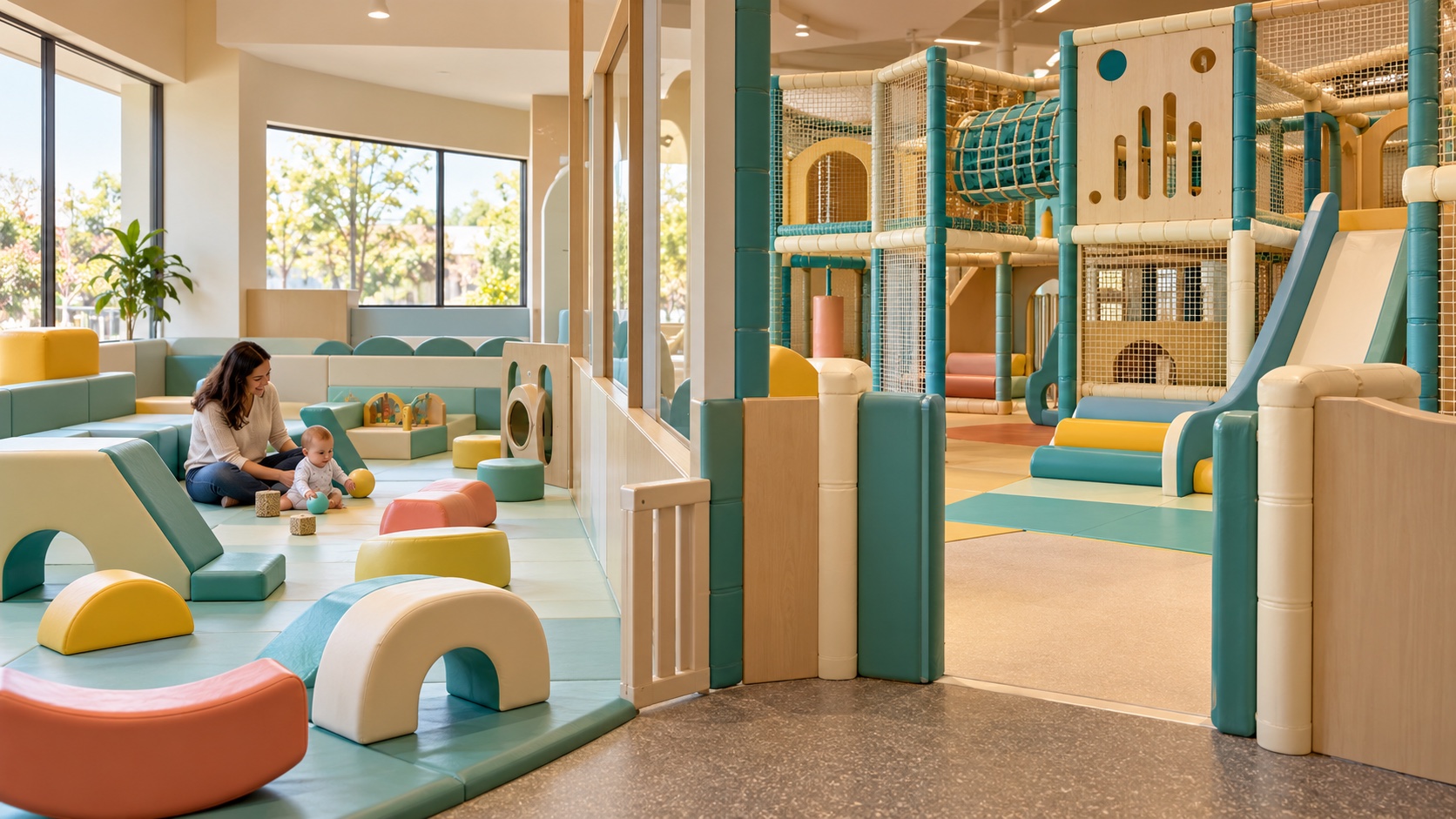
For a young-child area, trace how a child enters, moves through, and leaves each component. Where climbing, sliding, or crawl-through features are proposed, check dimensions, hand and foot support, possible fall paths, exit locations, and whether an adult can reach a child who needs help. A soft appearance does not answer those questions. Foam floor mats, padding over structural parts, and freestanding soft-play pieces can serve different purposes; the name of the material alone does not establish impact performance or cleaning suitability.
When a project also includes a connected structure for older children, ask the supplier for a separate schedule for each zone: equipment category, intended age, capacity, component list, materials, surrounding space, and installation conditions. Documented Mimuplay Kids Space configurations can include a galvanized steel tube frame, plywood platforms, EPE foam padding, and PVC and PU coverings. The drawings, material information, and test documents for the selected model still need to be checked. A material list for that structure should never be treated as a specification for an infant area.
The layout is only part of the job. The venue should explain age rules, capacity, and the responsibilities of caregivers and staff for each zone. A parent being present does not replace staff checks and guidance. In an area for very young children, adults need to watch for users outside the intended age range, conflicting activities, damaged components, and floor conditions. A hazardous part should be isolated, repaired, and checked before the area reopens.
Cleaning should also reflect the surface and the way it is used. Handrails, padded panels, floor mats, tunnels, and ball pools present different contact and access conditions. Set a cleaning schedule using actual traffic, children's ages, visible soil, material instructions, and local hygiene requirements. A treatment intended for a hard surface should not be applied to fabric, foam, netting, or adhesive areas without checking compatibility.
Before approving a baby indoor playground plan, ask the supplier and operations team three practical questions. Who may use each piece of equipment? Where do the routes of different age groups meet? From where will an adult watch, and how will that adult reach a child who needs help? If the answers are not tied to specific models, drawings, and site rules, the visual concept is not yet a usable operating plan.
Check whether an adult adventure park indoor playground fits its product type, age limits, and venue conditions.
Ver detalles
Plan a indoor playground around users, space, equipment, installation, inspection, and daily operations.
Ver detalles
Comparar Rectángulo Vs. Trampolines redondos, su rebote, seguridad, y necesidades del espacio de ayudarle a elegir el perfecto.
Ver detalles
Aprenda Lo Que Saltar En Un Trampolín Hace Por Usted: Absorber el choque 80%, estimular el drenaje linfático y aumentar la densidad ósea de forma natural.
Ver detalles