 Mimu spielen


Produktsuche
Indoor-SpielplatzNinja-KriegerSpielplatz im FreienTrampolin
Suche
When comparing quotes for children’s climbing equipment, the first step is to normalize all proposals to an identical delivery baseline: the same functional requirements, defined site conditions, and agreed-upon scopes of installation and commissioning/acceptance. Price comparisons are meaningful only when these parameters are aligned. For projects requiring turnkey readiness, evaluating equipment supply costs in isolation will never reveal which proposal is truly more cost-effective.
The most common discrepancy that skews evaluation is that one quote may cover equipment supply only, while another includes freight, installation, or civil site preparation. The former might suit a buyer with an in-house construction team; the latter minimizes coordination for the procurement team. The real comparison must answer three core questions: How much will it cost to complete all remaining scopes? When can the facility open safely? And who bears liability if an issue arises?
First, define the precise target milestone for this procurement: Ex-Works (factory gate), delivered to site (DAP/DDP), or fully installed and signed off. Never rely on generic phrasing such as “freight included,” “turnkey,” oder “complete installation.” Insist that each proposal itemize inclusions, exclusions, and buyer obligations.
Use the table below to establish a standardized inquiry baseline:
| Scope Area | Required Quote Details | Procurement Impact |
| Equipment Configuration | Drawing revision, overall dimensions, quantities, specific climbing components, and bill of accessories. | If configurations differ, verify functional and safety compliance before comparing prices. |
| Logistics & Delivery | Delivery location, shipping method, customs clearance/tariffs, and designated party for offloading and internal site transfer. | Omitted freight or handling must be priced separately to calculate the true landed cost. |
| Civil Works & Site Prep | Surveying, excavation, foundations, drainage, subgrade restoration, and spoil disposal. | If civil scope is unresolved, equipment cannot be installed upon arrival. |
| Installation Services | Labor, travel/lodging, tools, heavy machinery, auxiliary consumables, and site supervision. | Incidentals beyond basic labor rates may otherwise fall back on the buyer. |
| Safety Surfacing | Coverage area, surfacing system, sub-base preparation, edge retainers, and installation scope. | A quote covering only top-layer wear materials cannot be directly compared to a full-depth system. |
| Inspection & Handover | Inspection criteria, compliance certifications, rectification liability, and formal handover conditions. | Determines whether additional expenditures are required post-installation before public opening. |
Every item should be explicitly marked as “Included,” “Excluded,” oder “Provisional Sum.” Any unmentioned scope must be treated as an item to be clarified rather than a zero-cost item.
If certain tasks are to be contracted separately by the buyer, integrate those third-party quotes into this comparative matrix. Only then will you arrive at the true total cost to complete the project.
Two climbing structures with similar appearances do not necessarily offer identical play value, nor do they cater to the same demographic. Before comparing prices, establish common parameters for target age groups, primary play functions, and usable footprint, then cross-reference the detailed equipment schedule.
If two proposals both meet baseline performance requirements, additional decorative or secondary modules represent optional upgrades. However, if a proposal fails to satisfy basic functional or safety requirements, it cannot be considered a viable “low-cost alternative.”
Greenfield developments, existing paved grounds, and retrofit sites with demolition needs each warrant different contracting approaches.
When site data is comprehensive and foundation/drainage engineering is settled, request fixed-scope pricing to mitigate future change orders. If underground conditions, existing subgrade integrity, or construction access routes remain uncertain, the safer approach is to break out unverified items into provisional unit rates with pre-agreed measurement and change-order approval procedures.
While this introduces provisional sums, it grants the buyer transparency over where budget variances may occur. Conversely, a fixed lump-sum price that fails to define existing site conditions must be scrutinized to see if it implicitly excludes subsurface obstructions, over-excavation, or sub-base remediation.
Safety surfacing must be coordinated with the equipment layout from the outset. Require design submittals to demonstrate how the proposed surfacing matches the equipment’s Critical Fall Height (CFH) and impact area boundaries. Avoid selecting surfacing systems solely on wear-layer thickness or per-square-meter rates.
If new equipment is to be installed over existing surfacing, commission a professional structural and compliance evaluation first. Without this verification, never assume “no surfacing modification required” as guaranteed cost savings.
Procuring equipment, civil works, and installation via separate contracts allows for competitive subcontractor selection and transparent line-item pricing. If the buyer has an experienced in-house construction management team capable of coordinating engineering submittals, foundation interfaces, and installation sequences, this method merits consideration.
However, split procurement transfers interface risks to the buyer:
A turnkey contract suits buyers with limited on-site management capacity who need single-point accountability for schedule and non-conformance rectifications. Yet, a single contract only adds value if the contractor’s scope covers these critical interfaces. If foundation prep, surfacing, offloading, and closeout punch-lists remain the buyer’s responsibility, the procurement team still bears the coordination burden. Do not pay a premium for a “turnkey package” that is turnkey in name only.
Both approaches are viable; the prerequisite is that every interface has an unambiguous definition of completion and an assigned party responsible for sign-off.
“Ex-factory date,” “dispatch date,” “arrival on site,” und “client acceptance date” represent fundamentally different milestones. For projects with strict opening deadlines, quotes must specify all these milestones alongside their binding prerequisites.
Scrutinize the following dependencies:
A proposal with faster factory turnaround offers no advantage if site conditions and installation crews cannot accommodate it. Conversely, a vendor with a longer production cycle but a fully sequenced logistics and commissioning plan is often safer for projects with fixed opening dates.
Ensure vendors explicitly define the deadlines by which the buyer must provide site access and drawing approvals, allowing you to assess your own operational readiness to perform.
Acceptance criteria should be formalized in the contract annexes during procurement, covering as-built drawings, equipment manifests, applicable safety standards (and specific revision years), commissioning check-sheets, O&M manuals, and defect rectification protocols. Establish clear demarcation lines between equipment-related obligations and broader civil or site packages.
For third-party test reports or certifications, verify that they explicitly cover the exact models, dimensions, and structural assemblies purchased. If your layout customizes structural components or connections, confirm whether existing certificates remain valid or if project-specific engineering verification is required. Volume of paperwork is no substitute for exact scope coverage.
Warranty reviews must look beyond the headline duration:
Life-cycle operating costs should itemize maintenance for structural frames, hardware/fasteners, rope netting, and surfacing independently. A low initial purchase price can quickly become uneconomical if replacement parts have long lead times or require extensive disassembly of adjacent components.
Upon receiving revised submissions, standardize currencies, tax treatments, drawing revisions, and delivery scopes, then compute:
Normalized Project Budget=Contract Quote+Buyer Scope Costs+Provisional Allowances for Open ItemsNormalized Project Budget=Contract Quote+Buyer Scope Costs+Provisional Allowances for Open Items
Provisional sums must be reported separately from hard costs. For items that cannot be fixed immediately, explicitly define the responsible party, the rate-calculation methodology, and the resolution cutoff date. Any ambiguity impacting installation or certification must be resolved prior to purchase order issuance.
Finally, evaluate proposals against your project constraints:
Next Steps: Distribute a standardized equipment schedule, verified site data, and delivery scope-matrix to all bidding vendors. Require line-item confirmation and revised pricing. Obtain formal written clarifications or supplemental quotes for all unresolved items before entering final contract negotiations.
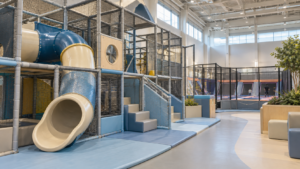
Learn how adult amusement park indoor projects can match equipment categories, age limits, layouts, and model evidence.
Details anzeigen
Erfahren Sie mehr über die Belastbarkeit von Trampolinen, Sicherheitsrichtlinien und Tipps zur Auswahl des richtigen Trampolins für Kinder und Erwachsene.
Details anzeigen
Erfahren Sie, wie Sie einen Spielplatz im Freien unter Verwendung professioneller Sicherheitsstandards, ASTM-Materialien und CPSC-Richtlinien bauen.
Details anzeigen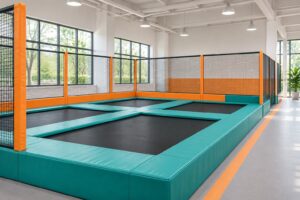
Explore The Benefits Of Indoor Trampoline Activities, With Practical Advice On Participation And Venue Management.
Details anzeigen