 Mimu spielen










Produktsuche
Indoor-SpielplatzNinja-KriegerSpielplatz im FreienTrampolin
Suche
The child stopped at the bottom of one climbing route and watched another child walk through the platform and then picked another way up. This trip is not just moving from the facility to the other side. Which dots are steady, which way is taken, and what is taken into account when there are people around, are all in there.
The benefits of climbing are hidden in the process of moving, testing and dealing with people. A suitable set of facilities for children to practice their physical abilities, to find ways to play games and to play with their peers. However, the actual experience depends on the child’s own circumstances, how the equipment is chosen, how the space is set, and how the adults can help. The shelf is much higher, the route is more complex and not necessarily more valuable.
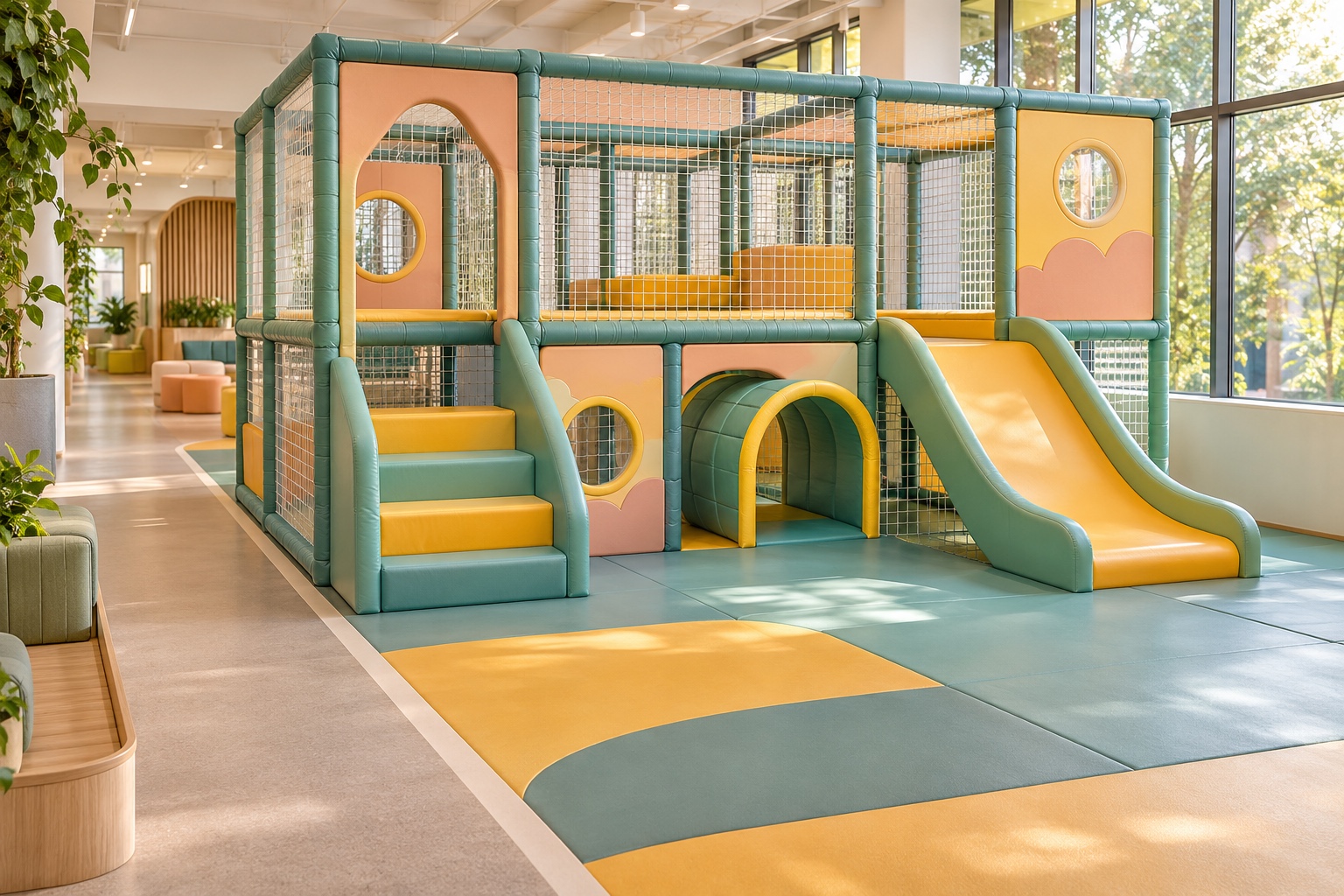
Climbing, drilling and balancing require children to move their bodies in different ways. Following a route, it may be necessary to take a step on the platform, then enter the pipe with a short body, turn around and move forward. Every connection between movements is helping the child exercise his/her physical harmony and control.
Different climbing components also test the grip, balance and upper limb force differently. Hard climbing and soft webs cannot be considered the same as climbing up. The real option is to fit the target population and provide the child with a step up.
The most practical question, whether for parents or for house operators, is: can children really be involved? It is important to look at how the child moves down the first drop point, whether he can understand the next step, if he wants to stop or get out. In many cases, children have taken the initiative to climb a difficult route several times over and over again, more than being pushed over and over and over again.
The climber, with a live design, can give the children a little trouble, so they can find out for themselves in the process of hand and foot. Which entrance can get into the pipe? Can you climb that platform on a different route? Where can we change next time?
In these cases, the child ‘ s spatial understanding, problem-solving ability and alternative thinking have the opportunity to practice. This is provided that the choice provided by the facility is clearly visible to the child. A route around which there is no clear exit will only make children feel stifling and defeating and will not be a useful challenge.
Adults can support the children in their search, but they don’t have to direct every move to death. “Who do you want to try? “and leave it to the children. When there is a need for help, the degree of help should allow the child to continue playing at a level appropriate to his or her own, while leaving room for him or her to rest or change items.
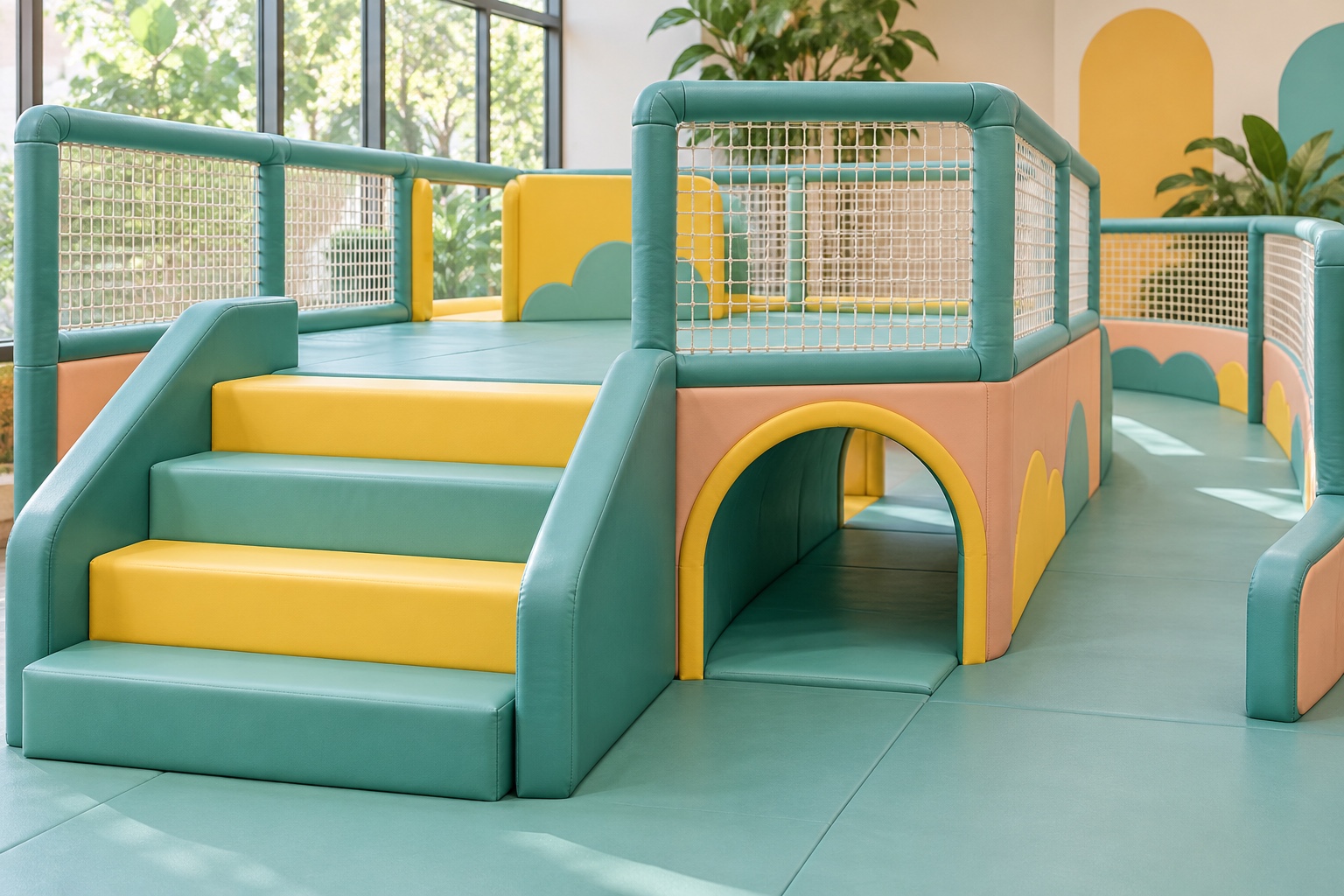
The fact that the two children were on the same platform did not mean that they were playing together. Social interaction is only clearer when there is a rotation of waiting at the entrance, when there is agreement on which route to follow, or when stories are written around the shelf.
A pipe may become part of an imaginary journey, a platform may become a meeting point in a game. These are all the games that the site may bring, not the automatic delivery of the equipment itself. Children still have to have the time, the pleasure and the right circumstances to play together.
The layout is critical here. Access congestion and cross-cutting routes can easily turn queues into conflicts. Clear import and export controls, together with careful care, make it possible for children to be given the space to rotate, so that the queue does not block access or slide exits.
Choose a path, find it difficult and try again, a process that allows the child to practice adherence and self-regulation. But this exercise is premised on the fact that it is difficult to keep within control and that people can help when they need help.
The child had chosen a low-point route, which was his own logical decision; the child sought help by speaking out and clearly expressing his needs. Neither of these reactions should be seen as “failure to play well”. A good playground would allow children to participate to varying degrees and provide a clear exit.
In the case of children with different levels of competence, it is important to consider whether everyone can find something to do. Access to recreational areas is only part of the experience, and participation is affected by the manner in which access is made, the physical support, sensory load, the choice of rest and the inconvenient proximity of the caregiver. The needs of all children cannot be met by a label on a route or device alone.
It’s a broader term. It can refer to different climbing combinations and does not itself directly frame a single applicable age, construction practice or use restriction. The selection process has to start with specific equipment and those expected to use it.
In the case of indoor climbers, check the target’s age and capacity range, points of entry and exit, difficulty in climbing, platform protection, exit and perimeter areas. It is important to separate the climb route from the exit of the slides, the main pedestrian route. It is also necessary to ascertain whether the caregiver or staff can follow the structure to ascertain the location of the child.
The material is also part of the verification, but it does not provide a full picture. Indoor flexible play structures usually combine steel racks, layers, sponge mats and PVC or PU wraps. The fact that the surface is covered softly does not justify the full set of installations. Connections, protective parts, floor preparation, overall layout and routine maintenance are all targeted.
In communicating Mimuplay ‘ s programme, it is important to remember that each party is required to present the target population, the play route and the product configuration together. Take a plan to compare the real room with the columns, the clean height, the position of the door hole, and the space required for care and passage. Thematic impact maps help to see what is going on, and technical data and operational information are needed to assess how the space actually works.
A well-planned structure is also indispensable for inspection, maintenance and proactive management. Broken packages, loose connections, blocked routes or crowded entrances affect how children play it. Once problems are identified, the affected areas will be isolated and re-opened.
It is also important that adults and court staff have clear responsibilities. Being in a room doesn’t automatically mean being cared for. Observe on-site activity, manage the capacity of the population and keep exports open, all of which are ongoing. Care is provided in conjunction with appropriate equipment and a reasonable layout, and is not used to cover the defects of the facility itself.
It provides opportunities to practice climbing and moving, charting routes, carrying out imagination games and interacting with other children. The specific opportunities available vary according to the child ‘ s own characteristics, the activities provided on the ground and the surrounding conditions.
The size alone determines the quality of the game. Appropriate challenges, perceptible routes, rich forms of activity, permeable horizons and conditions for smooth participation and exit are all important. Larger facilities may also lead to congestion points that need to be addressed in layouts earlier.
The suitability needs to be verified against the specific equipment, the limits of its use, and the capacity and support required of the child. Broad labels such as “child application” or “parent-child family” are far from sufficient. Before setting up the site, identify the specific items and limitations within it.
The most practical way to start is to think of a child passing through the proposed space: how to get in, how to pick out the project, how to meet the challenge, how to interact with people, how to leave at the end. In that order, it is easier to judge whether the equipment itself is worth playing with and whether the surrounding layouts are holding it up.
Planen Sie Abenteuerparkgeräte für den Innenbereich rund um Aktivitätszonen, Zugang, Fallschutz und Standortprüfungen.
Details anzeigen
Meistern Sie den Indoor-Abenteuerpark für Erwachsene. Bezwingen Sie jeden Indoor-Hindernisparcours für Erwachsene mit dem Experten-P.A.R.K.-Framework.
Details anzeigen
Meistern Sie die Kosten für das Indoor-Spielplatzgeschäft. Vermeiden Sie versteckte Gebühren und senken Sie Ihre endgültigen Kosten für den Indoor-Spielplatz.
Details anzeigen
Maximieren Sie FEC-Gewinne mit Premium-Indoor-Fußballspielbereich & Spielrutschen-Optionen. Entdecken Sie intelligentes Raumdesign.
Details anzeigen