 Mimu Play








product search
Indoor PlaygroundNinja WarriorOutdoor PlaygroundTrampoline
search

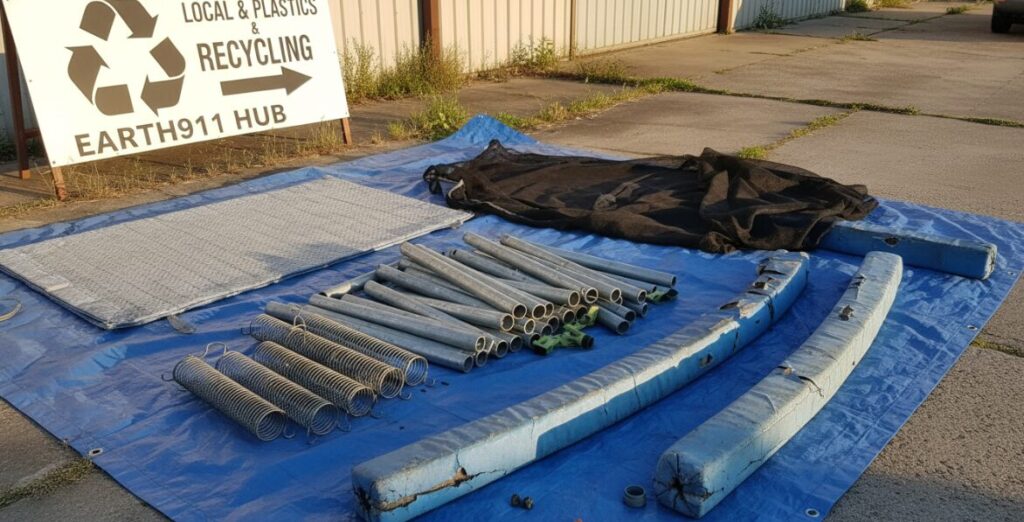
Yes, approximately 80% to 90% of a trampoline’s materials can be recycled, but it cannot be placed in a standard curbside recycling bin, you can check local facilities or services like TerraCycle for specifics. To successfully recycle a trampoline, you must dismantle it and separate the components: the galvanized steel frame and springs are 100% recyclable at local scrap metal yards, while the polypropylene mat (#5 plastic) and netting are technically recyclable but typically require specialized industrial facilities rather than residential programs. However, foam padding and PVC covers are often non-recyclable due to mixed-density materials. For a truly eco-friendly disposal, you need to manually separate these parts to prevent the entire unit from being rejected by automated sorting facilities and sent to a landfill.
From an environmental point of view, or if you want to earn some pocket money, the metal frame is the most valuable part of the trampoline. The trampolines that are slightly better on the market now use thick galvanized steel, mainly for rust prevention.
Steel frame: Steel is the 1 “permanent material”, which means that it can be melted and recycled countless times without any degradation in quality. This kind of frame is very popular at the local scrap metal recycling station, they will even pay you a sum of money based on the weight.
Spring: Like the frame, the spring is made of high-strength metal, which also has high value in the eyes of recyclers.
The trampoline bed and the surrounding net cover are usually made of polypropylene (No. 5 plastic).
Recycling status: In theory, it can be recycled, but the threshold is quite high.
The difficulty: The vast majority of community recycling programs only accept rigid plastics like plastic bottles. This woven fiber is simply the “natural enemy” of the recycling machine, which is extremely easy to entangle and damage the equipment.
Advice: I suggest you contact a recycler who specializes in industrial textiles or bulk plastics, so they have the appetite to “digest” these things. For example, you can use resources such as Earth911 to find local delivery centers that receive No. 5 plastic.
Discover endless fun and spark imagination! Our indoor playground products create a safe, exciting paradise for children. Experience boundless joy now!
Embrace adventure and fresh air! Our outdoor playground products offer thrilling, safe experiences for kids to explore, play, and grow. Unleash the fun outside!
This part is basically the most headache to deal.
Pain points: These components are usually mixed materials, such as PVC wrapped in polyethylene foam.
Results: This fusion material is difficult to separate by physical means, so most recycling centers directly characterize it as non-recyclable, and in the end, it will probably go to the landfill.
Finding a professional garbage removal company (such as 1-800-Got-Junk) is usually the easiest way.
No physical labor: the most important thing is that you don’t have to disassemble it yourself, their people will take care of everything.
Sustainability: According to my observation, these companies usually carry out secondary sorting of the collected items, and try to donate or disassemble the parts that can be used for recycling, so that everything will not rot in the landfill.
Another way that people often overlook is to check your local “large garbage appointment door-to-door service”. The current city management is actually quite professional. You just need to go to the municipal sanitation official website and check the roadside recycling plan for those large sports equipment.
In order not to let the whole trampoline be rejected by the recycling station, I suggest you don’t be lazy and disassemble it manually according to this process:
Remove the soft parts first: take a pair of sharp scissors and cut the protective net directly from the pillar. Rip off the foam sleeve and PVC cover as well.
Take the spring: Remember to use that special spring tool (if you still have it on hand) to remove the spring from the jumping pad and frame. Remember to pack these finely divided metal pieces in a box for easy handling.
Disassemble the frame: unscrew or unlock the screws of the galvanized steel pipe. Lay them neatly, don’t pile them up.
Classified storage: Pile the jumping pads made of No.5 plastic and those foam pads separately.
If you don’t take the time to dismantle, those high-value steel will basically “evaporate” in the waste disposal chain. To be honest, automatic sorting equipment simply does not have the ability to dismantle such a large piece of consumer goods. Manual disassembly is the only way to ensure that 80 to 90 percent of the material can re-enter the production cycle. Otherwise, these metals and plastics can only stay underground and pollute the environment in vain.

Author: Alex
“I’m an environmental advocate and DIY enthusiast dedicated to sustainable waste management and eco-friendly living. With years of experience in outdoor equipment maintenance and repurposing, I specialize in helping homeowners navigate the complexities of recycling large household items. “
This will close in 0 seconds