 Mimu Play








product search
Indoor PlaygroundNinja WarriorOutdoor PlaygroundTrampoline
search

More springs do usually mean better, more stable, and more durable bounce, because they distribute weight more evenly and reduce the risk of a single spring being overstretched.
However, if you force a spring on a shelf that doesn’t have that kind of load-bearing design, the effect will only backfire. The core of determining the quality of the spring is the quality, length (usually between 8 and 10 inches) and reasonable tension distribution. When buying or upgrading a trampoline, the number of springs is often the most controversial parameter. Although you intuitively feel that “more is good”, you must figure out how to match the quantity, quality, and frame design.
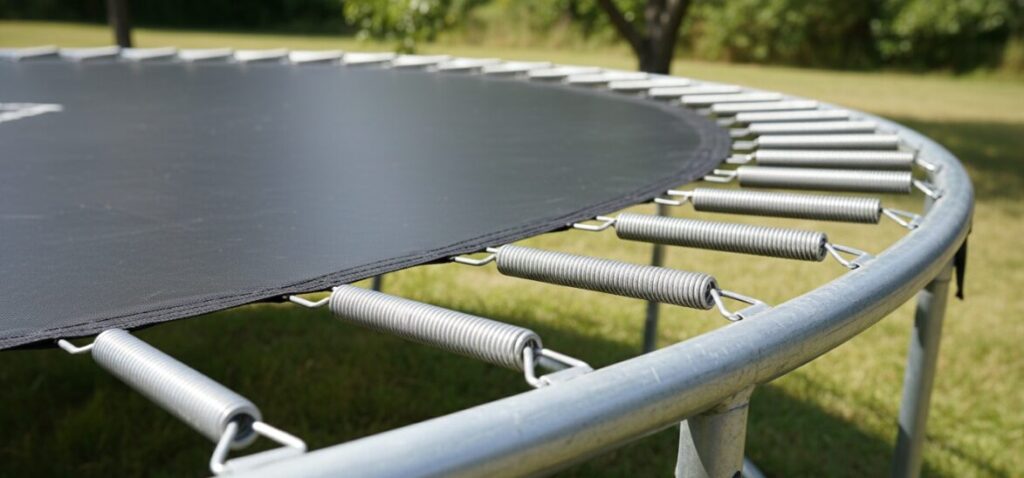
In most cases, a high spring count is the hallmark of a high-end trampoline. The following are some core advantages:
The large number of springs usually improves the overall tension and bounce quality. When the spring arrangement is more dense, the tension distribution of the jump cloth will be more uniform. This ensures that when you jump, whether you fall on the center or edge of the jumping cloth, the foot feeling is stable and consistent, and there will be no cheap feeling of soft and hard.
In the long run, more springs mean long life. This is easy to understand: the weight of the jumper is spread to more support points, the instantaneous impact of a single spring is small, and it is not easy to overstretch due to fatigue. Sharing the load can significantly extend the life of the spring and hook.
The physical logic of the trampoline lies in the synergy of the spring and the jumping cloth. The long springs, in sufficient quantity, provide both deep and smooth elasticity. This kind of “soft bullet” is very popular with senior players because it can effectively cushion the impact on the knees and ankles while providing enough jumping height.
If you are a professional athlete or a hardcore player who likes to play fancy high-altitude action, I strongly recommend choosing a model with a capped spring number. The high spring count ensures that the trampoline remains structurally sound when subjected to significant G forces, without the risk of “bottoming out” (i.e., the jumping cloth is stretched too much and hits the ground directly).
Discover endless fun and spark imagination! Our indoor playground products create a safe, exciting paradise for children. Experience boundless joy now!
Embrace adventure and fresh air! Our outdoor playground products offer thrilling, safe experiences for kids to explore, play, and grow. Unleash the fun outside!
While quantity is important, it is not the only variable that determines the quality of the bounce. If you want to buy top goods, you have to keep an eye on the following points:
There is a quantity alone. If it is matched with a short and hard spring, it cannot be saved. Generally speaking, long springs of 8 to 10 inches are more flexible and bounce higher than short springs. To tell the truth, a trampoline equipped with 96 long springs almost beats those rotten goods stuffed with 120 short springs.
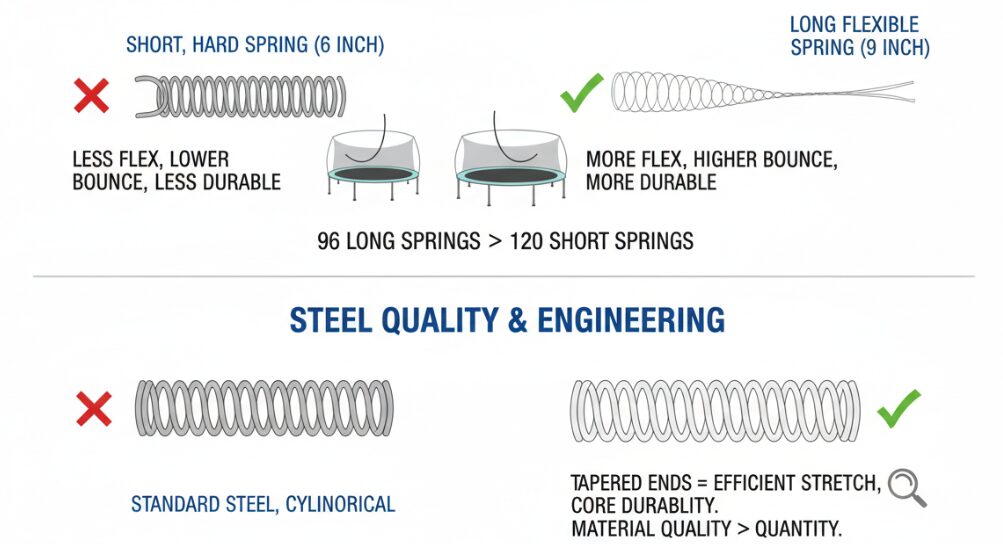
The quality of steel is much more important than the simple number. High-end springs are usually designed with tapered ends, which allows the spring to stretch and contract more efficiently. This “hard currency” at the material level is the core of improving durability.
Many people have a misconception that they can upgrade the old trampoline by drilling more eyes and hanging more springs. Don’t do this! The frame must be specially structurally reinforced to withstand the enormous tension of so many springs coming together. If you add springs to the ordinary frame, it is not only easy to twist the metal frame into twists, but also because of tension overload, the bounce feeling becomes as stiff as stagnant water, completely losing the meaning of trampoline.
Author: Jake Miller
With over a decade of experience in testing backyard sports equipment, I’ve seen firsthand how the right engineering makes all the difference in safety and fun. I specialize in trampoline performance, focusing on how spring tension and frame design impact the jumping experience.
This will close in 0 seconds