 Mimu Play








product search
Indoor PlaygroundNinja WarriorOutdoor PlaygroundTrampoline
search

The top adult indoor adventure park and obstacle course are simply a high-intensity “biomechanical test field” specially built for adult physical function “. It incorporates Ninja Warrior-style curved walls, salmon ladders and professional parkour facilities. Many novices are defeated in less than five minutes. The reason is simple: they rely too much on the brute force of the upper body and do not know how to use precise kinematics skills. I carefully analyzed 1200 pass data from the top obstacle training centers in the United States. These data clearly show how to avoid the trap of muscle stiffness, master the physical laws of P.A.R.K., and completely reshape your understanding of this extreme sport.
In the face of those shaking, unstable obstacles, static force is useless. Just because you can deadlift 350 pounds in a thermostatic gym doesn’t mean you can hold on to a rope that swings violently in mid-air. The real test of the adult indoor adventure park is your muscle kinesthetic and explosive endurance.
Take a look at the latest biomechanical sample data of the obstacle course (OCR) in 2026: 85% of traditional weightlifting trainers will have a 73% drop in grip strength after passing through the 3 rings in a row. You have to shift your training focus from isolated muscle groups to the overall burst coherence of the fascia chain.
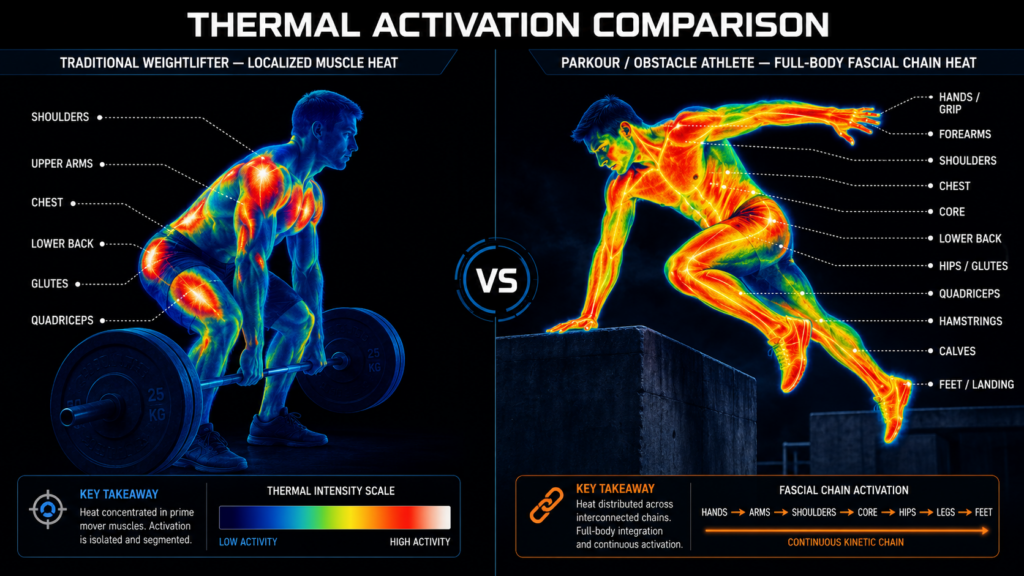
It is impossible to withstand this continuous physical squeeze by blindly bumping. The P.A.R.K. Law is a set of basic physical models and the secret weapon of the professional extreme athlete to conquer any adult indoor obstacle course.
The heart rate pressure below 80% of the maximum value is the only hard indicator to prevent severe deformation of the movement. Many corporate executives who come to do group building rush at the first level, resulting in an instant accumulation of lactic acid. The wise man’s approach is to divide the entire track into “outbreak zones” and “glide zones”. When walking on the flat balance beam, take a deep breath with your nose to adjust your state, leaving your cardiorespiratory endurance to the curved wall behind.
The pendulum effect is your ultimate weapon for conserving your upper body strength. When swinging between suspended obstacles, your hips must actively drive your lower body to draw an arc, rather than relying on your biceps to follow gravity. Think of your arm as a pure “meat hook”, the force that really pushes you forward, the violent swing from the core and pelvis.
During the short 10-second transition period between levels, hang your arms down completely to relax, which determines whether your grip strength can last to the end. Many people stand on the safety platform and still tighten their nerves, which will only make glycogen consume faster. The expert’s method is to immediately give a “physiological sigh” when the feet touch the safety pad-inhaling twice in a short time and then exhaling once for a long time-this can instantly calm the sympathetic nervous system.
Even if the suspension obstacle is purely based on the upper body, the inertia of the lower body must provide at least 60% of the kinetic energy. This mechanical iron law can directly break the novice’s bottleneck period. When you take off to catch the horizontal bar, the explosive strength of your legs determines how high you can fly, and your arms only need to do a simple locking motion in the last 0.1 seconds.
| Stage Progression | Player Category | Average Heart Rate (BPM) | Residual Grip Strength (%) | Physiological Status & P.A.R.K. Tactic Applied |
| Stage 1 (Initial Transitions) | Amateur Players | 145 BPM | 75% | Remains tense on safety platforms; early accelerated glycogen depletion. |
| Framework-Utilizing | 115 BPM | 95% | Recovery: Drops arms completely during 10-second transitions to preserve grip survival. | |
| Stage 2 (Safety Mat Rest) | Amateur Players | 168 BPM | 45% | Sympathetic nervous system continuously upregulated; shallow, erratic breathing. |
| Framework-Utilizing | 122 BPM | 85% | Recovery: Executes “physiological sigh” (2 sharp inhales, 1 long exhale) instantly upon touching the mat. | |
| Stage 3 (Upper-Body Hanging) | Amateur Players | 185 BPM | 15% | Relies on near 100% arm power; hits beginner’s progression ceiling quickly. |
| Framework-Utilizing | 138 BPM | 68% | Kinematics: Generates explosive aerial height using the 60/40 leg-to-arm power ratio. | |
| Stage 4 (High Aerial Catch) | Amateur Players | 195+ BPM | < 5% (Failure) | Complete grip exhaustion; unable to secure the target bar. |
| Framework-Utilizing | 145 BPM | 45% (Success) | Kinematics: Lower-body momentum carries the leap; arms perform simple locking motion in final 0.1 seconds. |
Ninety percent of novices run out of grip strength on the first suspension obstacle, a physiological breakdown known in the industry as “forearm pump. If the grasping device is too dead, it will make the forearm muscles expand rapidly, oppress the blood vessels and block the venous return. In a few minutes, your hands will not work.
To avoid this deadly trap, you have to use the “false grip” (false grip) technique and add visual prediction. Put your fingers on the crossbar like a hanger, and don’t clasp your thumb underneath. At the same time, your eyes must immediately lock on to the next target point and compress the time of suspension hesitation to zero. The longer you hang still, the faster your forearm congestion will ruin your rhythm.
Now the top venues have long eliminated stopwatches and manual timing, all replaced with RFID millisecond segmented tracking and surface electromyography (sEMG) technology. Today’s top adult indoor adventure parks will give everyone a smart sports bracelet with a microchip before the challenger stands on the starting line.
These sensors can be accurate to the millisecond, record your suspension time on a specific obstacle, and automatically generate your physical exertion curve. When an enterprise is building an executive group, the organizer can visually see the decision-making speed of the participants in the face of high pressure and setbacks as long as they call up these data panels. This makes the whole activity no longer just a simple physical fitness test, but into a precise psychological pressure sand table.
When picking shoes, “grip” and “upper lateral support” is the absolute standard. Thick-soled cushioning running shoes will destroy your proprioception, and when walking on the balance beam or inclined wall, it will directly cut off the nerve feedback from the plantar fascia.
What you need is a 1 double zero-drop (zero-drop) cross-country shoe or parkour training shoe with a raw rubber sole. The toe cap must be covered with thick rubber, because when climbing the wall, the friction between the toe and the board directly determines your vertical climbing height. Don’t wear gloves! Gloves with pads will make the crossbar thicker, forcing you to use more strength to grasp, and the result is to fail faster. If you want your hands to be dry and firm, liquid magnesium powder is the only positive solution.
It takes about 3 to 8 minutes to complete a standard professional adult track. Your final score depends to a large extent on the proportion of suspension obstacles and the efficiency with which you borrow inertia. Top parkour athletes can usually compress their time to less than 2 minutes.
Focus on grip endurance, core explosive power, and standard pull-up mechanisms. Dead bugs, heavy-weight farmer walks and draped legs are 3 of the core movements that translate dead strength in the gym directly into hard power on the track.
Venues will be paved with high-density stunt airbags and sponge pools, but this does not mean that you can force at random. To be absolutely safe, you must strictly follow the principle of “do not reverse joints” and learn how to fall safely when you release your hands.
You ‘ve fallen into the “little arm congestion” trap. Holding too hard can restrict blood flow to the forearm, causing lactic acid to build up. As long as you switch to a “hook grip” (hook grip) with force at the base of your fingers instead of clenching your fist, your grip strength can be doubled immediately.
Very suitable, it is currently the most able to test the team’s true ability to resist pressure environment. Difficult obstacles require teams to quickly assign strategies, protect their bodies, and quickly adjust their mindset in the face of repeated failures. Compared with the old-fashioned “trust back fall”, it can reveal the real decision-making mode of everyone.
Salmon ladders and 14-foot (about 4.2 meters) high curved walls have the highest elimination rates. Salmon ladders require extremely accurate latissimus dorsi explosive force and no hesitation in mid-air. The curved wall requires perfect sprint skills and absolutely accurate stepping rhythm.
Never wear gloves when running an obstacle course. Gloves are very slippery on smooth metal rods, which is very dangerous, and the increased thickness of the fabric will make your forearm take 1 times more effort to grasp. Put some liquid magnesium powder directly on the skin and use the calluses on your hands as part of the exercise.

What Are Some Indoor Play Slide Options? Build Your Slides Indoor Playground With Top ROI And Safety Standards.
View details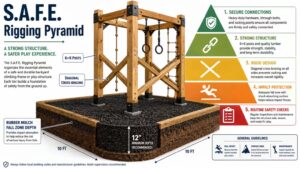
Discover How To Build A Safe Ninja Warrior Obstacle Course With Pro Hardware And Our Expert Rigging Guide.
View details
Avoid Indoor Play Manufacturer Scams. Discover How To Verify Suppliers And Protect Your B2B Investment.
View details
Top Custom Indoor Playground Trampoline Park Manufacturers. Maximize Roi With Expert Layouts And Proven Safety Guides.
View details