 Mimu Play








product search
Indoor PlaygroundNinja WarriorOutdoor PlaygroundTrampoline
search

Trampolines are dangerous primarily due to the transfer of kinetic energy between jumpers (the “double bounce” effect), structural hazards, and high-risk maneuvers that can lead to catastrophic spinal or head injuries. The primary dangers and causes of injury include:
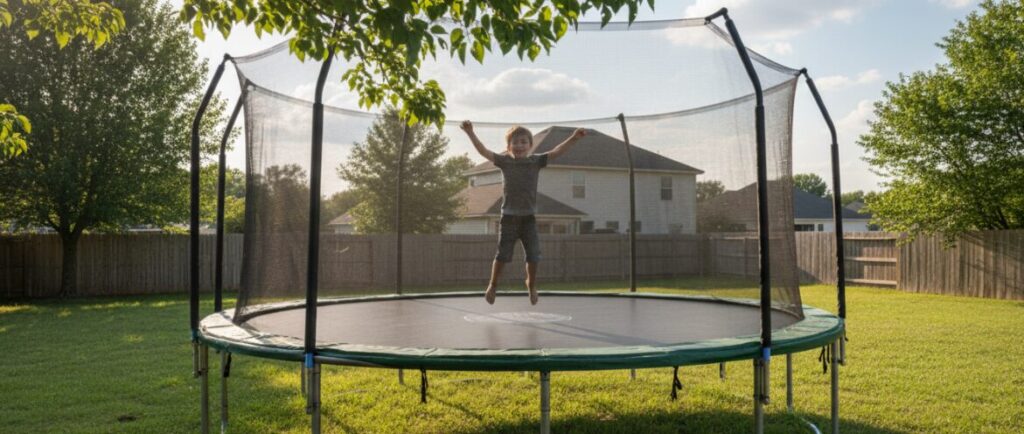
About why the trampoline is dangerous, many people on the “double bounce” there is a huge misunderstanding. It’s not just two kids bumping together, it’s essentially a superposition of energy transfer.
When a heavier person (usually an adult or an older child) takes off and falls first on the mat, the mat is extremely stretched; when a lighter child falls next, the mat will rebound instantly with the superimposed energy of the two people. This huge kinetic energy will be transferred to the light child in an instant.
The resulting upward impact force occurs so fast that the child’s leg muscles have not had time to adjust their posture to absorb the impact. This unpredictable G-force (gravitational acceleration) can even directly break the tibia or cause severe spinal compression before the child leaves the mat surface.
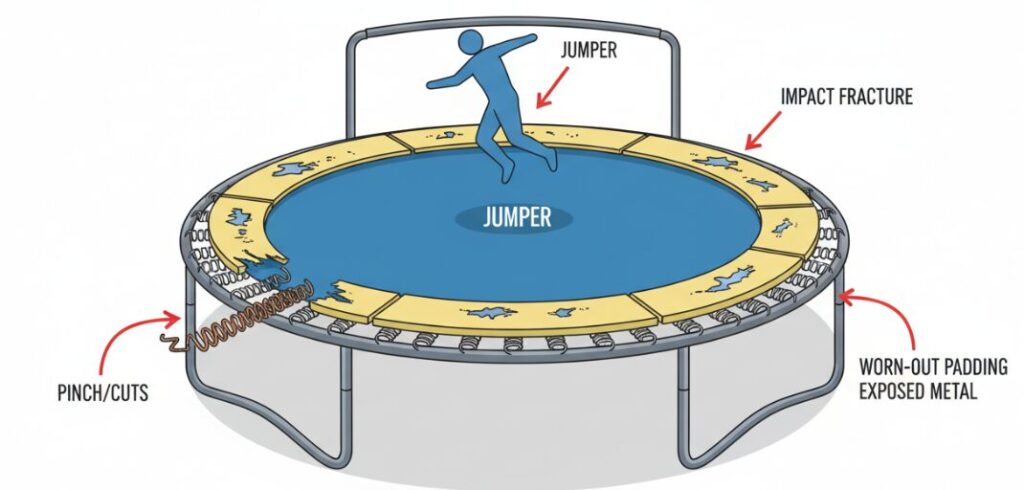
Although the center of the trampoline is soft, it is surrounded by real “hard bones”. The data show that about 20% of contact injuries are caused by the jumper landing on the device itself, rather than on the jumping surface.
Even if you install safety cushions, those metal springs and steel frames are still a threat. I’m all too aware of the rate at which materials age-years of sun and rain can thin, shift, and even powder the cushion. Once the loss of protection, the human body hit the steel frame at high speed, and the fracture occurred almost instantly. In addition, the limb slips into the exposed spring gap, which can easily cause serious cuts, pinching, or even getting stuck.
Discover endless fun and spark imagination! Our indoor playground products create a safe, exciting paradise for children. Experience boundless joy now!
Embrace adventure and fresh air! Our outdoor playground products offer thrilling, safe experiences for kids to explore, play, and grow. Unleash the fun outside!
In all trampoline accidents, the most irreversible consequences often come from somersault or salto (somersaults). This type of action is the culprit that causes permanent cervical spine damage to the user.
Completing a perfect flip requires extremely high motor control and spatial awareness, which, to be honest, most children and amateurs simply do not have. Once the rotation is insufficient or excessive, the jumper may directly land on the head and neck. This vertical compression force can instantly crush the vertebrae and damage the spinal cord, directly leading to lifelong paralysis and even death. This is why medical experts have repeatedly stressed that the short-term stimulation is not worth the risk.
Many parents feel that everything is fine with the safety net, which is actually a false sense of security. The protective net does not eliminate the risk of being “ejected.
The zipper will break, the mesh material will age and tear, or fall off the column. These are all matters of time. To make matters worse, if the jumper hits the protective net with enough impact, the entire trampoline may roll over, or the person may slide directly out of the bottom of the net. The most common results of a fall from the height of a trampoline to hard ground-even grass-are forearm fractures (because people are born to support the ground with their hands) and traumatic brain injuries.
Author:Alex Mercer
“Hi, I’m a Family Safety Researcher dedicated to uncovering hidden backyard hazards. With a focus on injury prevention and AAP guidelines, I analyze the physics behind playground risks—like the kinetic energy transfer in trampolines—to help parents make informed decisions about their children’s safety.”