 Mimu Play








product search
Indoor PlaygroundNinja WarriorOutdoor PlaygroundTrampoline
search

Yes, a trampoline will eventually kill the grass underneath it if left in the same spot, primarily due to sunlight deprivation (blocking photosynthesis) and soil compaction from the heavy frame legs. The lack of direct sunlight causes the grass to turn yellow and lose vigor, while the constant weight compresses the soil, preventing water and oxygen from reaching the roots. However, this damage is not inevitable or permanent. By simply moving the trampoline just 2-3 feet every week to rotate the shaded area, and placing protective washers under the legs to distribute the weight, you can successfully maintain a healthy, green lawn without sacrificing your family’s outdoor fun.
To really save your lawn, you have to figure out how the damage happened. This destruction is rarely instantaneous, it is a gradual process, mainly caused by the two factors I mentioned earlier.
The most direct threat to the lawn is actually the trampoline mat itself. Although the mesh material can penetrate a little light, the black jumping surface basically blocks most direct sunlight from the outside. We need to know that grass lives by photosynthesis-the conversion of sunlight into energy.
Yellowing effect: When the grass under the mat lacks sufficient light for a long time, it cannot produce chlorophyll, which is the pigment that makes the grass green. That is why the first signs of damage you see, always the blades of grass begin to turn white or yellow.
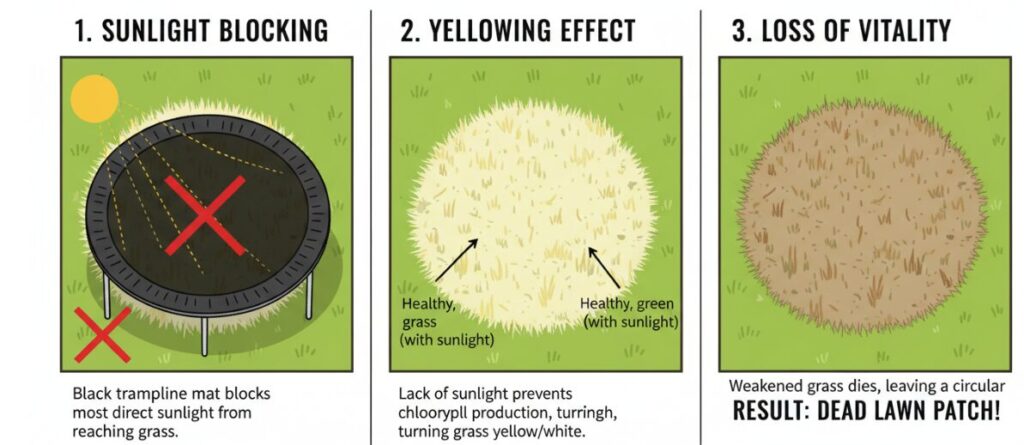
Loss of vitality: Without the energy provided by the sun, the grass will become very weak. The weak lawns are highly susceptible to disease and die quickly, leaving you with a large bald patch shaped like a trampoline.
If the mat is tossing blades of grass, the trampoline legs are destroying the foundation-that is, the soil.
Root choking: The trampoline itself is heavy, especially when someone is jumping on it. This downward pressure is focused entirely on the U-shaped leg. a long time, this weight will crush the soil under the legs to death.
Blocking water and oxygen: The hardened soil is as hard as concrete. It causes poor drainage and also blocks oxygen from entering the root system. Once the roots can’t breathe or drink water, the grass naturally dies. Many times, even if you move the trampoline away, there will still be ugly “rings” or pits in the yard.
As long as the two root causes of shade and heavy pressure are targeted, the lawn can be completely saved.
Discover endless fun and spark imagination! Our indoor playground products create a safe, exciting paradise for children. Experience boundless joy now!
Embrace adventure and fresh air! Our outdoor playground products offer thrilling, safe experiences for kids to explore, play, and grow. Unleash the fun outside!
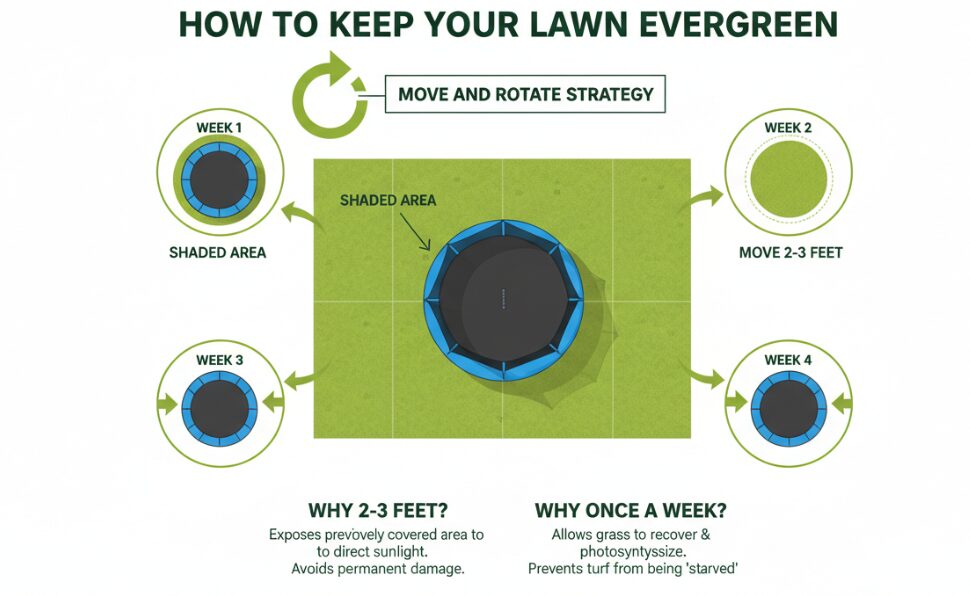
The most effective solution is to strictly adhere to the practice of “moving 2-3 feet per week.
Why 2-3 feet? You don’t need to drag the trampoline across the whole yard. It only takes a few feet of movement to ensure that the area previously covered by the mat is now exposed to direct sunlight.
Why once a week? Although the vitality of the lawn is tenacious, there are limits. Partial shading can usually be restored in a week, but if it takes longer, it may cause permanent damage. By rotating the position on a weekly basis, you can allow the grass to recover and photosynthesize before it becomes too weak. This rotation ensures that no piece of turf is permanently “starved.
To combat soil settlement, you must reduce the pressure that the metal legs exert on the lawn.
Use spacers or wooden blocks: Large protective washers or flat wooden blocks placed under the trampoline legs help spread the weight over a larger surface area.
Prevent sagging: It’s like wearing snowshoes, rather than having thin, narrow metal legs cut into the soil like knives. This prevents the legs from sinking too deep, greatly reduces the degree of soil crundling, keeps the root structure intact, and allows water to seep down smoothly.
By combining these two simple habits-weekly position rotation and weight distribution-you can enjoy the trampoline for a long time, while ensuring that the lawn underneath remains healthy and green.
Author: David Miller
With over 10 years of experience in backyard landscaping and lawn care, I specialize in helping families balance outdoor fun with garden maintenance. I write practical guides on how to protect your grass from heavy equipment like trampolines, ensuring your lawn stays green and healthy all year round.