 Mimu Play








product search
Indoor PlaygroundNinja WarriorOutdoor PlaygroundTrampoline
search


If you’re wondering what is a soft play or how to choose the best soft play equipment for your home, daycare, or commercial space, you’ve come to the right place. In today’s world, parents and business owners alike are paying more attention to safe, educational, and engaging play environments for children. That’s exactly where soft play equipment—also known as softplay equipment, soft play apparatus, or kids soft play equipment—comes in.
These soft, foam-based play systems provide children with a fun and safe environment to climb, crawl, and explore. Whether you’re setting up a toddler soft play equipment corner at home, designing a full-scale soft play set up in a preschool, or investing in soft play sets for a commercial play zone, understanding the core value and selection criteria is essential. This ultimate guide will walk you through everything you need to know—from safety standards and materials to space planning and creative design ideas—so you can choose the perfect soft play toys and create a world where fun and learning come together.
In the field of children’s amusement facilities, soft play equipment is undoubtedly an indispensable part. I often think about what makes these seemingly simple foam and vinyl structures have such a profound impact on children’s development. My conclusion is that they are not just toys, but also important catalysts for children’s physical and mental development.
When we talk about Soft Play Equipment, we are emphasizing its critical role in promoting children’s physical, cognitive and social development.
Physical Development: Children crawl, jump and try to maintain balance in soft structures, which are excellent exercises for their large muscle groups and fine motor skills. They may not realize that every attempt and challenge improves their motor coordination, strength and flexibility. This is more fun and challenging than simply running on flat ground, because the software environment provides more variables.
Cognitive Stimulation: Don’t think that software amusement is just a pure physical activity. In the seemingly random stacking and crossing, children are actually constantly solving problems, such as “How can I climb to the top?” or “Where does this tunnel lead?” These thinking processes greatly stimulate their spatial awareness and decision-making ability. I ‘ve even seen some kids invent new ways of playing on their own, which in itself is a sign of creativity.
Social Interaction: Software play area is a natural social field. In the process of exploring and sharing space together, children learn to cooperate, wait, and even resolve minor conflicts. For example, in the ball pool, they will pass balls to each other, or build a “fortress” together “. This unconscious interaction is crucial to their future social development.

Modular Soft Play Blocks: This is the most basic and creative 1. Blocks of various shapes and sizes can be stacked and combined to create any structure they can imagine. This flexibility is an excellent tool for developing your child’s creativity and problem-solving skills.
Soft Play Ball Pits: Who doesn’t love a ball pool? It offers unparalleled sensory stimulation and pure fun. Children roll and jump among tens of thousands of plastic balls, which not only exercise their bodies, but also provide a unique tactile experience. I always feel that the ball pool is one of the best places for children to release energy and enjoy happiness.
Soft Play Tunnels & Crawl Throughs: These devices give kids the opportunity to explore and adventure. They crawl in the tunnel, as if in a mysterious world, which can effectively enhance their sense of space and direction. For those children who like to hide, this is also a small world full of security.
Soft Play Climbing Structures: These structures are usually designed as steps and ramps of different slopes or heights to challenge children’s climbing ability. They have a good exercise effect on children’s upper limb strength, core stability and hand-eye coordination. Watching them climb up step by step, the sense of achievement is obvious.
Themed Soft Play Equipment: Themed Soft Play Equipment have become increasingly popular in recent years. Whether it is a castle, ocean or space theme, these devices greatly enhance the appeal and stimulate the imagination of children through the distinctive story background and shape. They take the play experience to a whole new level and make children feel like they are in a fantasy world.

Good Soft Play Equipment design must adhere to three core principles: safety, durability and attractiveness.
Safety First: This is the first principle that I always emphasize. All materials must be non-toxic and environmentally friendly. This is the bottom line. All edges and corners must be rounded to prevent children from being injured by collisions. In addition, non-slip surfaces are also essential, especially when children are running and jumping. A safe environment is the basis for children to have fun.
Durability for Long-Term Fun: Soft Play Equipment are used very frequently, so durability is of the essence. The high-quality high-density foam is used as the inner core, which can withstand long-term extrusion and impact without deformation. The outer material, usually high-quality PVC or PU leather, must be wear-resistant, waterproof and easy to clean. I always advise customers not to compromise on materials, because it is related to the life of the equipment and maintenance costs.
Engaging and Stimulating Designs: Last, but not least, the design must be attractive. Bright colors can stimulate children’s visual senses, and diverse shapes and structures can stimulate their curiosity and desire to explore. An attractive design that allows children to linger in it, thus achieving its dual purpose of education and entertainment.

Inner Foam Core:
High quality Soft Play Equipment, its inner core foam is by no means just stuffed. I’ll give preference to the type of foam that is high density and has good resilience. Why? Because the high density means that it can withstand more pressure and not easily collapse and deform, so that it can better protect the impact of children when playing. Good resilience can quickly restore the equipment to its original state and extend its service life. Imagine that if the foam is soft, the child will lose his balance when he steps on it, and it will quickly become flat, then the experience will be greatly reduced.
Outer Covering Material:
The choice of outer material is directly related to the durability, cleaning convenience and hygiene of the equipment. Common on the market are PVC and PU leather. The advantage of PVC is its excellent abrasion resistance and water resistance, as well as its bright colors and easy cleaning. For some large, high-frequency amusement parks, PVC is often a more economical and practical choice. PU leather is superior in feel, soft touch, more skin-friendly, especially suitable for infants and young children Soft Play Equipment. Of course, no matter what kind of material, I will emphasize one point in particular: it must be easy to clean and antibacterial. After all, children will explore with small hands and feet, and hygiene is the top priority. Some inferior materials are not only difficult to clean, but also easy to breed bacteria, which is absolutely unacceptable to us.
Stitching & Zippers:
You may think that these details are not important, but it is precisely these details that determine the quality and safety of the equipment. I have seen too many cases of safety hazards caused by poor stitching and exposed zippers. The sturdy double-layer stitching process is a must, which can effectively prevent the equipment from cracking and expose the inner core foam. The zipper design must be hidden, so as to prevent children from scratching themselves while playing, or accidentally opening the zipper to touch the inner core. These seemingly inconspicuous places are actually the embodiment of the manufacturer’s intentions.

Soft Play Equipment for Infants & Toddlers:
For infants and young children who are just beginning to explore the world, safety is the first priority. I would recommend those designs that are low, soft and rounded on the edges. For example, small crawling mats, soft blocks, ball pools, etc., these devices can not only meet their tactile and visual exploration needs, but also help them develop large movement skills, such as crawling and sitting. In particular, it should be emphasized that such devices cannot have any small parts to prevent suffocation when swallowing. I always remind parents and business owners that toddler soft play equipment is designed to maximize safety while providing basic sensory stimulation.
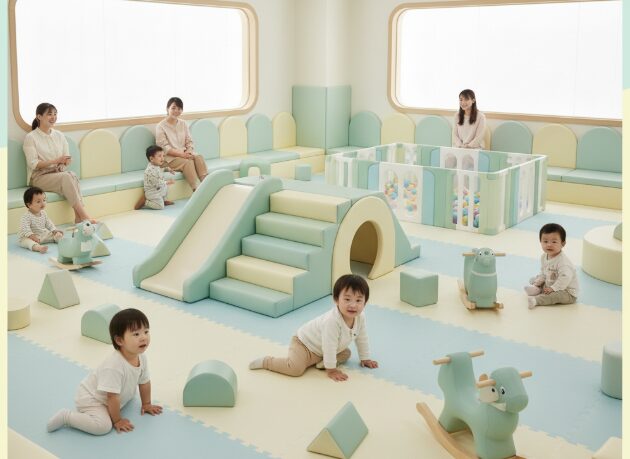
Soft Play Equipment for Preschoolers:
When children enter the preschool stage, their physical coordination and cognitive ability have been significantly improved. At this time, we can appropriately increase the challenge and diversity of equipment. For example, some soft structures with slopes, caves, and climbing or drilling can stimulate their adventurous spirit and exercise their sense of balance and spatial perception. Brightly colored and versatile equipment can also better attract their attention.

Soft Play Equipment for Older Kids:
For older children, Soft Play Equipment can combine more motor and cognitive challenges. For example, some modules that can be combined into complex paths, soft structures with simple puzzles or role-playing elements. This will not only allow them to get physical exercise, but also improve their teamwork and problem-solving skills. My experience tells me that if children can learn through play, they will enjoy it.
Good equipment requires a good “stage”. Space planning and setting are key to ensuring the ride experience and safety.
Assessing Your Space:
Before purchasing equipment, I strongly recommend that you thoroughly evaluate the site. Whether it is indoors or outdoors, you need to consider the size and height of the space, and whether there are fixed obstacles such as pillars and windows. I have seen situations where some tall equipment cannot be installed due to insufficient site height, which is very embarrassing. Detailed site measurements and photos are essential to help us better plan for the next step.
Optimizing Layout:
With the site information, the next step is layout optimization. Like a designer, I will seriously consider the moving line design of amusement equipment to ensure that children can move smoothly while playing, avoiding crowding and collisions. For example, separate a high-energy climbing zone from a relatively quiet block or reading zone. The setting of entrances and exits is also very important to ensure clarity and convenience for parents. A good layout can not only enhance the play experience, but also reduce the security risk invisibly. In my experience, the success of soft play set up depends largely on the fineness of the early layout.
Safety Matting:
This is the point I want to emphasize anyway-the ground safety mat. No matter how perfect the equipment is, if there is no proper ground buffer, once the child falls from the equipment, the consequences will be unimaginable. It is very important to choose a ground safety mat that meets safety standards and has good cushioning performance. They can effectively absorb impact and protect the safety of children to the greatest extent. I often say that the safety mat is the “last line of defense” of the soft amusement space, and there must be no sloppy.

Create a safe play area in your home: kids can have fun in an environment that’s completely theirs and is absolutely safe, and you don’t have to worry about them bumping and getting hurt. This convenience and privacy is unmatched by any public playground. Especially when the weather is bad or you don’t have time to go out, the tiny play area at home can come in handy.
Promoting Family Interaction: Soft Play Equipment is a good “catalyst” for family interaction. I have seen many families where parents climb, jump and build with their children, and this experience of joint participation not only enhances the parent-child relationship, but also fills children’s childhood with laughter and laughter. It provides a platform where the whole family can relax and play together.
Learning and Development at Home: Soft Play Equipment At Home, More Than Just Playing. It greatly stimulates the creativity of children, who, with these deceptively simple modules, build all kinds of worlds they imagine ——castles, caves, boats. I even feel that sometimes a child’s inspiration bursts out of these unrestrained play.
Of course, the value of Soft Play Equipment can not be underestimated in the commercial field. It’s not just an investment, it’s the key to improving customer experience and business competitiveness.
Amusement centers and early education institutions: For amusement centers and early education institutions, high-quality Soft Play Equipment can provide children with a safe and fun learning and growth environment, which can naturally attract more parents to bring their children. More importantly, this is not only to attract customers, but also to effectively increase customer stickiness, thereby increasing your revenue. A good software play area is often an important consideration for parents to choose institutions.
Hotels & Resorts: Hotels or resorts that want to attract family customers should consider configuring Soft Play Equipment. It can significantly enhance the hotel’s “family-friendly” degree “. When the children have a place to play, parents can enjoy the holiday more relaxed, which will undoubtedly win the reputation of your hotel and encourage them to visit again.
Restaurants and shopping centers: When parents take their children to restaurants for dinner or shopping, what is the biggest headache? The children have no place to play, noisy and uneasy. A well-designed soft play area can effectively extend the customer’s stay time. Children have fun, parents can feel at ease consumption. With soft play area of the restaurant, under the same conditions, traffic will be much higher.
Event rentals: Finally, we cannot ignore the growing market for “Soft Play Equipment rentals. Whether it’s a birthday party, a community event or a corporate family day, a set of colorful, safe and fun Soft For Play can instantly enhance the appeal of the event. It adds a unique entertainment element to the event, allowing children to have fun and parents to be more willing to participate. Many activities become lively and interesting because of Soft For Play.

What age group is soft play equipment suitable for?
Kids soft play equipment is suitable for a wide age range—from infants and toddlers to preschoolers and even older children.
What materials are used in soft play equipment?
High-quality soft play apparatus typically uses a high-density foam core for resilience and safety, combined with durable PVC or PU leather coverings that are easy to clean, waterproof, and antibacterial. Double stitching and hidden zippers are essential for safety and longevity.
How do I create the perfect soft play set up at home or in a business?
Start by assessing your available space—whether it’s a small play corner at home or a large indoor playground.
How can soft play equipment benefit children’s development?
Soft play isn’t just about fun—it’s a developmental tool. Through climbing, crawling, and balancing on soft play toys, children:
Is soft play equipment only for commercial use?
Not at all! While softplay equipment is common in commercial spaces like amusement centers, preschools, and shopping malls, kids soft play equipment for home use is becoming increasingly popular. Families can now create small, safe play zones that provide the same developmental benefits right at home.
How do I maintain and clean soft play equipment?
To keep your soft play apparatus hygienic and long-lasting:
Soft play equipment is far more than just foam blocks and colorful tunnels—it’s a complete developmental ecosystem for children. From enhancing motor skills and creativity to fostering social interaction, softplay equipment plays an irreplaceable role in early childhood growth. Whether you’re a parent planning a small soft play set up at home, a preschool owner designing an interactive soft play apparatus, or a business operator adding a play corner to attract families, investing in high-quality kids soft play equipment brings long-term value and joy.
By understanding what makes great soft play sets—safe materials, smart design, and age-appropriate challenges—you can transform any space into a safe, engaging world of exploration. So next time someone asks you, “What is a soft play?” you’ll know it’s not just play—it’s a smart way to nurture learning, laughter, and limitless imagination through soft for play.
This will close in 0 seconds