 Mimu Play


product search
Indoor PlaygroundNinja WarriorOutdoor PlaygroundTrampoline
search


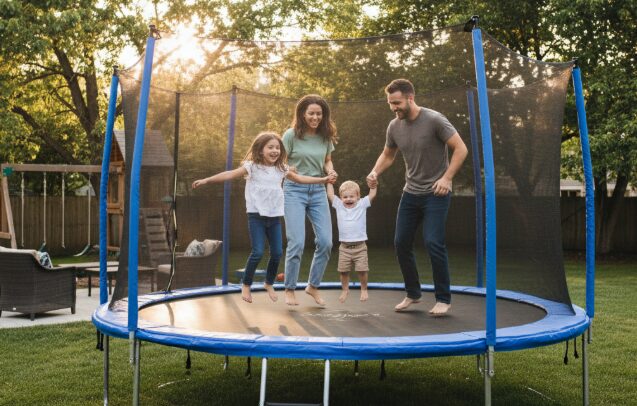
A high-quality trampoline is mainly composed of 5 parts: Galvanized Steel Frame, Polypropylene Fabric, Carbon Steel Springs, PVC & EPE Safety Mats, and Polyethylene Or Polypropylene Enclosure Net.
These key trampoline parts together determine the safety, bounce force and service life of the trampoline. Among them, the trampoline frame is responsible for load-bearing and stability, the trampoline fabric material provide bounce performance, springs affecting resilience, the safety mats play a protective buffer role, and the trampoline replacement net prevents accidental falls.
If you are selecting or replacing trampoline accessories and understand the characteristics of these trampoline materials, you can quickly judge the product quality and choose a safer and more durable style.
All we use are heavy duty galvanized steel pipes. Why is it? Because this material combines corrosion resistance, excellent strength and stability. The galvanizing process prevents rust and ensures that our trampoline frames are durable in outdoor environments.
Of course, galvanizing alone is not enough. The thickness, diameter and connection mode of the frame are directly related to the overall structural strength and safety of the trampoline. We also adapt materials and structures to different designs, such as round, square or rectangular frames, to provide a different jumping experience.

Our jumping mat is mainly used in Polypropylene woven mesh, and will be strictly UV-resistant. High Polypropylene strength, wear resistance, good air permeability, but also not afraid of water.
The importance of anti-ultraviolet treatment cannot be overemphasized. After all, trampolines are often outdoors. Without it, direct sunlight will accelerate the aging of the material and make the jumping mat brittle and hard. Multi-layer stitching and reinforced edge design ensure that the jumping mat remains intact, safe and reliable even under the most intense jumps.

Spring, the core of trampoline power. Their material is usually high-strength carbon steel or galvanized steel wire, galvanized is also to prevent rust, after all, who do not want the trampoline is not bad, the spring first rust broken.
In our design, we will use conical spring in particular, because it can provide better elastic feedback. The number and length of springs directly determine the elasticity and load-bearing capacity of the trampoline. More springs and longer springs usually mean better elasticity and stronger load-bearing capacity. At the same time, we will strengthen the design of the connection points between the spring and the frame and the jumping pad to ensure that it is still stable under repeated stretching.

Trampoline Safety Mats usually consist of an outer layer of weather-resistant PVC and an inner layer of EPE foam. The outer layer of PVC waterproof, wear-resistant, UV-resistant, daily cleaning is also very convenient.
The inner layer of EPE foam is the key to providing cushioning. It can firmly cover the spring and frame to prevent the jumper from being accidentally pinched or scratched. We will also use a safety rope or Velcro to ensure that the safety protection pad does not move and is firmly fixed when jumping.

We use high-strength PE (polyethylene) or PP (polypropylene) material, the same will be anti-UV treatment. The grid density and strength of the purse seine have been strictly tested to ensure that it can effectively withstand impact and is not easy to tear.
The seine will be firmly connected to the special replacement poles for trampoline, and the bottom will be closely connected to the frame. The zipper or fastener design not only facilitates access, but also ensures reliable protection when closed to prevent accidental falls.

Now that you know what trampolines are made of, you also understand the important impact of different trampoline materials on performance and security.
High-quality galvanized steel frame can ensure a stable structure, UV-resistant polypropylene fabric to extend the service life, high-strength carbon steel springs bring better elastic feedback, while PVC safety mats and trampoline replacement net provide additional protection.
When purchasing or maintaining a trampoline, remember to give priority to the materials and workmanship of these key trampoline parts-high-quality materials not only make the trampoline more durable, but also make every jump more comfortable.
提交产品咨询
我们将会在24小时内联系您